
Contents
Battery Saver Active Light On? What It Means and How to Fix It Fast
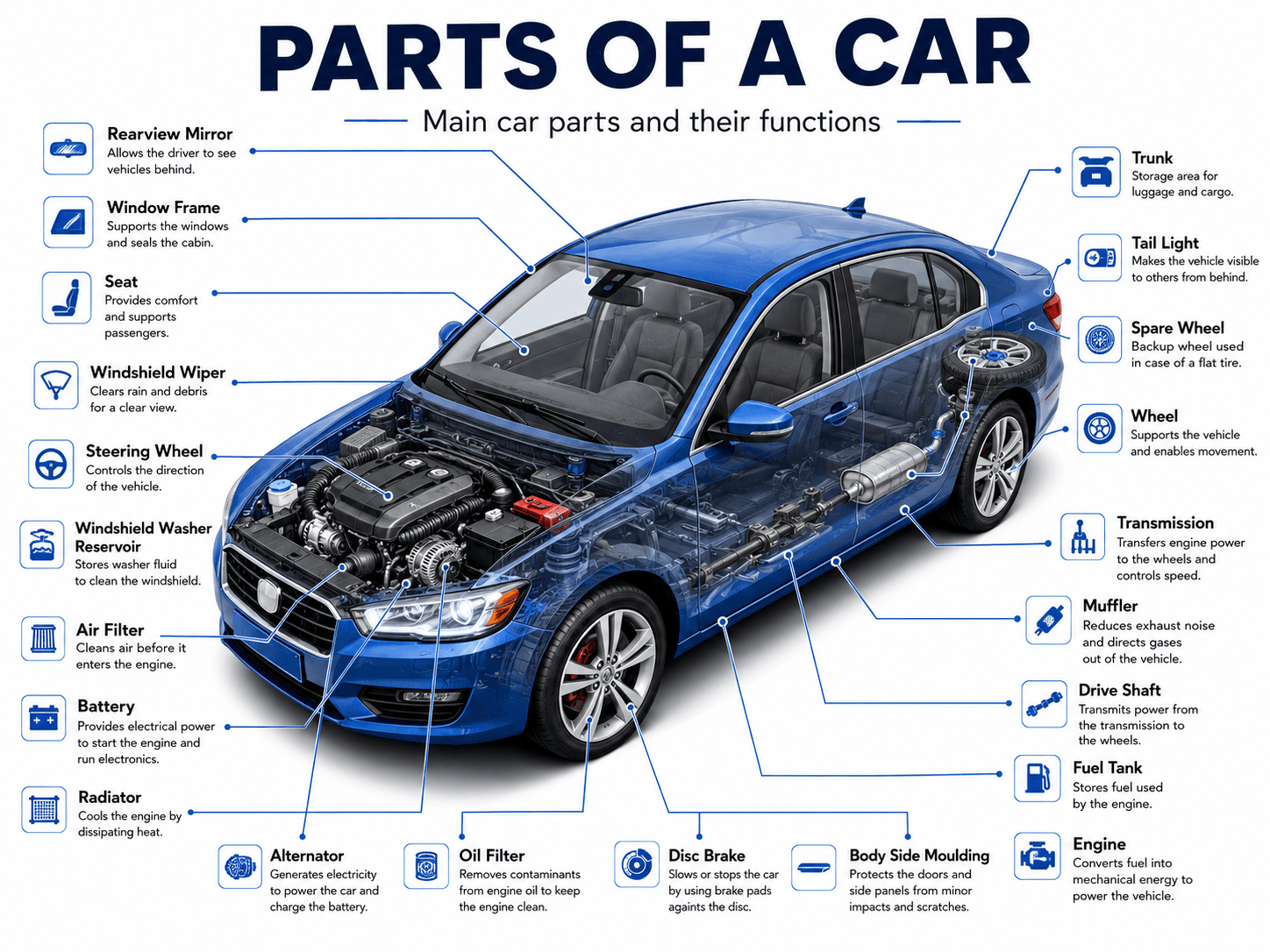
The battery in ICE cars is usually one of the 12-volt batteries responsible for powering appliances like radio, headlights, taillights, interior lights, air conditioning systems, horns, and fuse boxes.
These load systems can drain the battery, so recharging is needed. Auto manufacturers use alternators that charge the battery and prevent the battery from running out of charge.
The alternator connected to the engine through a serpentine belt helps regulate voltages, keeping battery voltages around 12.4 volts, 12.8 volts, 14.2 volts, and 14.7 volts depending on configuration.
A charger can also recharge the battery and restore electric flow to electric appliances. If the battery holds charge poorly or is unable to hold charge, it becomes unable to supply enough electric flow to electrical appliances and the car computer.
In such cases, a battery-saver active warning may appear in the driver information center. This article explains what battery saver active mean, its causes, probable solutions, and how to fix the problem.
What Does A Battery Saver Active Mean?
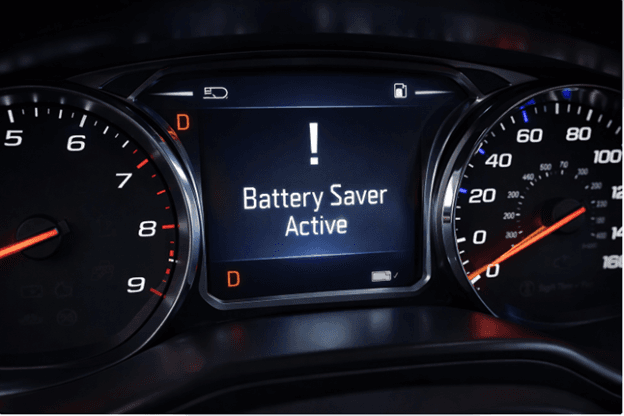
Battery saver active or battery saver active means the battery is weak, not charging properly, or running down. The car computer starts disabling electrical appliances to reduce battery life loss and avoid leaving you stranded. This battery saver active warning appears in the driver information center.
The system works using the battery and alternator to maintain proper power flow. The battery-saver active system limits certain systems, helping avoid sudden shutoff and maximizing battery current for adequate electric flow. It is controlled by the powertrain control module and battery sensor, which sense and calculate the vehicle charging system.
This helps maximizes battery running and prevents sudden shutoff. Common reasons include battery or alternator issues, often seen in Chevy Cruze and other models.
What Causes Battery Saver Active?
The causes battery saver active message are usually linked to system concerns in the car. There can be multiple reasons, but most involve the powertrain control module (PCM) which can trigger the battery saver active message on the dashboard. Some common grounds include electrical faults, weak charging, or sensor issues that turn on the warning light.
Bad Battery
A bad battery is one of the most regular reasons for battery saver active, especially in models like Chevy Malibu. A weak battery can cause the warning light to appear on the dash.
You should inspect the battery life, because as the battery goes weak and discharges 12.4 volts or less, the battery sensor, engine control unit, and car computer may shut down non-essential systems while keeping the most vital active for the best movement of the vehicle.
In this case, installing a new battery or using a multimeter to test the battery and check the needed voltage discharge is important. Always check the battery properly if you suspect it is not meeting required parameters.
Lousy Alternator
A lousy alternator cannot properly charge the battery, which leads to the battery saver active message. The alternator works with the ECM, and if it fails in a vehicle while driving then a warning light appears on the dashboard.
A faulty alternator or even a faulty connection can stop proper charging, leaving the battery weak.
Loose or Lousy Battery Cables
Loose battery cables or lousy battery cables can cause intermittent electric flow to car accessories. Even small corrosions can become a big problem, as battery connections may look fine but still cause problems.
It is important to wash battery terminals, clean battery cables, and apply anti-rust to fix the issue and ensure they do not rust in the near future.
Lousy Battery Sensor
A lousy battery sensor or vehicle battery sensor fails to properly regulate and measure the battery electric flow and net voltage of the car battery.
When electric flow less than 12.4 occurs, it sends wrong data and relate information to the car computer, triggering battery saver active on the dashboard. This sensor also measures and regulates net voltage, tracks the alternator, and monitors current drawn by car accessories.
A constant negative current or draining more current affects voltage transmitting from the alternator.
Battery Saver Active Issues
The battery saver active problem is common in vehicles like GMC Acadia and other car models, but once these causes are identified, you can easily resolve the issues by fixing the faulty components.
Battery Saver Mode Fixes
Replace Malfunctioning Sensor
If the issue is from a replace malfunctioning sensor case, use a scan tool to detect a battery sensor malfunctioning. Sometimes the sensor improperly fitted after a changed battery or alternator increases the probability of error, even if the battery sensor bad is not fully confirmed. This can trigger the battery saver active warning light.
Make sure to install sensor properly so the sensor connects correctly to the negative battery terminal. Always cross-check connections to correct issue areas.
Clean contact points using sandpaper, especially around the negative battery terminal and proper bolting to the vehicle frame. If needed, fully replace the sensor.
If the warning light pops up again while driving, inspect charging systems and ensure battery and alternator working properly.
Tightening Loose Connections
Tightening loose connections is a frequent cause fix for battery-saver active warning messages on the DIC. Loose battery connections or bad battery connections disturb current flow.
Start by tightening bolts on battery terminals. If corrosion exists, do cleaning battery terminal corrosion to fix the problem. If the corrosion serious, then replace terminals to avoid further issues.
Replace a Defective Battery
A replace defective battery step is needed when a faulty battery becomes the major cause of a battery saver active warning message. Signs include weak ignition, car battery low, or not starting.
You should put the battery to test to confirm culprit, not directly blame the car alternator.
How to Test a Car Battery
- Keep all electricals switch off and ignition switch off
- Use a digital multimeter set to 20V DC
- Place the black probe on the negative battery terminal
- Place the red probe on the positive battery terminal
- If reading is below 12.4V, it shows bad battery voltage
- If it fails to meet required voltage, try charging
- If still weak, go for replacing
Replace Lousy Alternator
A replace lousy alternator step is required when a bad alternator is a possible cause of battery problems. Always confirm by testing the alternator before changing the culprit.
How to Test an Alternator
- Keep engine off, key out, lights off
- Set multimeter to 15-20V DC
- Clean battery terminals if soot or gunk present
- Place black probe negative side and red positive side
- Battery should show around 12.6V
- Then start your car and check 14.2V to 14.7V
- After some miles, if less than 14.2V, it is undercharging
- If more than 14.7V, it is overcharging
- Add load using headlights, taillights, inside lights, offroad lights, radio, AC
- Voltage should not drop below 13 volts
- Then switch engine off and recheck
- If battery stays more than 12.6V, alternator working great
FaQs
Q: Does battery-saver mode mean I need a new battery?
Battery-saver mode does not always mean a new battery is needed. In many cases, the Chevy battery saver active warning message appears in the driver information center because the battery is distributing less than needy amount of electric voltage. This can happen due to a myriad of factors such as a faulty alternator, dead battery, defective battery sensor, or loose battery connection. The exact cause should be checked first.
Q: How do I turn off battery saver?
To turn off battery saver, you do not just clear the battery saver active message from the driver information center. If the car battery is discharging low amount of electric flow needed to power the car system, the proper way to turn off battery-saver mode is to fix the problem. That may mean battery replacement, alternator inspection, replace faulty battery sensor, clean battery terminal corrosion, or retighten anything loose.
Q: What does it mean when it says battery saver active on Chevy Malibu?
When battery saver active appears on a Chevy Malibu, Pontiac Grand Prix, or GMC Yukon, it means the driver information center has detected that electric flow has dropped and the battery cannot carry all electrical systems normally. The car computer may shut down part of the system operation to preserve battery life.
Q: How long can you drive in battery-saving mode?
You may still drive your car in battery-saving mode, but there is no time set for how long after battery saver active appears in the driver information center. It depends on the condition of the engine charging system and battery. In some cases, the car may shut down in 20 minutes or may last for 2 hours. The safest move is to get the problem fixed as soon as you notice it.