
From what I have experienced in workshop environments, drilling feels simple at first, but it quickly shows how important it really is.
It is a cutting technique used to create a circular cross sectional hole in solid materials by using a drill bit against a workpiece.
In this process, the tool is pressed and works as a rotating tool running at revolutions per minute, which can range in hundreds or even thousands.
As it rotates, it starts removing chips to form a clean hole. This procedure ensures successful drilling whether you are working on metal or even a rock, where older methods may feel like being hammered with swift strokes.
Modern drilling depends on the cutting edge and force applied for precision. That is why it is a core part of manufacturing that most mechanical engineers are already familiar with through daily reading, applications, and real operations.
Understanding how it works, along with proper safety precautions, makes a big difference in achieving clean and accurate results.
Contents
What is Drilling
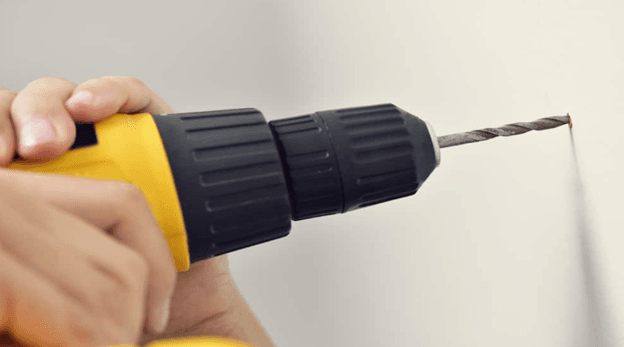
In workshop use, drilling is a machining process that makes circular holes or cylindrical holes in a solid workpiece with a rotating cutting tool like a drill bit.
It is one of the key manufacturing operations across many industries and an essential process for different materials including metals, plastics, wood, and composites.
From construction and mechanical engineering to automotive, aerospace, and general manufacturing, it helps create precise holes with required diameters and depths for assembly, fastening, and other functional purposes.
Drilling Meaning
The drilling meaning is the method of making holes or enlarging holes in a material by using a rotating cutting tool such as a drill and drill bit.
As it removes material, it supports proper hole formation with the needed diameter and depth.
This is an essential procedure in mechanical, industrial, and construction fields, where accuracy, efficiency, and consistency matter for installing fasteners, routing pipes and wires, handling precision engineering, working on parts, and preparing for later operations like tapping and reaming.
Drilling Definition
The drilling definition describes a mechanical machining operation where a rotating drill bit forms a cylindrical hole in a solid material through axial cutting.
As the tool penetrates surface layers, it removes chips through controlled material removal.
It is a critical process in manufacturing, construction, and engineering production, where hole sizes, depths, and tolerances must be controlled across industries such as metalworking, woodworking, aerospace, and automotive.
This helps maintain precision, efficiency, repeatability, smooth assembly, secure fastening, and other functional purposes.
How Does Drilling Work?
For drilling through metal, many DIYers need the right tools and methods, whether doing wood drilling or working with materials like wood, plastic, or steel.
Good drill bits such as standard bits, high speed steel, HSS, and a twist bit are common for metal drilling tasks.
Usually, you use a center punch, measure and mark the desired hole, then tap it with a hammer to make a dimple.
It is also important to keep lubricated bits cool against friction and heat buildup to improve lifespan.
Starting with a small hole before making larger holes with the right drill bit, sizes, diameter, and twist bits often gives better results.
Then you can remove sharp edges and burrs with deburring tools for smooth edges, or use hand twisting and light grind work to improve the drilling process, efficiency, and follow proper guidelines for each metal material.
How to Drill a Hole?
Using a drill bit for drilling holes is easier when the steps are followed properly.
Pick the location, check screws alignment with straight lines and a level, then mark it with a pencil, X, or dot.
Turn on the power of the drill, set the right torque for the material, confirm the hole marking and correct level, then stabilize the tool in a vertical position.
Pull the trigger at low speed to make a clean drilled hole, then reverse and back out the bit before inserting screw.
A pilot hole helps the slot line up well, so press gently, stop drilling at the right moment, avoid over screwing, and finish with a screwdriver for a smooth process and efficient drilling.
Steps
- determine location, screws placement, straight lines level
- mark holes, pencil X dot
- power up drill, adjust torque
- find marks, correct level, stabilize vertically
- pull trigger, low speed drilling
- drill hole depth, reverse drill, back out bit
- insert screw, pilot hole use, adjust torque
- fit screw slot, line up screw, vertical drill
- press gently, stop drilling, avoid over screwing
- finish with screwdriver