
Contents
- What Is Dielectric Grease? Uses, Mistakes and Safe Application Tips
- Quick Answer: What Is Dielectric Grease?
- What Is Dielectric Grease Made Of?
- Is Dielectric Grease Conductive?
- What Is Dielectric Grease Used For in Cars?
- Where to Use Dielectric Grease
- Where You Should Not Use Dielectric Grease
- Can You Put Dielectric Grease on Battery Terminals?
- How to Apply Dielectric Grease on Spark Plug Boots
- Dielectric Grease vs Silicone Grease vs White Lithium Grease
- Common Dielectric Grease Mistakes
- Can Dielectric Grease Worsen a Connection?
- Is Dielectric Grease Safe for All Electrical Connections?
- Dielectric Grease and Water Protection
- Final Mechanic-Style Advice
- FAQs About Dielectric Grease
- What is dielectric grease used for?
- Is dielectric grease conductive?
- Can dielectric grease cause a bad connection?
- Can I use dielectric grease on spark plugs?
- Should I put dielectric grease on battery terminals?
- Is dielectric grease the same as silicone grease?
- Can dielectric grease fix a loose wire?
- Is Vaseline the same as dielectric grease?
- Where should you not use dielectric grease?
- How much dielectric grease should I use?
What Is Dielectric Grease? Uses, Mistakes and Safe Application Tips
Dielectric grease is one of those small automotive products that can save you from many annoying electrical problems. It does not look special at first. It is just a thick, clear or slightly cloudy grease. But when it is used in the right place, it can protect electrical connections from moisture, dirt, corrosion and heat damage.
In simple words, dielectric grease is a non-conductive silicone-based grease. It is mostly used around electrical connectors, spark plug boots, bulb sockets, battery terminals and other areas where moisture can cause trouble. It does not repair a bad wire or a loose connector. Its main job is to protect a clean and tight connection after it is already working properly.
Many car owners get confused because the word “dielectric” sounds technical. Some people think it improves electrical flow. Others think it blocks electricity completely and should never be used near connectors. The truth is in the middle. Dielectric grease does not conduct electricity, but when used correctly, the metal parts of a connector still touch each other and current can pass normally. The grease simply seals the area around the connection and helps keep moisture away.
This guide explains what dielectric grease is, what it is made of, where to use it, where not to use it and how to avoid the common mistakes that can cause misfires or poor electrical contact.
Quick Answer: What Is Dielectric Grease?
Dielectric grease is a non-conductive silicone grease used to protect electrical connections from water, dust and corrosion. In cars, it is often used on spark plug boots, battery terminal protection areas, light bulb sockets, trailer plugs and weather-exposed connectors. It should be applied lightly because too much grease in the wrong place can create problems instead of solving them.
| Question | Quick Answer |
|---|---|
| Is dielectric grease conductive? | No, it is non-conductive |
| What is it mainly used for? | Moisture and corrosion protection |
| Can it fix a bad connection? | No, it only protects a good connection |
| Best automotive uses | Spark plug boots, bulb sockets, battery terminal protection and connectors |
| Biggest mistake | Applying too much grease or putting it on the wrong metal contact area |
What Is Dielectric Grease Made Of?
Most dielectric grease is made from a silicone oil base mixed with a thickener. This gives it a smooth, stable and water-resistant texture. It can handle heat better than many ordinary greases and it does not wash away easily when exposed to moisture.
This is why it is popular in automotive work. A car engine bay faces heat, vibration, rainwater, road dirt and temperature changes. Electrical connectors in these areas need protection. Dielectric grease helps create a protective barrier so water and oxygen have a harder time reaching the metal parts.
Because it is silicone-based, dielectric grease is also useful around rubber boots and plastic connector housings. However, it should still be used carefully. Not every rubber or plastic material reacts the same way to every product. Always check the product label if you are working on sensitive parts or expensive electrical components.
Is Dielectric Grease Conductive?
No, dielectric grease is not conductive. This is one of the most important things to understand.
It does not carry electricity like copper, metal or conductive paste. Its purpose is not to improve the electrical path. Its purpose is to protect the area around the electrical path.
A proper connector works because the metal terminals press against each other. When you plug the connector together, the metal contact points make direct contact. If dielectric grease is applied lightly, the metal terminals can still touch and the grease is pushed away from the exact contact point. The remaining grease helps seal the connector from moisture.
Problems usually happen when the connector is already loose, dirty, damaged or packed with too much grease. In that case, the grease may make the problem more noticeable because the metal terminals are not touching properly.
So the rule is simple:
Dielectric grease protects a good connection. It does not create a good connection.
What Is Dielectric Grease Used For in Cars?
Dielectric grease is used in many automotive electrical areas where moisture and corrosion can cause trouble. It is especially helpful in places exposed to rain, engine heat, road salt, car washing and outdoor parking conditions.
Common automotive uses include:
| Area | Why It Helps |
|---|---|
| Spark plug boots | Helps prevent moisture entry and makes boot removal easier later |
| Battery terminals | Helps reduce corrosion after the terminal is cleaned and tightened |
| Bulb sockets | Protects against moisture and corrosion in light housings |
| Trailer connectors | Protects exposed plugs from rain and road grime |
| Sensor connector seals | Helps protect the outer seal area from moisture |
| Marine or outdoor vehicle plugs | Useful where water exposure is common |
| Motorcycle electrical connectors | Helps protect small exposed connectors |
It is also used outside cars in electrical tools, outdoor plugs, RV connectors, boats and other equipment that faces damp conditions.
Where to Use Dielectric Grease
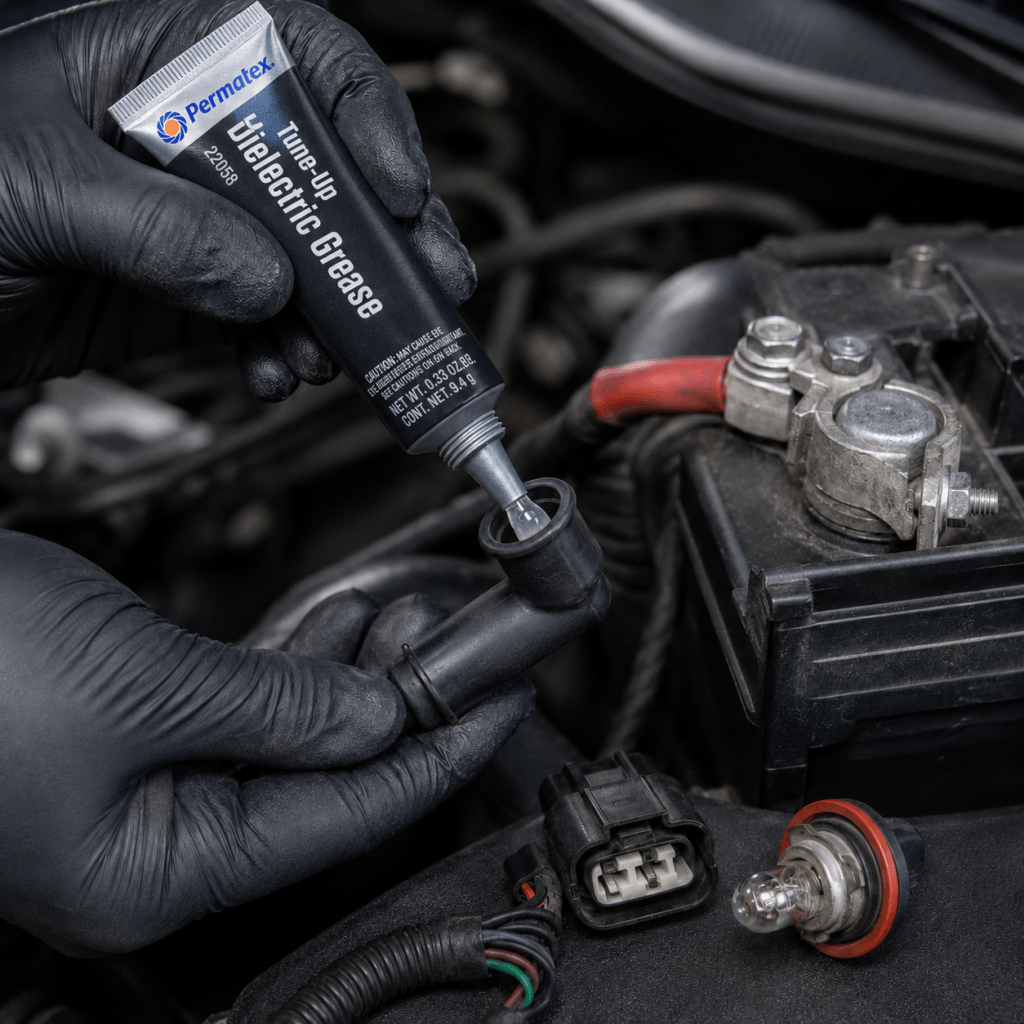
Dielectric grease is best used as a thin protective layer. You do not need to pack the connector like you are filling a hole. A small amount is usually enough.
Good places to apply dielectric grease include:
Spark Plug Boots
This is one of the most common uses. A small amount of grease inside the rubber boot helps stop moisture from entering and can make the boot easier to remove during future maintenance.
The grease should be placed inside the boot area that touches the ceramic part of the spark plug. Do not cover the metal terminal heavily.
Battery Terminals
Dielectric grease can help protect battery terminals from corrosion. The correct method is important. Clean the battery post and clamp first, install the clamp tightly and then apply a light layer around the outside exposed area.
Do not put a thick layer between the battery post and clamp before tightening. The metal must make solid contact first.
Bulb Sockets
Light sockets can suffer from moisture, especially in headlights, brake lights, trailer lights and outdoor vehicle lighting. A tiny amount of dielectric grease around the socket can help protect against corrosion.
Trailer Connectors
Trailer plugs are exposed to rain, mud and road dirt. Dielectric grease is useful here because these connectors often sit outside and face harsh conditions.
Weather-Exposed Electrical Plugs
Connectors near the engine bay, underbody, grille area or rear bumper can benefit from light protection. Make sure the connector is clean before applying grease.
Where You Should Not Use Dielectric Grease
Dielectric grease is useful, but it is not a magic fix for every electrical problem. Using it in the wrong place can create frustration.
Do Not Use It to Repair a Bad Connection
If a connector is loose, burnt, broken or corroded, grease will not fix it. The damaged part needs to be cleaned, tightened or replaced.
Do Not Pack It Into Every Connector
More grease does not mean more protection. Too much grease can make a connector messy and may stop weak terminals from touching properly.
Do Not Apply It Heavily on Spark Plug Metal Terminals
A small amount inside the boot is fine. A thick layer directly on the metal terminal can cause poor contact if the boot or terminal is already worn.
Do Not Put It on Spark Plug Threads
Spark plug threads are not the right place for dielectric grease. If the manufacturer recommends a thread compound, that is a separate product and a separate use case.
Do Not Use It as Mechanical Grease
Dielectric grease is not designed for door hinges, seat tracks, locks, wheel bearings or moving metal parts. Use the correct mechanical grease for those areas.
Do Not Ignore the Product Label
Different brands may have different temperature ratings and material compatibility notes. Check the label before using it on sensitive connectors, special sensors or non-automotive equipment.
Can You Put Dielectric Grease on Battery Terminals?
Yes, dielectric grease can be used on battery terminals, but it must be applied the right way.
The battery post and clamp need direct metal-to-metal contact. If you apply a thick layer of grease before tightening the clamp, you may reduce the quality of the connection. The better method is:
- Turn the vehicle off
- Disconnect the battery safely
- Clean corrosion from the terminal and clamp
- Reconnect and tighten the clamp properly
- Apply a thin layer of dielectric grease around the outside of the terminal area
This helps protect the connection from air and moisture after it is already secure.
Dielectric grease will not fix a weak battery, bad alternator, loose clamp or damaged cable. If your car has slow cranking, warning lights or repeated battery issues, inspect the charging system and cable condition too.
How to Apply Dielectric Grease on Spark Plug Boots
Spark plug boots are a perfect example of where dielectric grease can help when used correctly.
Here is the safe method:
- Remove the spark plug boot carefully
- Check the boot for cracks, oil damage or carbon tracking
- Clean the area if needed
- Put a small amount of dielectric grease inside the rubber boot opening
- Spread it lightly around the inner wall of the boot
- Keep the grease away from heavy buildup on the metal terminal
- Reinstall the boot until it clicks or seats firmly
The goal is to seal the boot area and stop moisture from entering. You are not trying to coat the spark plug tip in grease.
If your engine is already misfiring, do not assume dielectric grease will solve it. Check the spark plug, ignition coil, boot condition and connector fit.
Dielectric Grease vs Silicone Grease vs White Lithium Grease
People often mix up different greases because they look similar. But they are not all used for the same job.
| Product | Main Purpose | Conductive? | Good For | Avoid Using On |
|---|---|---|---|---|
| Dielectric grease | Electrical moisture protection | No | Spark plug boots, connectors, bulb sockets and battery terminal protection | Damaged wiring, loose terminals and spark plug threads |
| Silicone grease | Rubber and plastic lubrication or sealing | Usually non-conductive | O-rings, seals and some plastic parts | Areas where the product label says it is not suitable |
| White lithium grease | Mechanical lubrication | Not for electrical sealing | Hinges, latches and metal moving parts | Electrical connectors and sensor plugs |
| Anti-seize | Thread protection | Not the same purpose | Bolts and threaded metal parts | Rubber boots, plastic connectors and electrical sockets |
The main point is simple. Use dielectric grease for electrical protection, not for general mechanical lubrication.
Common Dielectric Grease Mistakes
Dielectric grease is easy to use, but many problems come from small mistakes.
1. Using Too Much
This is the most common mistake. A thin film is usually enough. If the connector is packed with grease, it can become messy and difficult to inspect later.
2. Applying It on Dirty Connectors
Grease should not trap dirt and corrosion inside the connector. Clean the connection first. Then apply a small amount for protection.
3. Thinking It Improves Conductivity
Dielectric grease does not improve electrical flow. It protects the connection from moisture. The metal terminals still need to touch properly.
4. Using It to Hide a Problem
If a connector is loose or burnt, do not cover it with grease and hope it works. Fix the actual problem.
5. Putting It on the Wrong Part of a Spark Plug
Use it lightly inside the boot area. Do not cover the spark plug threads or metal contact tip with a thick layer.
6. Ignoring Misfire Symptoms
If the engine starts misfiring after plug or coil work, check the boot seating, terminal contact and spark plug condition. Do not blame the grease immediately, but do not ignore over-application either.
7. Using It Everywhere
Not every connector needs grease. Factory-sealed connectors are often already protected. Use it where moisture exposure is likely or where the service manual recommends it.
Can Dielectric Grease Worsen a Connection?
Yes, it can worsen a connection if it is used incorrectly. The grease itself is non-conductive, so a weak connector with poor metal contact may become worse if too much grease is added.
For a healthy connector, this is usually not a problem. The metal terminals press together and push the grease away from the contact point. But if the terminal is loose, bent or corroded, the grease will not solve the issue.
Before applying dielectric grease, ask yourself:
- Is the connector clean?
- Are the terminals tight?
- Is there any corrosion?
- Is the wire damaged?
- Does the plug lock properly?
If the answer is no, fix that issue first.
Is Dielectric Grease Safe for All Electrical Connections?
It is safe for many automotive electrical connections, but that does not mean it should be used blindly.
It is commonly used on low-voltage automotive connectors, light sockets, trailer plugs and spark plug boots. But for sensitive sensors, control modules or special connectors, it is better to check the service manual or product label.
Modern vehicles use many small terminals and sealed connectors. Some of these connectors are designed to work dry. Adding too much grease can make future diagnosis harder. Use common sense and keep the application light.
Dielectric Grease and Water Protection
One of the biggest benefits of dielectric grease is water resistance. It helps keep moisture away from metal terminals. This is useful in places where water can enter through washing, rain, snow, humidity or road spray.
For drivers in cold climates, it can also help reduce corrosion from road salt. For drivers in hot and humid countries, it can help protect connectors from moisture-related oxidation.
Still, remember this: dielectric grease is protection, not waterproof magic. If a connector seal is broken or water is entering a light housing, the root problem needs repair.
Final Mechanic-Style Advice
Dielectric grease is a helpful product when it is used with patience. Use a small amount. Apply it on clean parts. Do not use it to cover damaged wiring. Do not assume it makes electricity stronger.
For most car owners, the best uses are spark plug boots, battery terminal protection, bulb sockets and exposed connectors. These are the places where moisture and corrosion often cause small but annoying problems.
If your car already has a no-start issue, misfire, dead battery problem or warning light, dielectric grease should not be your first diagnosis. Find the real fault first. Then use the grease to protect the connection after the repair is done.
Used correctly, it is cheap protection. Used incorrectly, it can create confusion.
FAQs About Dielectric Grease
What is dielectric grease used for?
Dielectric grease is used to protect electrical connections from moisture, dirt and corrosion. In cars, it is often used on spark plug boots, bulb sockets, battery terminals and exposed connectors.
Is dielectric grease conductive?
No, dielectric grease is not conductive. It does not carry electricity. It protects the area around the connection while the metal terminals still make contact.
Can dielectric grease cause a bad connection?
Yes, it can cause or worsen a bad connection if too much is applied or if the connector is already loose, dirty or damaged. Use only a light amount on clean and tight connections.
Can I use dielectric grease on spark plugs?
Yes, but only in the correct area. Apply a small amount inside the rubber spark plug boot. Do not apply a thick layer on the metal terminal or spark plug threads.
Should I put dielectric grease on battery terminals?
Yes, you can use it after cleaning and tightening the battery terminal. Apply it around the outside exposed area to help reduce corrosion. Do not pack it between the battery post and clamp before tightening.
Is dielectric grease the same as silicone grease?
Dielectric grease is usually silicone-based, but not every silicone grease is sold for the same electrical use. Always check the product label before using it on electrical connectors.
Can dielectric grease fix a loose wire?
No. Dielectric grease cannot fix loose wires, broken terminals or damaged connectors. Repair the connection first and then use grease for protection.
Is Vaseline the same as dielectric grease?
No. Vaseline is petroleum jelly. Dielectric grease is made for electrical protection and is better suited for automotive connector use.
Where should you not use dielectric grease?
Do not use it on spark plug threads, damaged wiring, loose terminals or mechanical parts that need normal lubricating grease. It should also not be packed heavily into every connector.
How much dielectric grease should I use?
Use a small amount. A thin film is usually enough. Too much grease can make a connector messy and may create problems if the terminal contact is already weak.