
Contents
- White Smoke From Exhaust: Causes Symptoms Diagnosis and When to Stop Driving
- Quick Answer: What Does White Smoke From Exhaust Mean?
- Is White Smoke From Exhaust Always Serious?
- Thin White Vapor vs Thick White Smoke
- What Causes White Smoke From Exhaust?
- White Smoke From Exhaust on Startup
- White Smoke From Exhaust When Accelerating
- White Smoke From Exhaust But No Overheating
- White Smoke From Exhaust With Sweet Smell
- White Smoke From Exhaust in Gas vs Diesel Engines
- Symptoms That Help Confirm the Cause
- How to Diagnose White Smoke From Exhaust at Home
- Tests a Mechanic Will Use
- Can You Drive With White Smoke From Exhaust?
- Repair Cost Guide
- What Happens If You Ignore White Smoke From Exhaust?
- How to Prevent White Smoke From Exhaust Problems
- FAQ
- Is white smoke from exhaust always a blown head gasket?
- Is white smoke from exhaust on cold start normal?
- What does white smoke from exhaust with sweet smell mean?
- Can low coolant cause white smoke from exhaust?
- Can I drive with white smoke from exhaust?
- Why do diesel engines produce white smoke from exhaust?
- Final Verdict
White Smoke From Exhaust: Causes Symptoms Diagnosis and When to Stop Driving
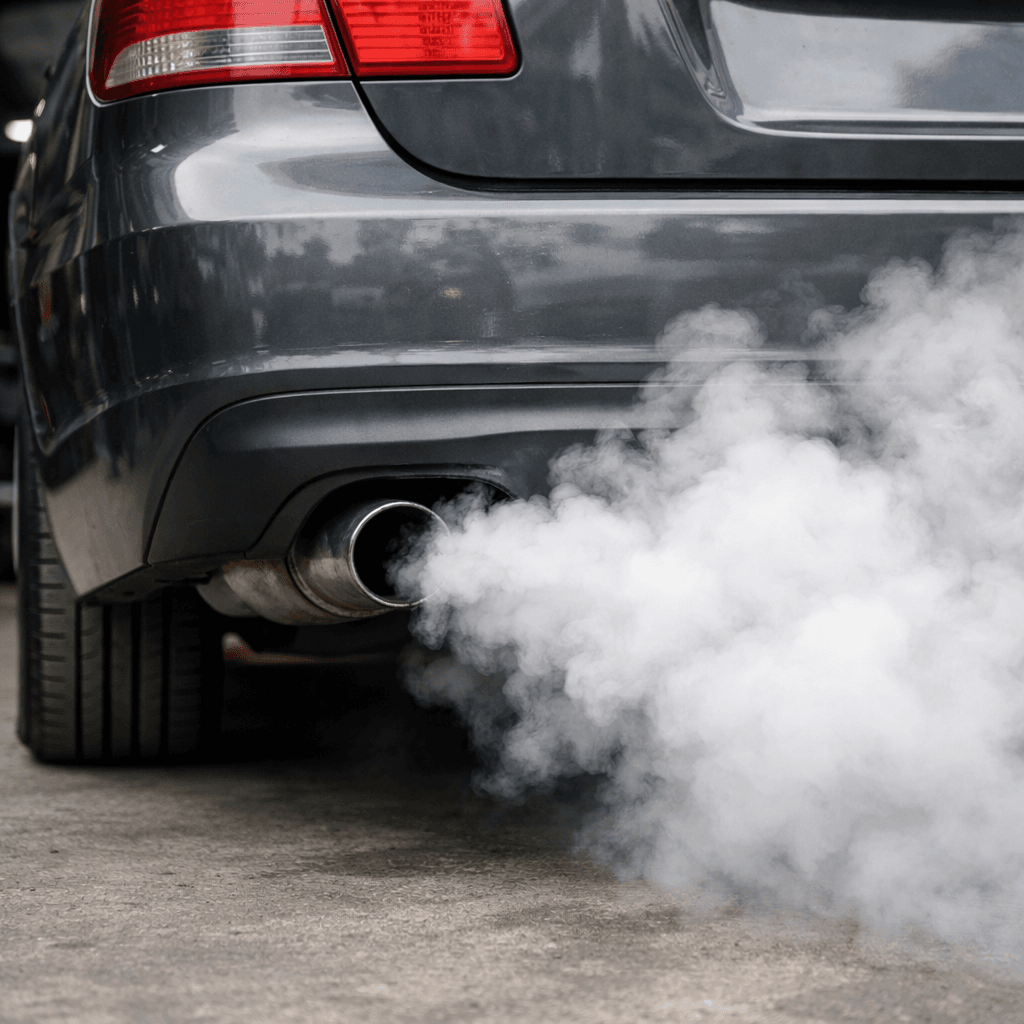
White smoke from exhaust can be normal for a short time on a cold morning. That usually happens when condensation turns into vapor as the exhaust system heats up. But if the white smoke from exhaust stays after the engine warms up then it often points to a real problem. In many cases it means coolant is getting into the combustion chamber. That can happen because of a blown head gasket a cracked cylinder head or in worse cases a cracked engine block. If the smoke is thick and keeps coming out do not ignore it.
Quick Answer: What Does White Smoke From Exhaust Mean?
If you notice white smoke from exhaust for only a minute or two after startup it is often harmless vapor. If the white smoke from exhaust is thick stays after warm up has a sweet smell or comes with coolant loss then it is usually a warning sign of coolant burning inside the engine. That is a serious issue and it should be checked as soon as possible.
Is White Smoke From Exhaust Always Serious?
Not always.
A little white vapor on a cold start is common. I have seen many drivers panic over this when the weather is cool and the car is actually fine. The real concern starts when the white smoke from exhaust does not go away. That is when you need to start thinking like a mechanic and not like a worried owner hoping it will disappear by itself.Many drivers ignore early overheating but understanding the real engine overheating causes can prevent this white smoke problem from getting worse.
Usually normal
- light white vapor on cold startup
- disappears after a short warm up
- no coolant loss
- no sweet smell
- no rough idle
- no overheating
Usually serious
- thick white smoke from exhaust after warm up
- sweet smell from tailpipe
- coolant level dropping
- rough idle or misfire
- overheating
- milky oil
- loss of power
Thin White Vapor vs Thick White Smoke
| What you see | What it usually means | Risk level | What to do |
|---|---|---|---|
| Light vapor on cold morning | Condensation in exhaust | Low | Let engine warm up |
| White smoke disappears in 1 to 3 minutes | Usually normal moisture | Low | Monitor only |
| Thick white smoke after warm up | Coolant burning | High | Inspect immediately |
| White smoke with sweet smell | Coolant leak into engine | High | Stop driving soon |
| White smoke with rough idle | Internal engine problem possible | High | Diagnose fast |
| White smoke with overheating | Head gasket or serious cooling issue | Very high | Stop driving |
What Causes White Smoke From Exhaust?
There are several possible causes of white smoke from exhaust. Some are minor. Some can destroy the engine if ignored.
1. Condensation in the Exhaust System
This is the most harmless cause. Water naturally collects inside the exhaust when the car cools down. On startup that moisture turns into vapor. It looks like white smoke from exhaust but it usually fades quickly.
Signs
- only happens on startup
- more common in cold or damp weather
- disappears fast
- no bad smell
- engine runs normally
2. Blown Head Gasket
This is one of the most common serious causes of white smoke from exhaust. A blown head gasket can let coolant enter the combustion chamber. Once that coolant burns it comes out as thick white smoke.
Extra signs
- coolant loss with no visible leak
- overheating
- bubbling in coolant reservoir
- rough idle
- misfire
- sweet smell from exhaust
- milky oil in some cases
3. Cracked Cylinder Head
A cracked head can create the same symptoms as a blown head gasket. The engine may still start and drive but the white smoke from exhaust will usually keep returning.
Extra signs
- persistent smoke
- coolant disappearing
- overheating under load
- poor running after startup
4. Cracked Engine Block
This is the nightmare scenario. It is less common but very serious. If coolant leaks into the cylinders through a cracked block the white smoke from exhaust may be heavy and constant.
Extra signs
- severe overheating history
- coolant loss
- poor compression
- engine damage symptoms
5. Intake Manifold Gasket Leak
On some engines coolant can pass through a failed intake manifold gasket and enter the combustion process. That also creates white smoke from exhaust.
Extra signs
- coolant loss
- rough idle
- engine hesitation
- smoke that may come and go
6. Bad Fuel Injector in Diesel Engines
On diesel engines white smoke from exhaust does not always mean coolant. Poor injector spray or bad timing can leave unburned fuel in the exhaust stream which may appear white or light gray.
Extra signs
- hard starting
- rough idle
- smoke on startup
- poor fuel economy
7. Glow Plug or Compression Problems in Diesels
A diesel engine relies on heat and compression. If glow plugs are weak or compression is low the fuel may not burn properly. That can lead to white smoke from exhaust especially at startup.
White Smoke From Exhaust on Startup
This is one of the biggest long tail searches and it matters because startup smoke can mean two very different things.
Normal startup smoke
If the smoke is light and fades within a minute or two then it is usually condensation.
Bad startup smoke
If the white smoke from exhaust on startup is thick smells sweet or keeps going after the engine warms then coolant burning becomes much more likely.
A lot of drivers make the mistake of calling every startup cloud normal. That is lazy diagnosis. The real question is not whether smoke appears. The real question is how long it stays and what other symptoms come with it.
White Smoke From Exhaust When Accelerating
White smoke from exhaust when accelerating is more concerning than light vapor at idle. If smoke gets worse under throttle it can point to coolant entering the combustion chamber under pressure. In diesel engines it can also suggest injector or turbo related issues depending on the setup.
Likely causes
- blown head gasket
- cracked head
- injector problem in diesel
- coolant leak becoming worse under load
White Smoke From Exhaust But No Overheating
This is where many owners get fooled. They assume there is no major problem because the temperature gauge looks normal. That can be a mistake.
You can still have white smoke from exhaust but no overheating in the early stage of a head gasket leak. Small coolant intrusion may show up before the engine starts running hot. That is why coolant level smell smoke thickness and engine behavior matter so much.
White Smoke From Exhaust With Sweet Smell
A sweet smell with white smoke from exhaust is a classic warning sign of coolant burning. Coolant has a very specific smell once it burns. It is not the same as raw fuel and not the same as oil.
If you see thick smoke and smell sweetness from the tailpipe then do not keep guessing. Start checking the cooling system.
White Smoke From Exhaust in Gas vs Diesel Engines
| Engine type | Common causes of white smoke | Notes |
|---|---|---|
| Gasoline engine | Condensation blown head gasket cracked head cracked block intake gasket leak | Coolant burning is a major concern |
| Diesel engine | Condensation injector issue glow plug failure low compression coolant leak | Unburned fuel can also look white |
This split matters because too many articles explain white smoke from exhaust like every car is the same. It is not. A gasoline engine and a diesel engine can produce similar looking smoke for very different reasons.
Symptoms That Help Confirm the Cause
When diagnosing white smoke from exhaust never look at smoke alone. Check the full pattern.
Watch for these symptoms
- coolant loss
- engine overheating
- rough idle
- misfire
- hard starting
- low power
- sweet smell
- bubbling in coolant reservoir
- milky oil
- check engine light
How to Diagnose White Smoke From Exhaust at Home
You do not need to tear down the engine to do a first level check. Start simple.
Step 1: See how long the smoke lasts
If it disappears quickly then condensation is likely.
Step 2: Smell the exhaust
A sweet smell often points to burning coolant.
Step 3: Check coolant level
If the level keeps dropping and there is no external leak that is a bad sign.
Step 4: Inspect the oil cap and dipstick
Milky residue can mean coolant mixing with oil.
Step 5: Watch engine temperature
Rising temperature plus white smoke from exhaust is a strong warning combination.
Step 6: Listen to engine behavior
Rough idle shaking or misfire adds more evidence of internal trouble.
Step 7: Scan for codes
Misfire codes coolant temp issues or combustion related faults can support the diagnosis.
Tests a Mechanic Will Use
As a proper workshop level check these tests are far more reliable than guessing.
| Test | What it checks | Why it matters |
|---|---|---|
| Cooling system pressure test | Finds leaks in cooling system | Helps reveal internal or external coolant loss |
| Block test for combustion gases | Detects exhaust gases in coolant | Strong clue for head gasket failure |
| Compression test | Measures cylinder pressure | Finds sealing problems |
| Leak down test | Shows where pressure is escaping | Very useful for gasket valve or crack diagnosis |
| Injector test on diesel | Checks fuel delivery quality | Helps rule out injector related white smoke |
Can You Drive With White Smoke From Exhaust?
This depends on what is causing it.
You may be able to drive briefly if
- the smoke is only light vapor
- it disappears after warm up
- coolant level stays normal
- there is no smell
- there is no overheating
- the engine runs smooth
You should stop driving if
- white smoke from exhaust is thick and constant
- smoke continues after warm up
- coolant is dropping
- temperature rises
- the engine runs rough
- there is a sweet smell
- you suspect a head gasket problem
Driving too long with coolant burning inside the engine can turn a repairable issue into a full engine rebuild. I have seen people try to save money by waiting and they ended up paying much more.
Repair Cost Guide
| Problem | Difficulty | Typical cost level | Safe to drive |
|---|---|---|---|
| Condensation | None | None | Yes |
| Intake gasket leak | Medium | Medium | Usually not for long |
| Bad diesel injector | Medium | Medium | Depends on severity |
| Glow plug issue | Low to medium | Lower | Sometimes for short term |
| Blown head gasket | High | High | No |
| Cracked cylinder head | High | High | No |
| Cracked engine block | Very high | Very high | No |
What Happens If You Ignore White Smoke From Exhaust?
Ignoring white smoke from exhaust can lead to:
- overheating damage
- warped cylinder head
- catalytic converter damage
- oil contamination
- severe misfire
- loss of compression
- complete engine failure
That is why this symptom should never be treated like a harmless visual issue until you know the real cause.
How to Prevent White Smoke From Exhaust Problems
Keep the cooling system healthy
Use the correct coolant and keep it at the proper level.
Never ignore overheating
One overheating event can damage the head gasket or cylinder head.
Service the engine on time
Old neglected engines develop leaks and combustion problems faster.
Pay attention to early signs
A little coolant loss or a faint sweet smell can be the first clue before the white smoke from exhaust becomes severe.
FAQ
Is white smoke from exhaust always a blown head gasket?
No. It can also be condensation or on diesel engines injector or glow plug related issues. But persistent white smoke from exhaust should always be checked for coolant burning.
Is white smoke from exhaust on cold start normal?
Yes if it is light and disappears quickly. No if it stays thick after warm up.
What does white smoke from exhaust with sweet smell mean?
It usually means coolant is burning in the engine.
Can low coolant cause white smoke from exhaust?
Low coolant itself does not create smoke. But the leak causing coolant loss may allow coolant into the combustion chamber which creates white smoke from exhaust.
Can I drive with white smoke from exhaust?
Only if it is clearly light condensation that fades fast. If the smoke is thick and persistent then it is safer not to drive.
Why do diesel engines produce white smoke from exhaust?
Diesel engines may show white smoke because of unburned fuel bad injectors glow plug issues low compression or coolant intrusion.
Final Verdict
White smoke from exhaust can be harmless for a minute on a cold start. After that the story changes. If the smoke is thick stays after warm up smells sweet or comes with coolant loss rough running or overheating then treat it as a serious warning. In many cases the problem is coolant entering the combustion chamber through a blown head gasket a cracked cylinder head or another internal leak. The faster you diagnose it the better your chance of avoiding major engine damage.