
Contents
- Black Smoke From Exhaust: Causes Symptoms Diagnosis and When to Fix It
- Quick Answer: What Does Black Smoke From Exhaust Mean?
- What Black Smoke From Exhaust Really Means
- Most Likely Causes in Order (Start Here First)
- Is Black Smoke From Exhaust Always Serious?
- Black Smoke From Exhaust Quick Meaning Table
- Symptom to Cause Table
- Most Common Symptoms That Come With Black Smoke From Exhaust
- Most Common Causes of Black Smoke From Exhaust
- Top Causes Priority Table
- Black Smoke From Exhaust in Petrol vs Diesel
- Black Smoke From Exhaust at Different Times
- How to Diagnose Black Smoke From Exhaust Step by Step
- What I Would Check First as a Mechanic
- Tests a Mechanic Will Use
- Can You Drive With Black Smoke From Exhaust?
- Risk Level Table
- How to Fix Black Smoke From Exhaust
- Repair Cost Guide
- What Happens If You Ignore Black Smoke From Exhaust?
- Biggest Mistakes People Make
- How to Prevent Black Smoke From Exhaust
- Black Smoke vs White Smoke From Exhaust
- FAQs
- 1. What does black smoke from exhaust mean?
- 2. Is black smoke from exhaust bad?
- 3. Why does my car blow black smoke when accelerating?
- 4. Can a bad MAF sensor cause black smoke from exhaust?
- 5. Can a dirty air filter cause black smoke from exhaust?
- 6. Why do diesel engines produce black smoke?
- 7. Can bad injectors cause black smoke from exhaust?
- 8. Can I drive with black smoke from exhaust?
- Final Verdict
Black Smoke From Exhaust: Causes Symptoms Diagnosis and When to Fix It
Black smoke from exhaust usually means the engine is burning too much fuel or not getting enough air for proper combustion. In simple terms the engine is running rich. This is the most common reason behind black smoke from exhaust in both petrol and diesel vehicles.
In real cases the problem often starts small. A slightly dirty air filter or weak sensor reading slowly pushes the mixture rich. Then one day the driver notices black smoke from exhaust and poor fuel economy at the same time. That is usually when the issue has already moved beyond a minor warning.If the smoke appears white instead of black then the issue is usually linked to coolant burning or internal engine problems
Common causes include a clogged air filter, faulty fuel injectors, a bad MAF sensor, oxygen sensor issues, fuel pressure problems, and in diesel engines faults with EGR, DPF, turbo, or overfueling.
Quick Answer: What Does Black Smoke From Exhaust Mean?
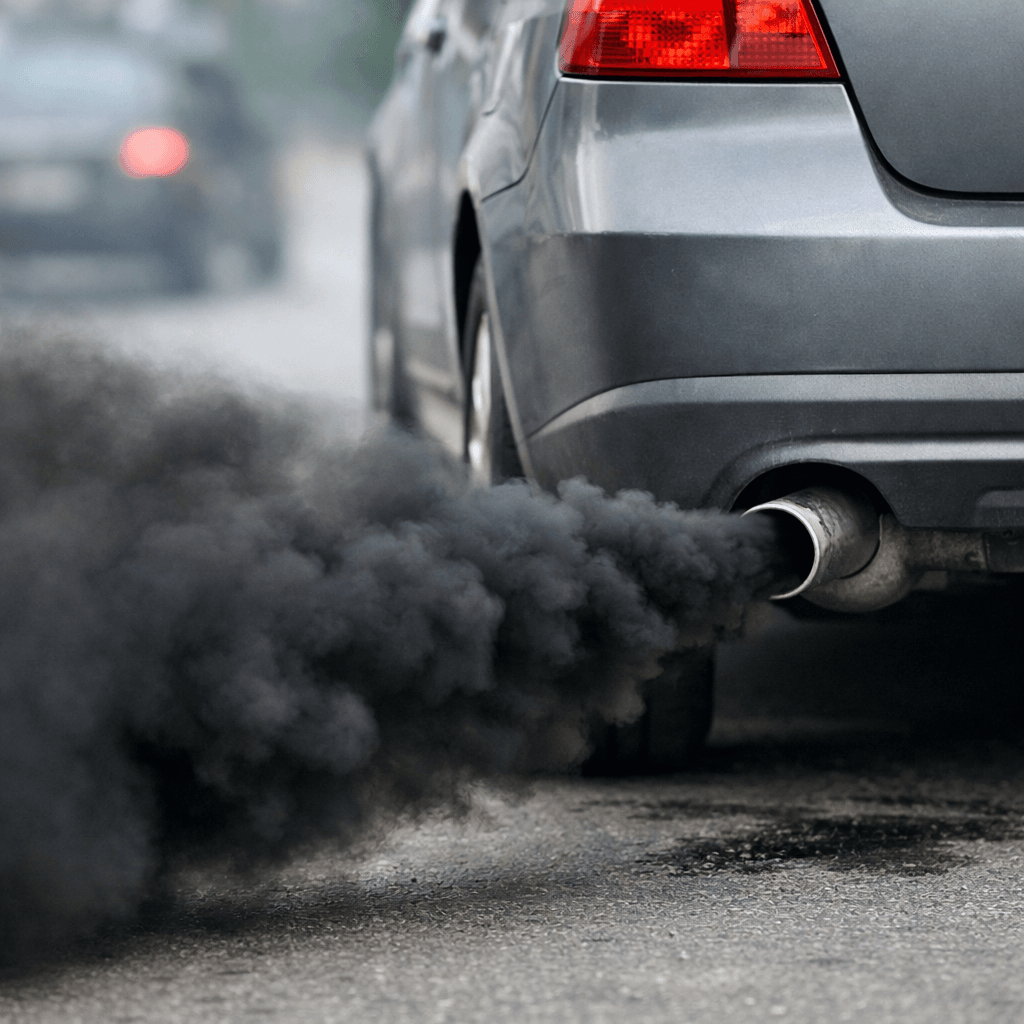
Black smoke from exhaust almost always means a rich air fuel mixture. That means too much fuel is entering combustion or not enough air is available to burn it properly. The most common causes are a dirty air filter, bad fuel injectors, a faulty MAF sensor, oxygen sensor problems, fuel pressure faults, and in diesel vehicles EGR, DPF, turbo, or injector-related issues.In some cases drivers confuse black smoke with coolant burning which is actually one of the main blown head gasket symptoms.
A brief puff under hard diesel acceleration can happen. Constant thick black smoke from exhaust is not normal and should be diagnosed.
What Black Smoke From Exhaust Really Means
When you see black smoke from exhaust you are usually looking at unburned fuel and carbon particles leaving the engine. That happens when:
- fuel delivery is too high
- airflow is restricted
- sensor data is incorrect
- combustion is incomplete
This is very different from white smoke. White smoke from exhaust is usually linked to condensation or coolant. Black smoke from exhaust is mainly a fuel and air balance problem. That separation matters because it helps prevent content cannibalization between your black smoke page and your white smoke page.
Most Likely Causes in Order (Start Here First)
If I had to check a car quickly this is the order I would follow:
- Air filter condition
- Fuel injectors
- MAF sensor
- Oxygen sensor
- Fuel pressure regulator
- Diesel EGR turbo or DPF system
This order saves time. Many people jump straight to expensive parts and ignore the basics.
Is Black Smoke From Exhaust Always Serious?
Not always. But ignoring it is where the real problem starts.
A small puff of black smoke from exhaust can appear in some diesel engines under heavy acceleration. That alone does not confirm failure. But constant smoke is a warning sign.
Usually less serious
- short puff under heavy load
- no power loss
- no fuel smell
- no rough idle
- no warning lights
Usually serious
- constant black smoke from exhaust
- poor fuel economy
- strong fuel smell
- rough idle
- hesitation
- loss of power
- check engine light
When smoke is combined with these symptoms it should be treated as a real fault not a minor issue.
Black Smoke From Exhaust Quick Meaning Table
| # | What You See | What It Usually Means | Risk Level |
|---|---|---|---|
| 1 | Light dark puff under hard acceleration | Temporary extra fuel burn | Low to Medium |
| 2 | Black smoke during acceleration every time | Rich mixture or airflow restriction | Medium to High |
| 3 | Black smoke at idle | Injector leak or sensor issue | High |
| 4 | Constant thick black smoke | Serious fuel or airflow imbalance | High |
| 5 | Black smoke with fuel smell | Overfueling or leaking injectors | High |
| 6 | Black smoke with loss of power | Turbo airflow or fuel system fault | High |
This pattern matches the main logic behind the topic. Black smoke from exhaust is normally tied to rich running, air restriction, and fuel system faults rather than coolant leakage.
Symptom to Cause Table
| # | Symptom | Most Likely Cause |
|---|---|---|
| 1 | Black smoke on acceleration | Turbo issue, MAF sensor, airflow restriction |
| 2 | Black smoke at idle | Leaking injectors or rich mixture |
| 3 | Black smoke with fuel smell | Overfueling or injector problem |
| 4 | Black smoke with poor mileage | MAF sensor, oxygen sensor, fuel pressure issue |
| 5 | Black smoke with loss of power | Airflow restriction or turbo fault |
| 6 | Black smoke with check engine light | Sensor fault or ECU mixture issue |
| 7 | Black smoke with rough idle | Injector or MAF issue |
| 8 | Black smoke with soot buildup | Long-term rich running |
This table is important because smoke alone is never enough. The pattern around it tells you where to look first.
Most Common Symptoms That Come With Black Smoke From Exhaust
From experience smoke alone is never enough. Always check the full pattern.
Watch for these signs:
- strong fuel smell
- poor fuel economy
- rough idle
- hesitation
- misfire
- loss of power
- black soot deposits
- check engine light
If fuel smell and black smoke from exhaust appear together then overfueling or injector problems become much more likely.
Most Common Causes of Black Smoke From Exhaust
1. Dirty Air Filter
This is the simplest and most ignored cause.
When airflow drops the engine still injects fuel. That creates a rich mixture and black smoke from exhaust.
Signs
- weak acceleration
- poor mileage
- smoke under load
Urgency
Low to medium. Fix quickly before it affects other components.
2. Faulty Fuel Injectors
Leaking injectors dump extra fuel. That fuel cannot burn completely.
Signs
- fuel smell
- rough idle
- black smoke at idle
- poor economy
Urgency
Medium to high. Ignoring this can damage spark plugs and emissions parts.
3. Bad MAF Sensor
If airflow data is wrong the ECU overfuels.
Signs
- hesitation
- poor throttle response
- rich mixture codes
- increased fuel use
Urgency
Medium. This is a very common root cause.
In many petrol cars the MAF is worth checking right after the air filter.
4. Bad Oxygen Sensor
A faulty oxygen sensor can trick the engine into adding extra fuel.
Signs
- check engine light
- poor mpg
- sluggish performance
Urgency
Medium.
5. Fuel Pressure Regulator Problem
High fuel pressure forces more fuel into the injectors.
Signs
- fuel smell
- rough running
- black smoke
Urgency
Medium.
6. Turbo or Boost Issue
On turbo engines airflow must match fuel delivery.
Signs
- black smoke from exhaust when accelerating
- loss of boost
- weak power
Urgency
High.
In diesel vehicles black smoke from exhaust under load often pushes the diagnosis toward turbo or airflow checks first.
7. Diesel EGR System Fault
The EGR system affects combustion temperature and emissions behavior.
Signs
- smoke under load
- hesitation
- poor response
Urgency
Medium to high.
8. Diesel DPF Issue
A blocked DPF affects exhaust flow and overall combustion behavior.
Signs
- poor performance
- warning lights
- regeneration issues
Urgency
Medium to high.
9. Diesel Overfueling or Injector Timing
This is a strong cause of heavy black smoke from exhaust.
Signs
- thick smoke under throttle
- strong diesel smell
- sluggish acceleration
Urgency
High.
Top Causes Priority Table
| # | Cause | Probability | Why It Happens |
|---|---|---|---|
| 1 | Dirty air filter | Very High | Air kam hoti hai fuel zyada reh jata hai |
| 2 | Bad MAF sensor | High | ECU ko wrong airflow data milta hai |
| 3 | Faulty injectors | High | Extra fuel directly cylinder mein jata hai |
| 4 | Fuel pressure regulator | Medium | Fuel pressure zyada ho jata hai |
| 5 | Turbo or boost issue | Medium | Air kam milti hai under load |
| 6 | EGR valve problem | Medium | Combustion disturb hoti hai |
| 7 | DPF issue in diesel | Medium | Soot handling system properly work nahin karta |
Black Smoke From Exhaust in Petrol vs Diesel
| Engine Type | Common Causes |
|---|---|
| Petrol | air filter, MAF, oxygen sensor, injectors, fuel pressure |
| Diesel | injectors, turbo, EGR, DPF, overfueling |
Diesel engines can produce more visible smoke under load. But constant black smoke from exhaust is still a fault and should not be treated as normal behavior.
Black Smoke From Exhaust at Different Times
Black Smoke From Exhaust During Acceleration
If smoke increases under throttle then the engine is struggling to balance fuel and air.
Most likely causes
- dirty air filter
- bad MAF sensor
- turbo issue
- injector problem
- diesel overfueling
This is one of the most common real-world cases.
Black Smoke From Exhaust on Startup
A brief puff can happen. But repeated startup smoke means:
- injector leakage
- rich cold start fueling
- sensor error
- carburetor issue in older vehicles
If it happens every day then it should not be ignored.
Black Smoke From Exhaust at Idle
Idle smoke is more serious than a quick puff under load.
Common causes
- leaking injectors
- faulty sensors
- rich mixture
- fuel pressure issue
If black smoke from exhaust appears at idle then it should be treated as a stronger warning.
How to Diagnose Black Smoke From Exhaust Step by Step
Step 1: Check the air filter
This is cheap, fast, and one of the most common causes.
Step 2: Scan for fault codes
Look for MAF, oxygen sensor, mixture, injector, or emissions-related codes.
Step 3: Look for rich codes like P0172 or P0175
These codes can point directly toward rich mixture problems.
Step 4: Smell the exhaust
A strong raw fuel smell supports overfueling.
Step 5: Inspect spark plugs
On petrol engines black sooty plugs suggest rich combustion.
Step 6: Observe the smoke pattern
Check whether smoke happens at startup, idle, or only under throttle.
Step 7: Track fuel economy
If mileage has dropped then the engine may be running rich for longer than you think.
What I Would Check First as a Mechanic
This is the real-world sequence that avoids wasting time and money:
- air filter
- MAF sensor
- fuel injectors
- fuel pressure
- diesel airflow and turbo system
This section matters because too many people replace expensive parts before checking the obvious.
Tests a Mechanic Will Use
| Test | Purpose |
|---|---|
| Live data scan | check fuel trims and sensor behavior |
| Fuel pressure test | detect pressure issues |
| Injector test | check leakage or poor spray pattern |
| Airflow inspection | find intake or boost issues |
| EGR and DPF check | inspect diesel systems |
| Turbo inspection | confirm airflow delivery |
A proper workshop diagnosis goes deeper than random part replacement. That is where many owners waste money.
Can You Drive With Black Smoke From Exhaust?
Possible for a very short drive
- light occasional smoke
- no power loss
- no warning lights
- no rough idle
Do not drive if
- constant black smoke from exhaust
- fuel smell is strong
- engine feels weak
- idle is rough
- check engine light is on
Ignoring this can damage the catalytic converter or DPF and push repair costs much higher.
Risk Level Table
| # | Condition | Risk Level | Action |
|---|---|---|---|
| 1 | Small puff occasionally | Low | Monitor only |
| 2 | Smoke only on hard acceleration | Medium | Check soon |
| 3 | Smoke visible frequently | Medium to High | Diagnose quickly |
| 4 | Constant black smoke | High | Do not ignore |
| 5 | Smoke with power loss | High | Inspect immediately |
| 6 | Smoke with fuel smell and rough idle | Very High | Stop driving soon |
How to Fix Black Smoke From Exhaust
| Cause | Typical Fix |
|---|---|
| Dirty air filter | Replace filter |
| Dirty or failed MAF sensor | Clean or replace sensor |
| Faulty injector | Clean, test, or replace injector |
| Bad fuel pressure regulator | Test and replace regulator |
| EGR issue | Clean, repair, or replace EGR |
| Diesel soot system issue | Diagnose DPF regeneration and related faults |
| Turbo issue | Inspect boost system and repair turbo-related fault |
Most fixes revolve around restoring the correct air fuel balance and proper combustion.
Repair Cost Guide
| Problem | Cost Level |
|---|---|
| Air filter | Low |
| MAF sensor | Medium |
| Oxygen sensor | Medium |
| Injectors | Medium to High |
| Turbo | High |
| EGR or DPF | Medium to High |
Exact pricing depends on vehicle type, labor rates, and how long the issue has been ignored.
What Happens If You Ignore Black Smoke From Exhaust?
Ignoring black smoke from exhaust can lead to:
- fuel waste
- carbon buildup
- catalytic converter damage
- DPF clogging
- power loss
- more expensive repairs later
That is why this should never be treated as just a visual annoyance.If the issue is ignored for too long it can also contribute to serious engine overheating causes.
Biggest Mistakes People Make
Mistake 1: Thinking black smoke is just old diesel behavior
That can be true for a brief puff in some cases. But constant black smoke from exhaust is still a sign of poor combustion or overfueling.
Mistake 2: Replacing parts without checking airflow first
A clogged air filter or dirty MAF is often easier and cheaper than jumping straight to injectors.
Mistake 3: Mixing black smoke and white smoke diagnosis
A black smoke from exhaust article should stay focused on rich mixture, soot, air restriction, MAF, injectors, fuel pressure, and diesel-specific causes.
A white smoke from exhaust article should stay focused on steam, coolant, head gasket, and internal leaks.
That clear separation helps stop content cannibalization.
How to Prevent Black Smoke From Exhaust
- replace the air filter regularly
- fix sensor issues early
- monitor fuel economy
- maintain injectors
- service diesel systems on time
Small maintenance delays often become bigger smoke problems later.
Black Smoke vs White Smoke From Exhaust
Keep this difference simple:
Black smoke from exhaust = rich mixture, overfueling, or air problem
White smoke from exhaust = condensation, steam, or coolant issue
If the smoke is clearly white then the diagnosis path is different. This is exactly why both articles should stay separate.
FAQs
1. What does black smoke from exhaust mean?
It usually means the engine is running rich and burning too much fuel or not getting enough air.
2. Is black smoke from exhaust bad?
Yes if it is persistent. It can point to sensor faults, airflow restriction, injector problems, or diesel emissions issues.
3. Why does my car blow black smoke when accelerating?
Because under load the engine demands more fuel and any air restriction or mixture fault becomes much more obvious.
4. Can a bad MAF sensor cause black smoke from exhaust?
Yes. A bad or dirty MAF sensor can make the ECU inject too much fuel.
5. Can a dirty air filter cause black smoke from exhaust?
Yes. Restricted airflow is one of the most common causes.
6. Why do diesel engines produce black smoke?
Common reasons include faulty injectors, clogged air filters, injector pump issues, EGR problems, turbo faults, and other combustion or soot-control issues.
7. Can bad injectors cause black smoke from exhaust?
Yes. Leaking or sticking injectors can send too much fuel into the engine and create black smoke.
8. Can I drive with black smoke from exhaust?
Only briefly if the smoke is minor and there are no other major symptoms. If the smoke is constant or the engine feels weak then it should be diagnosed quickly.
Final Verdict
Black smoke from exhaust is not just a visual issue. It is a clear sign the engine is not burning fuel correctly. In most cases the root cause is a rich mixture caused by airflow restriction, injector problems, sensor faults, fuel pressure issues, or diesel overfueling-related faults.
If the smoke is constant and combined with fuel smell, poor mileage, rough running, or power loss then do not ignore it. Diagnose early and fix the root cause before it damages expensive components.