
Contents
- Alternator Overcharging (15V+): Symptoms, Causes, and How to Fix It Before It Damages Your Car
- Causes of Alternator Overcharging (Symptoms + Fix)
- What I See in Real Cases (From Experience)
- What Voltage Is Too High for an Alternator?
- Alternator Overcharging Symptoms (Signs Your Car Voltage Is Too High)
- What Causes Alternator Overcharging?
- Alternator Overcharging vs Bad Battery
- How to Diagnose Alternator Overcharging (Step-by-Step)
- Advanced Diagnosis (Modern Cars)
- Can You Drive With an Overcharging Alternator?
- What Parts Can Be Damaged?
- Cost to Fix Alternator Overcharging
- How to Fix Alternator Overcharging
- Common Mistakes People Make
- What Most Articles Get Wrong
- FAQs
Alternator Overcharging (15V+): Symptoms, Causes, and How to Fix It Before It Damages Your Car
Causes of Alternator Overcharging (Symptoms + Fix)
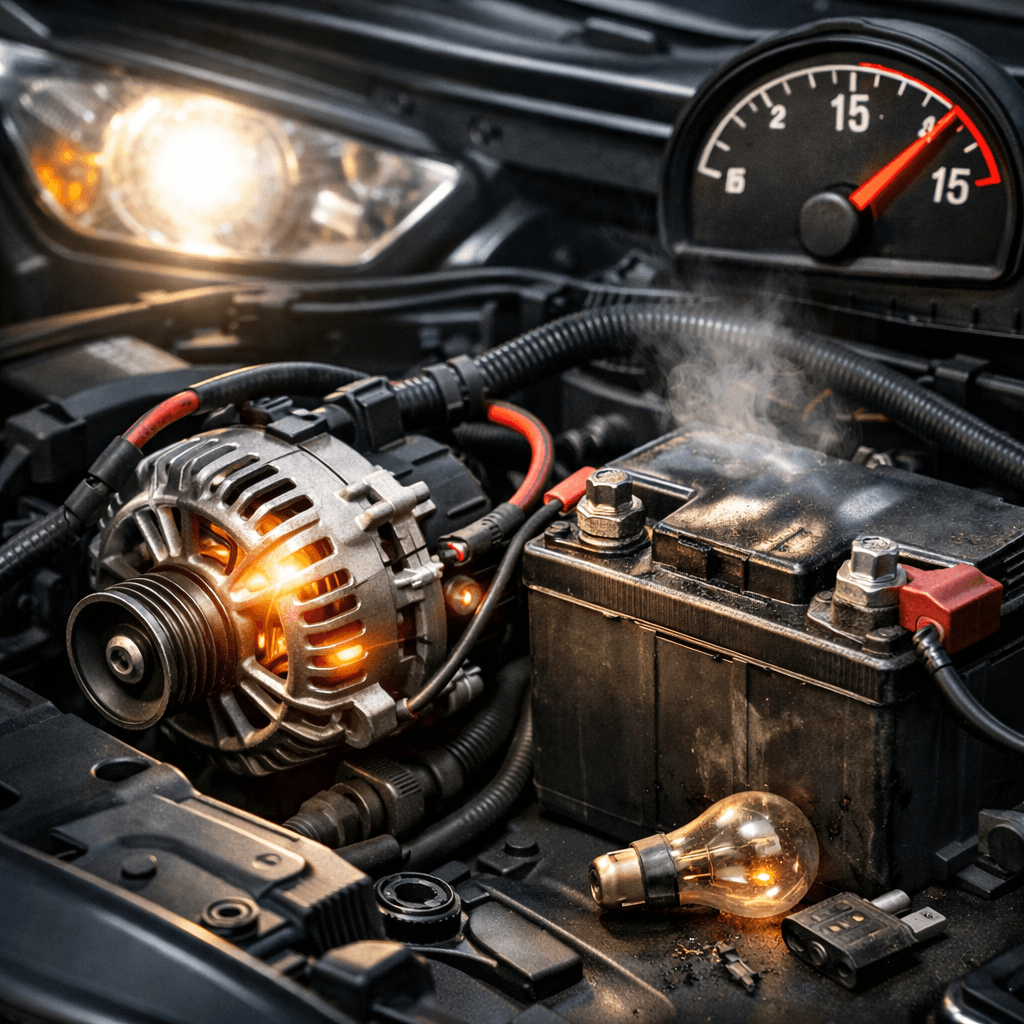
Alternator overcharging happens when your car’s charging voltage rises above 14.8V–15V, usually due to a faulty voltage regulator, wiring issue, or alternator failure. If ignored, it can overheat the battery, damage electronics, and lead to expensive repairs.
What I See in Real Cases (From Experience)
Most cars do not fail suddenly. They give small warnings first.
Headlights look slightly brighter. A bulb burns out earlier than expected. Sometimes there is a faint burning smell near the battery. Nothing feels urgent, so people keep driving.
Then one day, the car refuses to start.
I have personally checked vehicles where voltage was sitting above 15V for days. By that time, the battery was already swollen and electronics were starting to fail.
What Voltage Is Too High for an Alternator?
A healthy charging system stays stable. Here is a realistic range:
| Condition | Voltage |
|---|---|
| Engine off | 12.4V – 12.7V |
| Normal charging | 13.8V – 14.4V |
| Slightly high | 14.5V – 14.8V |
| Alternator overcharging | 15V+ consistently |
A single high reading does not confirm the problem.
If voltage stays high at idle and while driving, that is when it becomes a real issue.
Alternator Overcharging Symptoms (Signs Your Car Voltage Is Too High)
These are the most common signs I see in real diagnostics:
Headlights Too Bright or Flickering
Lights may appear sharper than usual or slightly unstable.
Bulbs Burning Out Frequently
Excess voltage reduces the lifespan of bulbs and small components.
Battery Getting Hot or Swelling
This is a serious warning. The battery is being damaged internally.
Burning Smell Near Battery
Often caused by overheating or internal chemical stress.
Voltage Gauge Reading High
If it stays near or above 15V, it should not be ignored.
Random Electrical Issues
Sensors, indicators, or infotainment systems may behave unpredictably.
In some cases, continued alternator overcharging can weaken the battery to the point where you start facing a car not starting issue, especially after the vehicle has been sitting for a few hours.
What Causes Alternator Overcharging?
Many people replace the alternator immediately, but that is not always correct.
Faulty Voltage Regulator (Most Common)
This controls the output. When it fails, voltage becomes uncontrolled.
Poor Ground Connection
Weak grounding can confuse the system and cause overcharging.
Corroded or Loose Wiring
Even small connection issues can lead to incorrect voltage behavior.
Corrosion on battery terminals and connectors is often overlooked, but using dielectric grease for electrical connections can help prevent moisture buildup and unstable voltage behavior.
Low-Quality Replacement Alternator
Cheap or mismatched parts often produce unstable output.
Battery Problems
A weak battery can make diagnosis confusing.
Alternator Overcharging vs Bad Battery
| Issue | Typical Signs |
|---|---|
| Overcharging alternator | High voltage, bright lights, battery heat |
| Weak battery | Slow starting, low power |
| Poor ground | Random electrical behavior |
Understanding this difference helps avoid unnecessary part replacement.
How to Diagnose Alternator Overcharging (Step-by-Step)
This is the exact process I follow:
- Check battery voltage with engine off (baseline)
- Start engine and observe idle voltage
- Turn on headlights and AC (load test)
- Monitor voltage behavior
A healthy system remains stable.
An overcharging system stays high under all conditions.
Next Step
- Inspect battery terminals
- Check ground connections
- Examine alternator wiring
Many problems are found here without replacing parts.
Advanced Diagnosis (Modern Cars)
Modern vehicles sometimes use ECU-controlled charging.
That means:
- Voltage may vary intentionally
- It is not always fixed
In such cases:
- Live data monitoring is helpful
- Testing while driving gives better clarity
Can You Drive With an Overcharging Alternator?
Technically yes, but it is not recommended.
I have seen cars driven for a few days with this issue, and the battery ended up completely damaged.
In many cases, drivers ignore early warning signs, but this can later turn into a situation where you are trying to figure out why your car will not start at all.
Risks include:
- Battery failure
- Electrical damage
- Sudden breakdown
What Parts Can Be Damaged?
Overcharging does not affect just the battery.
It can damage:
- Battery
- Bulbs
- Fuses and relays
- Sensors
- Control modules
- Aftermarket electronics
Damage often builds slowly, which makes it easy to overlook.
These issues often appear gradually, which is why it is important to understand common engine warning signs you should not ignore before they lead to bigger failures
Cost to Fix Alternator Overcharging
The cost depends on the root cause:
| Fix | Cost Level |
|---|---|
| Voltage regulator replacement | Low |
| Alternator replacement | Medium to High |
| Wiring or grounding repair | Low |
| Battery replacement | Additional |
Delaying repair usually increases total cost.
How to Fix Alternator Overcharging
The correct fix depends on proper diagnosis:
- Replace voltage regulator if faulty
- Replace alternator if regulator is integrated
- Repair wiring or grounding issues
- Replace battery if already damaged
The key is identifying the real cause before replacing parts.
Common Mistakes People Make
These mistakes often make the problem worse:
- Relying on a single voltage reading
- Replacing the alternator without testing
- Ignoring ground connections
- Installing low-quality parts
- Skipping battery testing
What Most Articles Get Wrong
Many guides oversimplify this issue.
- Not every 14.5V reading means failure
- Alternator is not always the root cause
- Wiring and grounding are often ignored
- Diagnosis is treated as too simple
In real-world situations, charging systems require careful inspection.