
Contents
- Blue Smoke from Exhaust? 6 Serious Causes You Should Never Ignore
- Is Blue Smoke from Exhaust Serious
- What Does Blue Smoke from Exhaust Mean
- Most Common Causes of Blue Smoke from Exhaust
- When Blue Smoke Appears and What It Usually Means
- Symptoms That Come with Blue Smoke
- How to Diagnose Blue Smoke Properly
- Repair Cost and Severity
- How to Fix the Problem
- Can You Drive with Blue Smoke
- Real Life Scenarios
- Petrol vs Diesel Difference
- What Blue Smoke Is Not
- When You Should Stop Driving Immediately
- Final Thought
- FAQs
Blue Smoke from Exhaust? 6 Serious Causes You Should Never Ignore
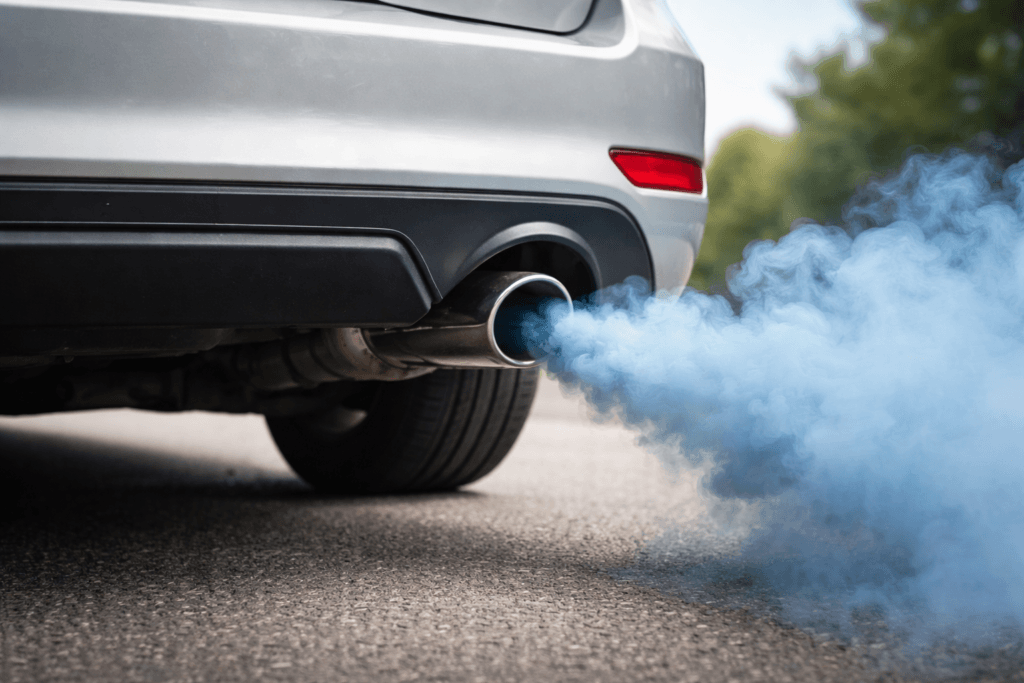
Blue smoke from exhaust almost always means your engine is burning oil. This usually happens when worn piston rings, valve seals, a faulty PCV system, or a leaking turbo allow oil to enter the combustion chamber. If ignored, the issue can slowly turn into serious engine damage and expensive repairs.
Is Blue Smoke from Exhaust Serious
Yes, and in many cases more serious than it looks at first.
A lot of drivers notice a small puff on startup and ignore it. I have seen this many times. At the beginning it feels harmless. The car still drives fine. Nothing feels broken. But after some weeks the oil level starts dropping. Then the engine becomes slightly rough. After that repair cost starts climbing.
What starts as a small issue can quietly move toward major engine wear if left unchecked.
Blue smoke is not just smoke. It is a warning that oil is going where it should not.
What Does Blue Smoke from Exhaust Mean
When blue smoke appears, it means engine oil is entering the combustion chamber and burning with fuel.
Oil is supposed to stay inside the lubrication system. It keeps moving parts protected. When seals wear out or internal clearances increase, oil slips past and gets burned during combustion. That is what produces the blue or blue gray smoke.
Many drivers confuse smoke colors. That leads to wrong diagnosis and wasted money.
Smoke Color Comparison
| Smoke color | Meaning | Key sign |
|---|---|---|
| Blue smoke | Burning oil | Oil loss and burnt smell |
| White smoke | Coolant or steam | Sweet smell |
| Black smoke | Too much fuel | Soot and fuel smell |
Getting the color right is the first step to fixing the problem correctly.
Many drivers confuse blue smoke with white smoke from exhaust, which usually indicates coolant entering the engine instead of oil burning.
If the smoke appears dark instead of blue, it may be related to a rich fuel mixture, which is explained in detail in this guide on black smoke from exhaust.
Most Common Causes of Blue Smoke from Exhaust
There is no single cause. But in real-world cases a few problems show up again and again.
1. Worn Valve Seals
Valve seals control how much oil reaches the valves. When they wear out, oil slowly leaks into the combustion chamber.
Typical pattern:
- Smoke right after startup
- Happens more after long parking
- Disappears after a few seconds
This is very common in older engines. If the smoke is only on startup, valve seals move high on the suspect list.
2. Worn Piston Rings
Piston rings seal the combustion chamber. When they lose tension, oil moves upward and burns with fuel.
Typical pattern:
- Smoke during acceleration
- Continuous smoke under load
- High oil consumption
- Loss of compression
This is a serious issue. In many cases it leads toward engine repair or rebuild.
3. Faulty PCV Valve
The PCV system manages engine pressure and oil vapors.
When it fails:
- Oil vapor enters the intake
- Oil burns inside the engine
- Smoke appears without major engine damage
This is one of the first things I would check. It is simple and often ignored.
4. Turbocharger Seal Failure
Turbo engines add another failure point.
If turbo seals wear:
- Oil leaks into intake or exhaust
- Smoke increases under boost
- Power may drop
If a turbo car suddenly starts blowing thick blue smoke, especially during acceleration, the turbo becomes a strong suspect.
5. General Engine Wear
High mileage engines often develop blue smoke because multiple parts wear together.
It is not always one failure. It is gradual internal wear.
In these cases oil consumption increases slowly and smoke becomes more noticeable over time.
6. Overfilled Oil or Wrong Oil Grade
This one is often missed.
After an oil change:
- Too much oil
- Wrong viscosity
- Poor quality oil
can lead to oil entering places it should not.
If smoke starts right after service, always check oil level first.If you are noticing white smoke along with coolant loss, check this guide on coolant disappearing no leak to understand possible internal leaks.
When Blue Smoke Appears and What It Usually Means
Timing gives the best clues. This is where most people guess wrong.
Diagnosis Table
| Smoke timing | Likely cause | Explanation |
|---|---|---|
| On startup | Valve seals | Oil leaks overnight |
| During acceleration | Piston rings or turbo | Load pushes oil inside |
| During deceleration | Valve seals or guides | Vacuum pulls oil |
| At idle | PCV or wear | Poor oil control |
| All the time | Serious engine wear | Advanced damage |
Watching when the smoke appears can save hours of wrong diagnosis.
Symptoms That Come with Blue Smoke
Blue smoke rarely comes alone. Look for these signs:
- Oil level dropping without visible leak
- Burnt oil smell from exhaust
- Rough idle
- Weak acceleration
- Oily or fouled spark plugs
- Misfire in some cases
- Oil traces in intake pipes
- Reduced turbo performance
In some cases, severe oil burning can trigger a check engine light flashing, especially if misfires start.
Symptoms vs Cause
| Symptom | Possible cause |
|---|---|
| Startup smoke | Valve seals |
| Acceleration smoke | Rings or turbo |
| Oil loss | Rings or PCV |
| Rough idle | PCV or wear |
| Power loss | Turbo or compression issue |
How to Diagnose Blue Smoke Properly
Do not guess. Follow a simple order like a mechanic would.
Step 1: Observe smoke timing
Startup, acceleration, idle, or constant.
Step 2: Check engine oil level
If oil keeps dropping, it confirms internal consumption.
Step 3: Inspect spark plugs
Oily deposits usually mean oil is entering the chamber.
Step 4: Check PCV valve
Cheap and quick to replace. Always test early.
Step 5: Inspect turbo system
Look for oil in pipes or excessive shaft play.
Step 6: Perform compression test
Low compression points toward worn rings or cylinders.
Step 7: Leak-down test
Helps confirm exactly where pressure is escaping.
Step 8: Scan for error codes
Supports the overall diagnosis.
The goal is simple. Do not jump to expensive repairs without ruling out simple causes first.
Repair Cost and Severity
| Cause | Difficulty | Cost level |
|---|---|---|
| PCV valve | Easy | Low |
| Valve seals | Medium | Medium |
| Turbo repair | Hard | High |
| Piston rings | Very hard | Very high |
Severity Table
| Severity | Risk | Action |
|---|---|---|
| Low | Light smoke | Monitor and diagnose |
| Medium | Regular smoke | Repair soon |
| High | Constant smoke | Immediate action |
How to Fix the Problem
Fix always depends on the cause.
- Valve seals → replace seals
- Piston rings → engine repair
- PCV valve → replace valve
- Turbo → repair or replace
- Severe wear → engine rebuild
One important thing. Thicker oil or additives may reduce smoke for a short time. They do not fix the real problem.
Can You Drive with Blue Smoke
Short answer is no, not for long.
Driving Safety
| Situation | Safe to drive |
|---|---|
| Light startup smoke | Short distance |
| Occasional smoke | Limited driving |
| Heavy constant smoke | Not safe |
| Oil dropping fast | Stop immediately |
If oil level keeps dropping, driving further can damage the engine badly.
Real Life Scenarios
This is what actually happens in real cases.
Morning startup smoke
Most likely valve seals. Very common.
Smoke during acceleration
Often piston rings or turbo problem.
Turbo diesel car smoking
Turbo seal failure becomes a strong suspect.
Smoke after oil change
Check oil level and viscosity first.
High mileage engine
Usually multiple wear issues together.
Petrol vs Diesel Difference
Both engine types can produce blue smoke.
- Petrol engines → valve seals and piston rings more common
- Diesel engines → turbo related issues more common
But the meaning stays the same. Oil is burning.
What Blue Smoke Is Not
Do not confuse it with:
- White condensation on cold mornings
- Coolant steam
- Black fuel smoke
Blue smoke always points toward oil burning.
When You Should Stop Driving Immediately
Stop the car if you notice:
- Thick continuous blue smoke
- Oil warning light
- Rapid oil loss
- Engine misfire
- Sudden power drop
- Turbo noise with smoke
At this point delay can turn a repair into full engine damage.
Final Thought
Blue smoke is one of those problems that starts small and grows quietly.
At first it looks like nothing. Just a little smoke. Then oil level drops. Then performance changes. After that the repair becomes expensive.
The best approach is simple. Observe the pattern. Check the basics. Diagnose early.
That is how you keep a small issue from turning into a major one.
FAQs
Does blue smoke always mean piston rings are bad
No. Valve seals, PCV issues, and turbo problems can also cause it.
Why does blue smoke appear only on startup
Usually because oil leaks into the cylinder while the engine is off.
Can a PCV valve cause this problem
Yes. It is one of the most common and cheapest fixes.
Is it expensive to repair
It depends on the cause. Some fixes are cheap, others require engine work.
Can this problem be ignored
No. It usually gets worse and more expensive over time.