
Contents
- Car Squeaks When Reversing: 9 Real Causes, Easy Fixes, and When to Worry
- Quick Answer: Why does a car squeak when reversing?
- Why Your Car Squeaks ONLY When Reversing
- Most common causes of a car squeaking when reversing
- What the sound tells you (very important)
- Quick diagnosis table
- The key question: braking or not?
- Is it safe to drive?
- How to check it yourself
- What actually fixes the problem
- Repair cost (realistic idea)
- How to prevent it
- Final takeaway
- Faqs
Car Squeaks When Reversing: 9 Real Causes, Easy Fixes, and When to Worry
If your car squeaks when reversing, most of the time it is not something dangerous. But here is the part people ignore… in some cases, it is the first warning sign of brake wear or a hidden issue starting to develop.
I have seen this many times while checking cars. A driver hears a small squeak in reverse, ignores it for weeks, then suddenly it turns into grinding. At that point, the repair cost jumps fast. The good thing is simple — most reverse squeaks are easy to understand if you pay attention to when and how the sound happens.
Let us break it down properly so you do not guess and waste money.
Quick Answer: Why does a car squeak when reversing?
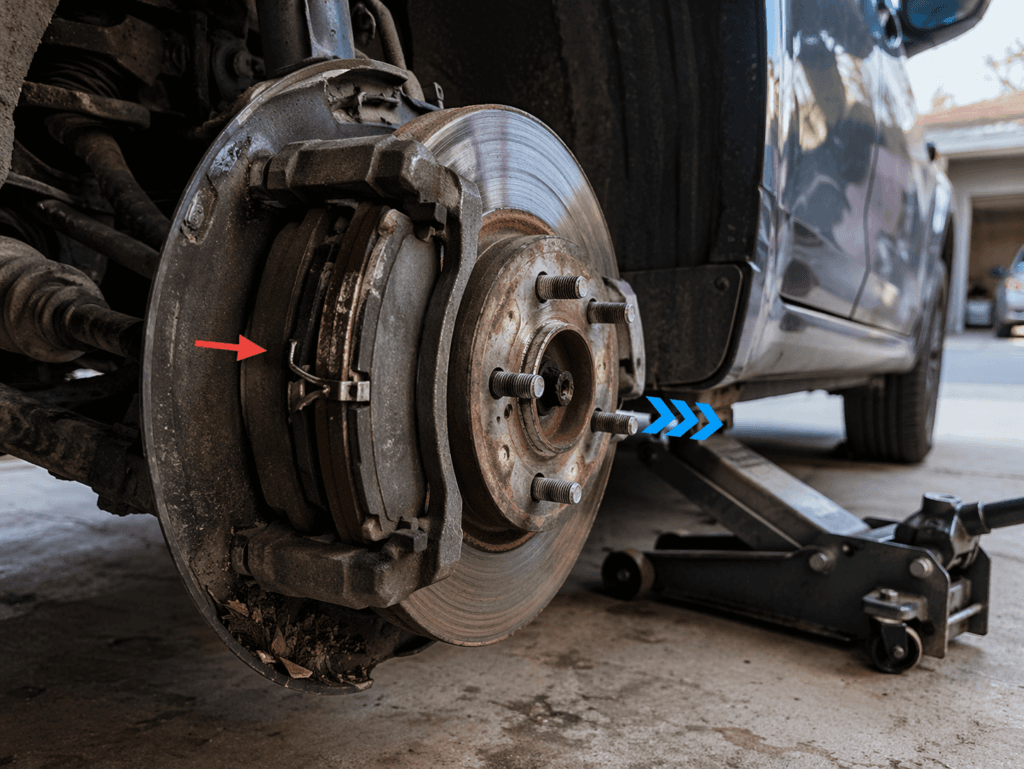
A car usually squeaks when reversing because the brake pads touch the rotor differently in reverse. This can highlight worn pads, light rust, brake dust, or dry hardware.
If the noise happens without braking, it is more likely coming from a backing plate, suspension part, or parking brake issue.
Why Your Car Squeaks ONLY When Reversing
Reverse is slow, quiet, and controlled. That alone makes small noises stand out. But there is a more technical reason behind it.
When the wheel rotates backward, the brake pad contact angle changes slightly, and the force is applied differently compared to forward motion. Because of this, even a pad that feels completely normal while driving forward can start making a squeak or chirp in reverse.
In real workshop cases, this noise often appears due to pad edge wear or slight rotor surface differences that only become noticeable when the direction changes.
Also, after the car sits overnight, a thin rust layer forms on the rotor. The first reverse movement cleans it. That short squeak you hear in the morning is very common and usually temporary.
Most common causes of a car squeaking when reversing
1. Worn brake pads
This is the most common cause.
When pads get thin, the wear indicator touches the rotor and creates a sharp squeak. Many times, it shows up first in reverse.
Real case insight:
In most cars I inspect with reverse squeaks, around 60 to 70 percent have worn pads.
2. Light rust on brake rotors
If the car was parked overnight or after rain, a thin rust layer forms.
The first few movements in reverse can produce a squeak, then it disappears.
3. Brake dust or small debris
Dust builds up over time. Sometimes a small stone gets stuck near the rotor or backing plate.
This creates a light squeak that can sound worse than it actually is.
4. Glazed brake pads
Overheating can make the pad surface smooth and hard.
That reduces grip and creates vibration, which leads to squeaking, especially at low speed.
5. Dry brake hardware or poor installation
Slide pins, clips, and contact points need proper lubrication.
If they are dry or installed incorrectly, pads move unevenly and create noise.
If your squeak started after a brake job, check this first.
6. Backing plate touching the rotor
The backing plate can bend slightly and touch the rotor.
This often causes squeaking even without pressing the brake
7. Parking brake drag
Rear brake systems sometimes do not fully release.
This can create noise while reversing, especially from the rear.
8. Suspension bushings or dry joints
Not every squeak is brake-related.
A dry bushing can make noise when the car shifts weight in reverse, especially while turning.
9. Wheel bearing or hub issue
Less common but possible.
Usually starts as humming, but early wear can sometimes sound like a squeak.
What the sound tells you (very important)
This is where most people go wrong. They hear noise but do not interpret it.
- High sharp squeak → brake pads or dust
- Short chirp → rust or light contact
- Metal scraping → worn pads (urgent)
- Squeak while turning → suspension or steering load
- Constant squeak without braking → backing plate or debris
This alone can save you time and wrong repairs.
If the noise also happens while moving slowly forward, it is worth checking our guide on [brake noise at low speed].
Quick diagnosis table
| Situation | Most Likely Cause | What to Do |
|---|---|---|
| Only when braking in reverse | Worn pads or rotor issue | Check brake pads |
| Without braking | Backing plate or debris | Inspect wheel area |
| Morning only | Rust on rotor | Usually normal |
| While turning | Suspension or steering | Inspect joints |
| Noise from rear | Parking brake or rear pads | Check rear brakes |
The key question: braking or not?
If it squeaks only when braking
Focus on:
- brake pads
- rotor surface
- brake hardware
This is a classic brake-related case.
If it squeaks without touching the brake
Think beyond brakes:
- backing plate rubbing
- debris stuck
- parking brake drag
- suspension bushings
This is where many people misdiagnose the issue.
If it happens only in the morning
Most likely:
- moisture
- light rust
If it disappears quickly, it is usually not serious.
If it happens while turning in reverse
Check:
- suspension load
- steering components
- front-end joints
If you also notice the sound when the wheel is turned without moving much, read our guide on [noise when turning steering wheel while stationary].
Is it safe to drive?
Usually safe
- noise disappears quickly
- no vibration
- braking feels normal
Needs inspection soon
- happens daily
- getting louder
- started after repair
Not safe
- grinding sound
- weak braking
- burning smell
- vibration or pulling
At this stage, do not delay.If the noise comes with a warning light or unusual braking feel, check our guide on [ABS warning light causes and meaning].
How to check it yourself
- Listen carefully — front or rear
- Test braking vs coasting
- Think about timing (rain or overnight)
- Look through the wheel
- Check recent brake work
What actually fixes the problem
- Replace worn brake pads
- Clean brake system
- Resurface or replace rotors
- Lubricate hardware properly
- Fix backing plate contact
- Repair parking brake
- Replace worn suspension parts
Repair cost (realistic idea)
- Brake pads: $100 to $300
- Pads and rotors: $300 to $700
- Brake cleaning: low cost
- Wheel bearing: $200 to $600
- Suspension repair: higher
Early diagnosis always saves money.
How to prevent it
- check brakes regularly
- use good quality parts
- do not ignore early noise
- ensure proper installation
- inspect after long parking
Final takeaway
If your car squeaks when reversing, brakes are usually the main cause, but not always the only one.
The smartest approach is simple:
match the sound with the situation
If the noise changes, gets louder, or does not disappear after a few drives, do not ignore it. Small squeaks are often early warnings, and catching them early can save you from bigger and more expensive repairs later.