

Contents
- Engine Overheating Causes, Symptoms & How to Fix Them
- introduction
- How Car Cooling Systems Work
- Top Causes of Engine Overheating
- Engine Overheating Diagnosis Based on Symptoms
- Low Coolant Level or Coolant Leaks
- Faulty Water Pump or Broken Drive Belt
- Bad Thermostat
- Radiator or Radiator Cap Problems
- Cooling Fan or Electrical Faults
- Clogged Exhaust or Engine Blockage
- Low Engine Oil
- Blown Head Gasket or Internal Damage
- Heavy Loads, Heat, Traffic
- Real-Life Overheating Scenarios
- Warning Signs of an Overheating Engine
- What to Do if Your Engine Overheats
- Preventing Engine Overheating
- Why an Engine Can Overheat Even When Coolant Is Full
- Quick Troubleshooting Summary
- FAQs About Engine Overheating
- Final Thoughts
Engine Overheating Causes, Symptoms & How to Fix Them
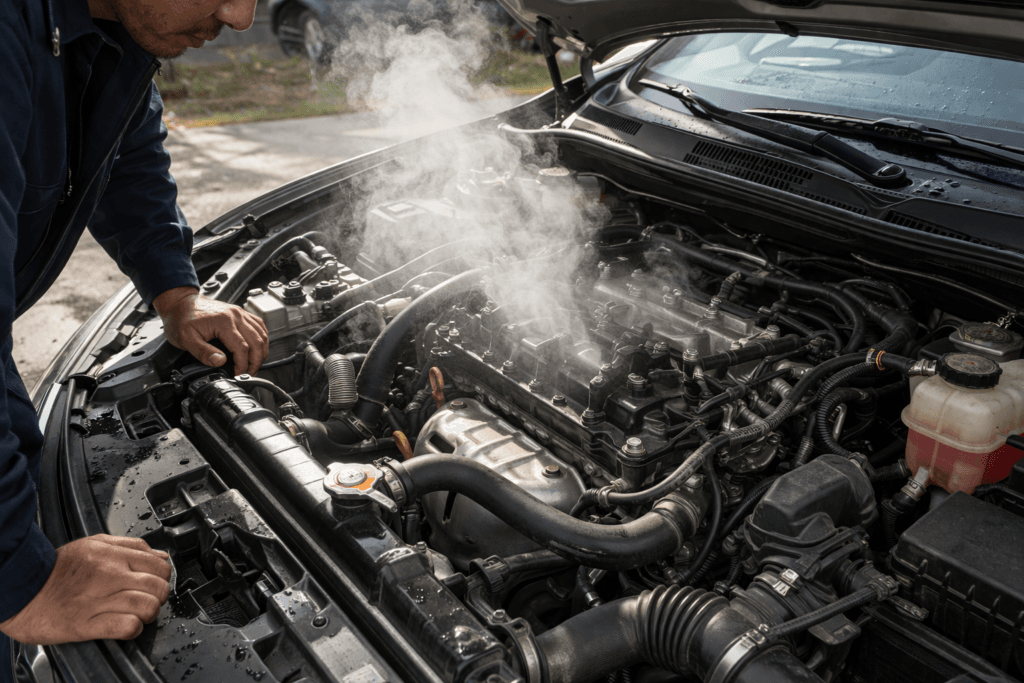
If an engine starts overheating, it usually comes down to one simple thing… heat is not getting managed properly. Most of the time it is low coolant, weak circulation, or some part of the cooling system not doing its job. A stuck thermostat, bad fan, worn water pump, or even internal engine trouble like a head gasket issue can all be behind it. And honestly, if temperature keeps climbing, it is not something to “wait and see”… it only gets worse.
Learn more about car overheating at idle.
introduction
You open the hood thinking everything is fine. Then you notice the temperature gauge creeping higher than usual. Not a great feeling.
Engines run hot by design. Around 195°F to 220°F is normal, nothing scary there. But once it crosses that line… things start going sideways. Warning lights show up. Steam maybe. And suddenly it is not a “small issue” anymore.
A lot of people assume overheating = low coolant. Fair enough, that is common. But that is also where many get it wrong. Because I have seen cars overheat with a full reservoir sitting right there. Confusing, right?
Thing is, overheating is rarely about just one cause. It could be a stuck thermostat, weak radiator cap, fan not kicking in, clogged radiator, failing water pump, even low oil. Sometimes it is something weird like a blocked exhaust. Most articles just scratch the surface and move on… which does not really help anyone.
So instead of that, let us actually break it down properly. Not just what causes it, but how it happens, how to read the signs, and what you should actually do about it.
How Car Cooling Systems Work
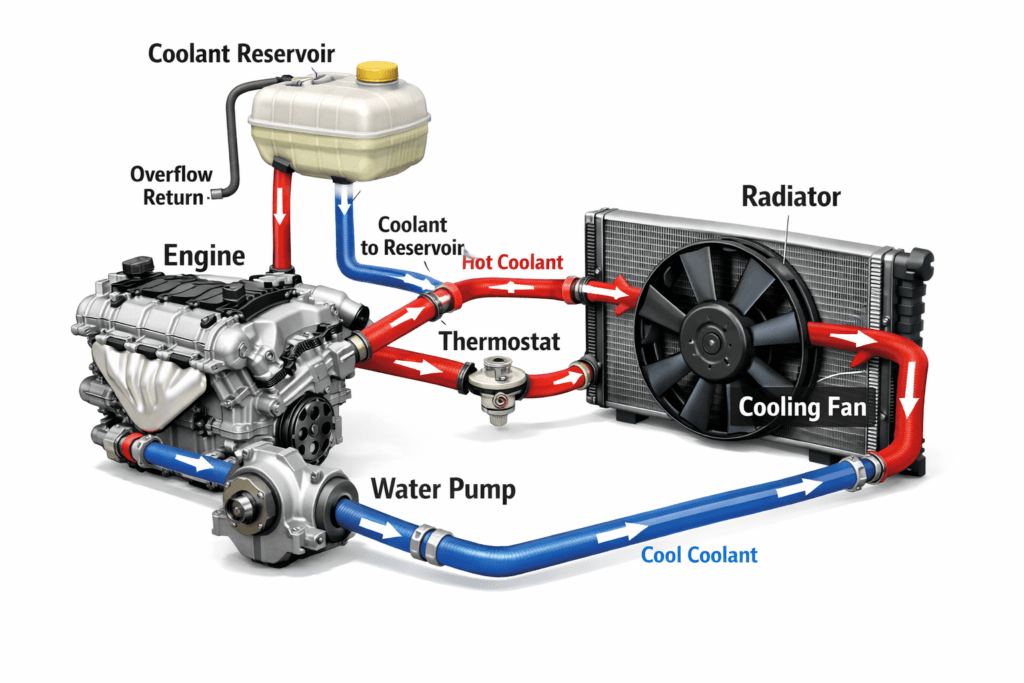
Alright, quick reality check. Engines produce a ridiculous amount of heat. Like… more than most people realize.
Every combustion cycle creates energy, yes, but also a lot of temperature. Without control, metal expands, oil breaks down, and parts start wearing out way faster than they should.
That is where the cooling system comes in.
Coolant flows through the engine, picking up heat along the way. Then it heads to the radiator, where that heat gets dumped into the air. The water pump keeps everything moving. The thermostat acts like a gate — opening and closing depending on temperature.
When the engine is cold, thermostat stays shut. Helps the engine warm up faster. Once it reaches operating temp, it opens and lets coolant circulate fully.
Now here is the part many overlook — the fan.
When you are driving fast, air naturally passes through the radiator. No problem. But sitting in traffic? Idling? That fan becomes critical. If it does not turn on… temperature climbs. Fast.
Also, coolant itself matters. The usual mix is 50/50 water and coolant. Mess that up, or let it get old and dirty, and cooling efficiency drops. Not immediately obvious, but it adds up.
And just because the reservoir looks full does not mean everything is fine. You could still have poor flow, pressure issues, air pockets, or a thermostat not opening properly. Seen that more times than I can count.
Top Causes of Engine Overheating
Overheating usually comes from three areas — cooling system problems, engine-related issues, or just harsh driving conditions pushing things too far.
But here is where it gets interesting…
Engine Overheating Diagnosis Based on Symptoms
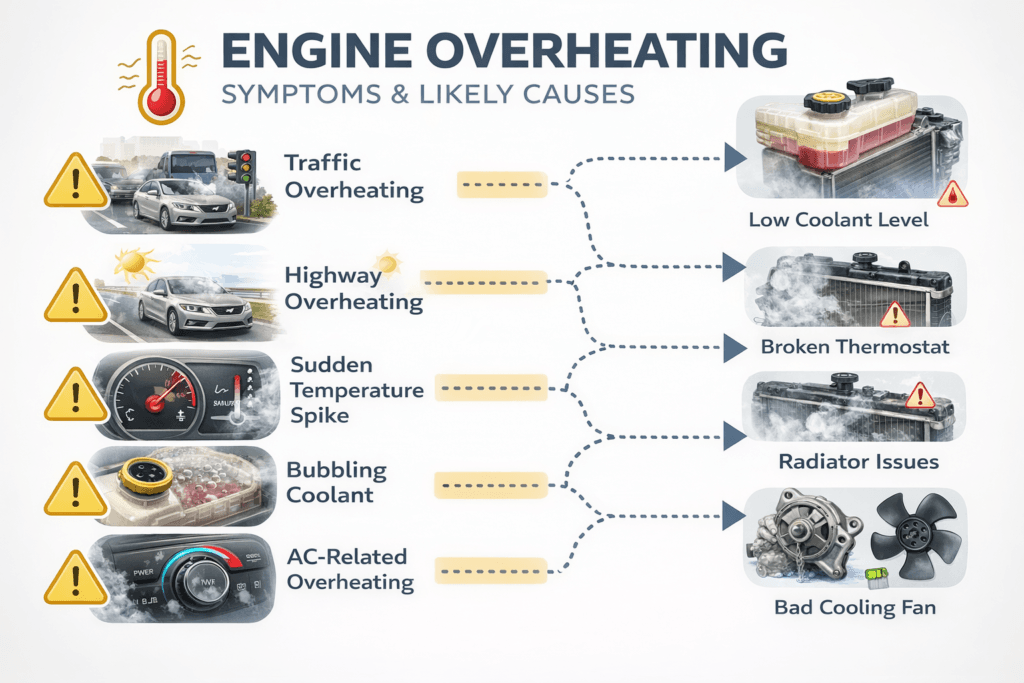
Not all overheating feels the same. And honestly, the pattern tells you a lot more than people think.
| Symptom | Likely Cause |
| Overheats in traffic but fine on highway | Fan not working |
| Overheats at higher speeds | Radiator or flow issue |
| Sudden temp spike | Thermostat stuck |
| Bubbling coolant | Head gasket or air trapped |
| Gradual temp rise | Coolant leak or low level |
| Worse with AC on | Cooling system struggling |
Most people just check coolant and stop there. Big mistake. The behavior of the problem usually points straight to the cause… if you pay attention.
Low Coolant Level or Coolant Leaks
Still the most common one. No surprise.
Coolant carries heat away. If it drops too low, there is just not enough to do the job. Temperature rises, and keeps rising.
Leaks can come from anywhere — hoses, radiator, pump, heater core, even the cap area. Some are obvious, leaving puddles. Others… not so much. Just a smell, or level slowly dropping over days.
Topping it off might help for a bit. But if there is a leak, it is coming back. Always does.
Faulty Water Pump or Broken Drive Belt
Water pump keeps coolant moving. No movement = no cooling. Simple as that.
If it fails, temperature climbs quickly. Sometimes suddenly, which catches people off guard.
You might hear noises, see leaks near the front of the engine, or notice overheating right after a belt issue. Not something to delay fixing.
Bad Thermostat
This little part causes a lot of trouble.
If it sticks closed, coolant cannot circulate. Heat gets trapped. Engine heats up fast.
Sometimes you will see temperature jumping up and down. Other times, heater inside the car does not feel right. Strange combo, but it happens.
Radiator or Radiator Cap Problems
Radiators can clog over time. Rust, debris, old coolant buildup… it all reduces efficiency.
And the cap? People ignore it. But it controls pressure, which affects boiling point. Weak cap means coolant can boil earlier than it should.
Ever seen a car overheat in traffic but behave okay on highway? Yeah, this is often why.
Cooling Fan or Electrical Faults
If overheating happens mostly when stopped or moving slowly, check the fan.
It could be the motor, fuse, relay, wiring… even a sensor issue. Not always mechanical. Electrical faults are more common than people think.
Pattern is obvious — fine at speed, overheating at idle.
Clogged Exhaust or Engine Blockage
Not talked about enough.
Blocked exhaust creates back pressure. Engine works harder. Heat builds up.
You might notice power loss, sluggish acceleration, maybe even a rattling sound. Subtle at first, then worse.
Low Engine Oil
Oil is not just lubrication. It also helps with heat control.
Low or dirty oil increases friction. More friction = more heat. Combine that with other issues, and overheating becomes more likely.
Blown Head Gasket or Internal Damage
This one is serious.
A blown head gasket can push gases into the cooling system or let coolant leak internally. Result? Constant overheating, no matter what you fix.
White smoke, bubbling coolant, milky oil… these are not good signs.
Heavy Loads, Heat, Traffic
Sometimes nothing is “broken”… but everything is just slightly weak.
Hot weather, traffic jams, uphill driving, towing — all push the cooling system harder. If anything is already borderline, this is where it shows up.
Real-Life Overheating Scenarios
This part confuses people a lot.
- Only overheats in traffic → fan issue
- Overheats on highway → radiator or flow problem
- Overheats with AC → system under pressure
- Overheats uphill → engine load too high
- Overheats after coolant refill → air trapped
Patterns matter. More than most guides admit.
Warning Signs of an Overheating Engine
Usually, the car gives you hints before things get bad.
- Temperature gauge rising
- Warning light showing up
- Steam under the hood
- Sweet coolant smell
- Engine sounding rough
- Power dropping
Ignoring these… not a great idea.
What to Do if Your Engine Overheats
First thing — stop the car. Safely.
Turn the engine off. Let it cool. Do not rush this part.
And please… do not open the radiator cap while it is hot. That can go wrong quickly.
Once cooled, check coolant level, look for leaks. If temperature spikes again quickly, do not keep driving. It is not worth the risk.
Preventing Engine Overheating
Most overheating issues build up slowly.
Regular checks help a lot:
- monitor coolant level
- inspect hoses
- flush coolant on time
- check fan operation
- keep oil fresh
- avoid pushing the car too hard in extreme heat
Basic stuff, but often ignored.
Why an Engine Can Overheat Even When Coolant Is Full
This throws people off.
Full coolant does not mean proper cooling.
It could be flow issues, pressure problems, trapped air, or internal faults. Thermostat, pump, radiator, fan, even head gasket — all still in play.
So yeah… “coolant is full” does not mean problem solved.
Quick Troubleshooting Summary
If you just want the short version:
- Low coolant → check for leaks
- Fan not running → electrical issue
- Sudden spike → thermostat
- Bubbling coolant → possible head gasket
- Overheats at idle → airflow problem
- Overheats at speed → radiator or circulation issue
FAQs About Engine Overheating
(kept same meaning, structure natural)
What is the most common cause?
Usually low coolant, often due to leaks or neglect.
Why overheating with full coolant?
Because flow, pressure, or internal issues can still fail.
Can low oil cause overheating?
Yes, it increases friction and heat.
Can a bad radiator cap cause it?
Yes, pressure loss affects boiling point.
Is it safe to drive?
Not really. Even short drives can cause damage.
How long to wait before checking?
At least around thirty minutes. More if needed.
Final Thoughts
Engine overheating is not something to brush off.
Sometimes it is small. Sometimes it turns expensive very quickly. That is the tricky part.
Better approach?
Pay attention early. Understand the pattern. Fix the actual cause, not just the symptom.
Because once overheating starts becoming “normal”… it usually means something is already going wrong under the surface.
Pingback: Car Overheating At Idle? 9 Causes, Warning Signs & Fixes -