

Contents
- What Causes Bubbles in Coolant Reservoir? (Normal vs Serious + Fix Guide)
- Quick Answer
- Quick Causes of Coolant Bubbling
- Is It Normal to See Bubbles in the Coolant Reservoir?
- What Do Bubbles in Coolant Reservoir Actually Mean?
- Types of Bubbles in Coolant Reservoir
- Comparison Table
- Main Causes of Bubbles in Coolant Reservoir
- How to Diagnose the Exact Cause
- Bubbles But No Overheating – Should You Worry?
- Why Do Bubbles Appear Only When Engine Is Running?
- When Should You Stop Driving Immediately?
- Can You Drive With Bubbles in Coolant Reservoir?
- How to Fix Bubbles in Coolant Reservoir
- Repair Cost Breakdown
- Quick Diagnosis Table
- FAQs
- Why is my coolant reservoir bubbling but the engine is not overheating?
- What is the difference between air bubbles and combustion gas bubbles in coolant?
- Why do bubbles increase when I accelerate the car?
- Can a faulty radiator cap really cause bubbling in coolant?
- How long should bubbles last after a coolant refill?
- What are early warning signs of head gasket failure in coolant?
- Can low coolant level cause bubbling even without leaks?
- Is bubbling coolant worse when the engine is cold or hot?
- Can a bad thermostat cause coolant to bubble?
- How can I confirm if bubbles are from a head gasket problem?
What Causes Bubbles in Coolant Reservoir? (Normal vs Serious + Fix Guide)
You pop the hood. Everything looks fine… almost. Then you notice it — bubbles in the coolant reservoir. Small at first. Easy to ignore. But then they keep showing up.
Now you are stuck thinking… is this normal, or is something quietly going wrong?
Honestly, it can be both.
Sometimes it is just trapped air working its way out after a refill. No big deal. Other times… it is the kind of early sign people ignore and later regret. I have seen that happen more than once.
Most of the time, it comes down to three things. Air. Heat. Or gases that should never be there.
Quick Answer
Bubbles in a coolant reservoir usually happen because of trapped air, overheating, or combustion gases entering the cooling system. Small bubbles after a refill are normal. Continuous bubbling is not.
If it keeps happening, something is off. Simple as that.
Quick Causes of Coolant Bubbling
Air trapped after coolant refill
Coolant overheating or boiling
Combustion gases from head gasket issue
Radiator cap not holding pressure
Is It Normal to See Bubbles in the Coolant Reservoir?
Short answer… sometimes.
If you just topped up coolant or had some work done, air can get stuck inside. As the engine warms up, that air slowly escapes. You see a few bubbles. Then fewer. Then nothing. That is fine.
But when bubbling sticks around, that is where things change.
If it shows up when the engine is cold… or keeps going at idle… or coolant level starts dropping — yeah, that is not normal anymore.
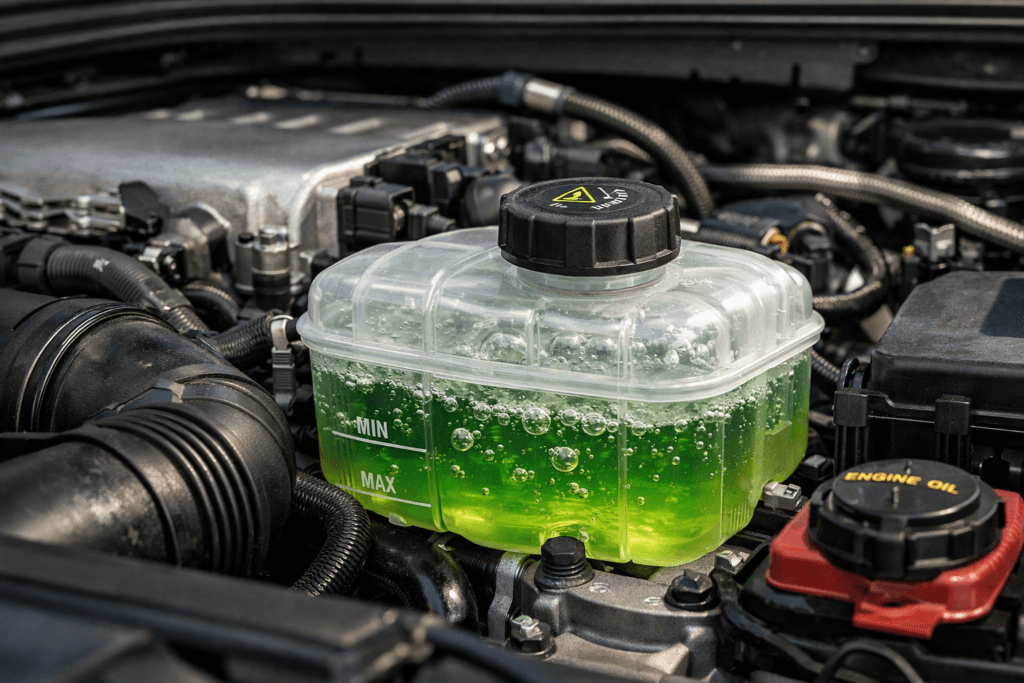
Here is a quick way to look at it:
SituationNormal or NotWhat It MeansAfter refillNormalAir escapingWarm-up phaseNormalCoolant movingConstant bubblingNot normalPressure issueBubbles when coldNot normalInternal leakCoolant lossSeriousSystem problemOverheating + bubblesCriticalCoolant boiling
What Do Bubbles in Coolant Reservoir Actually Mean?
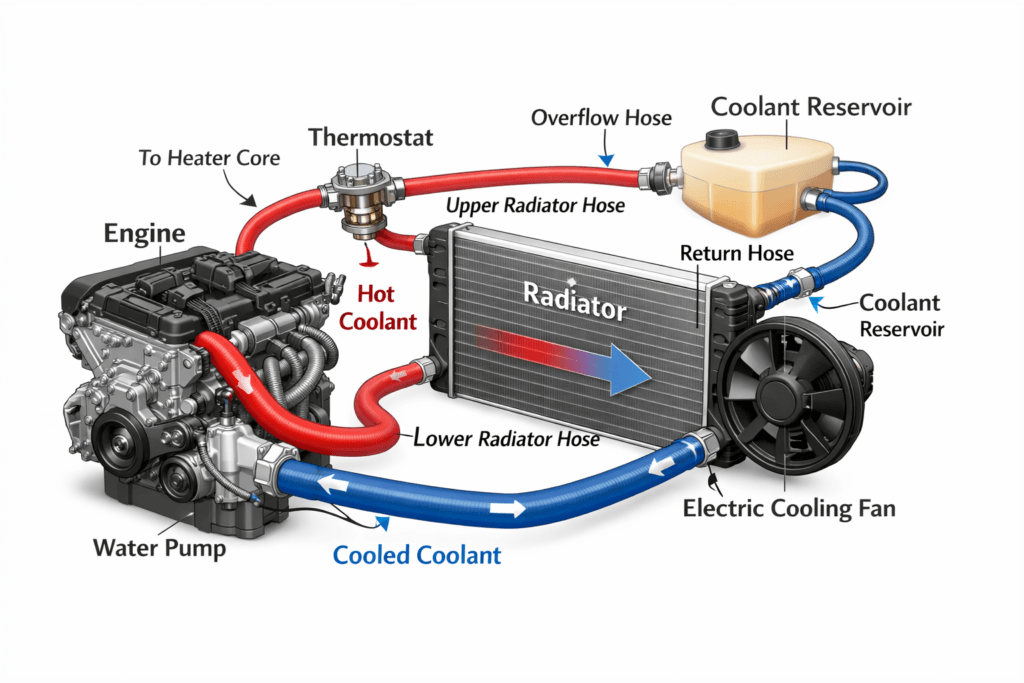
Let me explain it without making it complicated.
The cooling system is sealed and pressurized. That pressure helps the coolant handle heat without boiling too early. Everything works in balance.
Now when bubbles appear… that balance is disturbed.
Either air got in. Or temperature got too high. Or gases forced their way into the system.
And here is the important part — they do not behave the same.
Air bubbles come and go.
Steam bubbles show up with heat.
Gas bubbles… they just keep coming.
That last one is the one you really do not want.To understand this better, it helps to know the main car cooling system parts and how they work together.
Types of Bubbles in Coolant Reservoir
Trapped Air Bubbles (Usually Fine)
These show up after coolant work. Maybe a hose change or radiator service. Nothing unusual.
They look random. They reduce over time. Heater might act weird for a bit. Then everything settles.
If they disappear, you are good.
Boiling Coolant (Overheating Issue)
This is where things start getting serious.
Coolant should not boil in a healthy system. But if pressure drops or temperature rises too much, it can happen.
You might notice:
temperature going up
coolant pushing out
that hot smell
Not something to ignore.
Combustion Gas Bubbles (Serious Problem)
This one… yeah, this is the expensive one.
If gases from the engine enter the cooling system, usually due to a head gasket issue, bubbling becomes constant.
You may also see:
white smoke
coolant disappearing
pressure building fast
At that point, the problem is not small anymore.
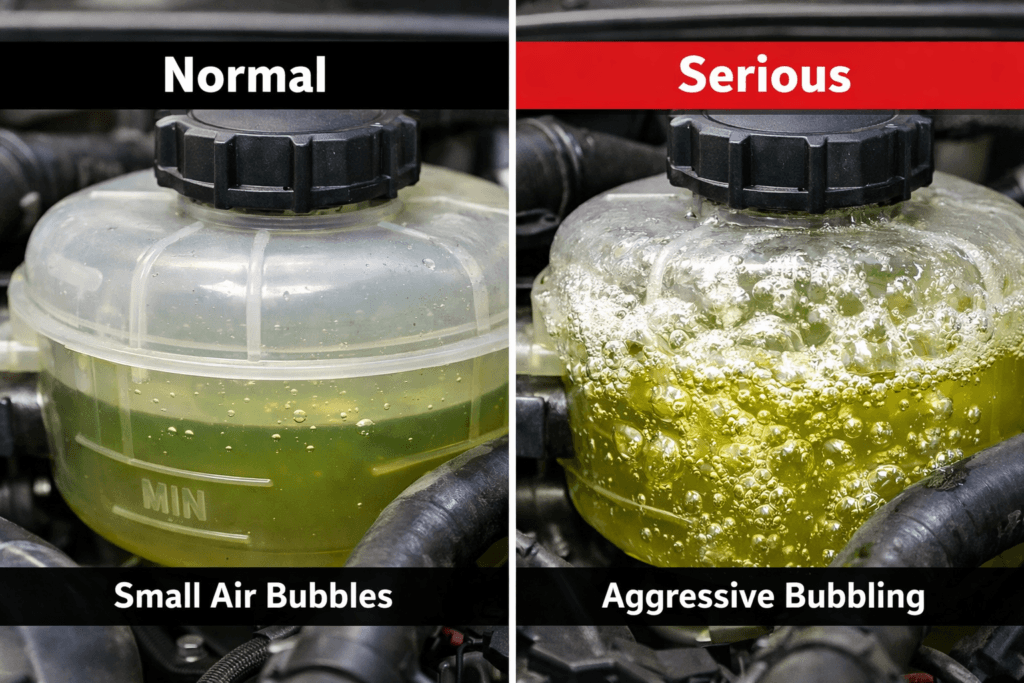
Comparison Table
| Type | Cause | Behavior | Severity |
|---|---|---|---|
| Air bubbles | Trapped air | Temporary | Low |
| Steam bubbles | Overheating | Heat related | Medium |
| Gas bubbles | Engine issue | Continuous | High |
Main Causes of Bubbles in Coolant Reservoir
Let us keep it simple.
Air pockets from improper bleeding. Easy fix.
Head gasket issues. Not easy. Not cheap.
Radiator cap failure. Very common. Often ignored.
Low coolant. Creates air gaps.
Thermostat problems. Blocks flow.
Water pump issues. Poor circulation.
Cracks in engine parts. Rare but serious.
Old coolant. Less effective.
From what I have seen, that radiator cap… people forget about it way too often.
How to Diagnose the Exact Cause
Do not jump to worst-case right away.
Start with when it began.
Right after coolant work? Probably air.
Shows up even when cold? That needs attention.
Let the engine idle. Watch the reservoir. If bubbling does not stop, that is not normal.
Check coolant level. If it keeps dropping, something is leaking.
Also check heater performance. Sounds random, but it helps. If it blows cold sometimes, there might be air inside.
And the radiator cap — check that too. Small part, big role.
If needed, go further:
pressure test
cap test
combustion gas test
That is how you get real answers.
Bubbles But No Overheating – Should You Worry?
Honestly… yes.
Just because temperature looks fine does not mean everything is fine.
Sometimes problems start quietly. Air pockets. Weak cap. Early gasket issues. All of these can show bubbling before overheating begins.
Ignoring this stage is where people usually mess up.
Why Do Bubbles Appear Only When Engine Is Running?
Makes sense when you think about it.
When the engine runs, pressure builds and coolant moves. If there is any weakness in the system, gases get pushed in at that moment.
That is why you see bubbling only when the engine is running.
Not random. There is always a reason.
When Should You Stop Driving Immediately?
No second thoughts here.
If you see overheating, white smoke, fast coolant loss, or engine misfire — stop.
Driving further can make things much worse. Much more expensive too.
And yeah… never open the coolant cap when hot. People still do it. Not a good idea.
Can You Drive With Bubbles in Coolant Reservoir?
If it is just trapped air after a refill, short driving is usually fine.
Anything beyond that… I would not risk it.
Continuous bubbling means something is wrong. Driving like that can turn a small issue into a big one pretty fast.
How to Fix Bubbles in Coolant Reservoir
Start simple.
Bleed the system properly.
Replace the radiator cap. Cheap and effective.
Fix leaks if any.
Replace thermostat if needed.
And if it is a head gasket… that is a bigger repair.
Repair Cost Breakdown
| Problem | Cost | Difficulty |
|---|---|---|
| Radiator cap | Low | Easy |
| Coolant bleeding | Low | Easy |
| Leak repair | Medium | Moderate |
| Thermostat | Medium | Moderate |
| Water pump | Medium-High | Hard |
| Head gasket | High | Very Hard |
Quick Diagnosis Table
| Symptom | Cause | Serious Level | Action |
|---|---|---|---|
| After refill bubbling | Air | Low | Bleed system |
| Constant bubbling | Gas issue | High | Test engine |
| Overheating + bubbles | Boiling | High | Stop driving |
| No overheating | Cap or air | Medium | Inspect |
| White smoke | Head gasket | Very High | Repair |
FAQs
Why is my coolant reservoir bubbling but the engine is not overheating?
Usually because of trapped air or a weak radiator cap. It can also be an early sign of a head gasket issue. If bubbling stays constant, the system should be checked.
What is the difference between air bubbles and combustion gas bubbles in coolant?
Air bubbles are temporary and often appear after a refill or small leak. Combustion gas bubbles keep coming, even at idle, and usually mean a serious internal engine problem.
Why do bubbles increase when I accelerate the car?
Because engine pressure rises when you accelerate. If there is a gasket leak or crack, more gas gets pushed into the cooling system, so bubbling increases.
Can a faulty radiator cap really cause bubbling in coolant?
Yes. The radiator cap holds pressure in the system. If it fails, coolant can boil sooner and cause bubbling.
How long should bubbles last after a coolant refill?
They should disappear after a few drive cycles. If they continue, air may still be trapped or there may be another fault.
What are early warning signs of head gasket failure in coolant?
Continuous bubbling, coolant loss without visible leaks, pressure in the hoses, and occasional white smoke from the exhaust.
Can low coolant level cause bubbling even without leaks?
Yes. Low coolant can create air pockets, affect flow, and cause bubbling. Coolant may still be escaping slowly from a small fault.
Is bubbling coolant worse when the engine is cold or hot?
Hot bubbling can happen from overheating or pressure issues. Cold bubbling is more serious because it often points to combustion gases entering the system.
Can a bad thermostat cause coolant to bubble?
Yes. A faulty thermostat can restrict coolant flow, build heat in one area, and cause localized boiling.
How can I confirm if bubbles are from a head gasket problem?
A combustion gas test or pressure test is the best way. Continuous bubbling with coolant loss and white smoke is also a strong warning sign.
Agar chaho to isi ko main WordPress ready formatting me bhi de deta hoon, jahan tables bhi properly readable format me set hon.
Pingback: Why Engines Overheat: Real Causes, Warning Signs & Fixes
Pingback: Oil In Coolant Reservoir: Signs, Causes, And What To Do Next -