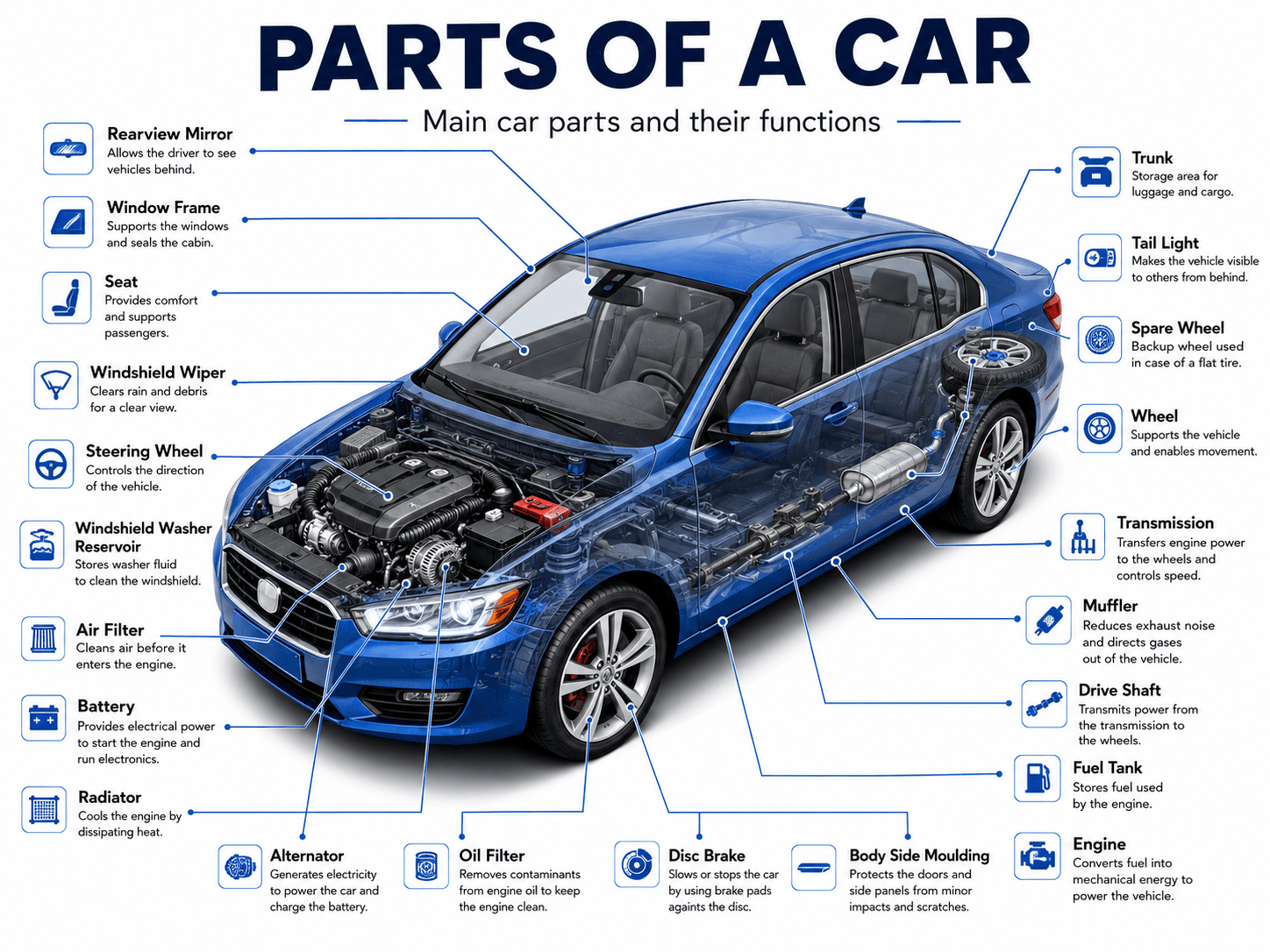

A car is more than just a vehicle rolling on roads — it is a system built around wheels, seats, and passengers with people transportation at its core.
Driver controls, car controls, lighting, lighting controls, mirrors, and right-hand turn all shape how you interact with it daily, while the cabin itself is designed entirely around passenger comfort and safer road travel.
Behind that straightforward exterior sits a dense interior filled with car parts and car interior parts that keep everything moving and functioning the way it should.
It all started with the Benz Patent Motorwagen built by German inventor Karl Benz, whose original design sparked everything the modern car has become. From that point additional features, safety features, in-car systems, and countless vehicle features were steadily introduced into modern vehicles making them more capable with every generation.
Today the car interior brings together reverse cameras, air conditioning, an air conditioning system, navigation, a navigation system, in-car entertainment, an entertainment system, heating, heating controls, ventilation, and ventilation controls — all working together as one complete transport system built for everyday people transportation.
Contents
- Basic Car Interior Parts
- 1.Steering Wheel
- 2.Airbag
- 3.Side Mirror
- 4.Rear View Mirror
- 5.Brake Pedals
- 6.Vehicle Audio
- 7. Seat and Seat Belt
- 8. Turn Signal Indicator
- 9. Glove Compartment
- 10. Gas Pedal
- 11. Emergency or Parking Brake
- 12. Air Ventilation
- 13. Clutch Pedal
- 14. Power Window or Door Lock Controls
- 15. Floor Carpet
- 16. Transmission
- 17. Emergency Flashers
- 18. Sun Visor
- 19. Horn
- 20. SatNav
- 21. Speedometer, Tachometer and Gauges
- 22. Ignition Switch and Start/Stop Button
- 23. Headlight Switch and Wiper Controls
- 24. Armrest and Cup Holders
- 25. Headrest and Lumbar Support
- 26. Heated and Cooled Seats
- 27. Sunroof and Moonroof
- 28. Side Airbags and Curtain Airbags
- 29. Knee Airbag
- 30. Seatbelt Pretensioner
- 31. Blind Spot Monitor and Lane Departure Warning
- 32. TPMS Indicator
- 33. Touchscreen Infotainment System
- 34. Bluetooth Controls and USB Ports
- 35. Wireless Charging Pad
- 36. Heads-Up Display
- 37. Rearview Camera Display
- 38. Door Pockets and Seatback Pockets
- 39. Center Console Storage
- 40. Overhead Console
- 41. Trunk Release Button
- 42. Dead Pedal and Footrest
- 43. Steering Column
- 44. Paddle Shifters
- 45. Gear Selector and Drive Mode Selector
- 46. Dome Light and Reading Lights
- 47. Ambient Lighting
- 48. Vanity Mirror Lights
- 49. Door Handle
- 50. Window Seal
- 51. A-Pillar and B-Pillar
- 52. Grab Handle
- 53. Door Trim Panel
- 1.Steering Wheel
Basic Car Interior Parts
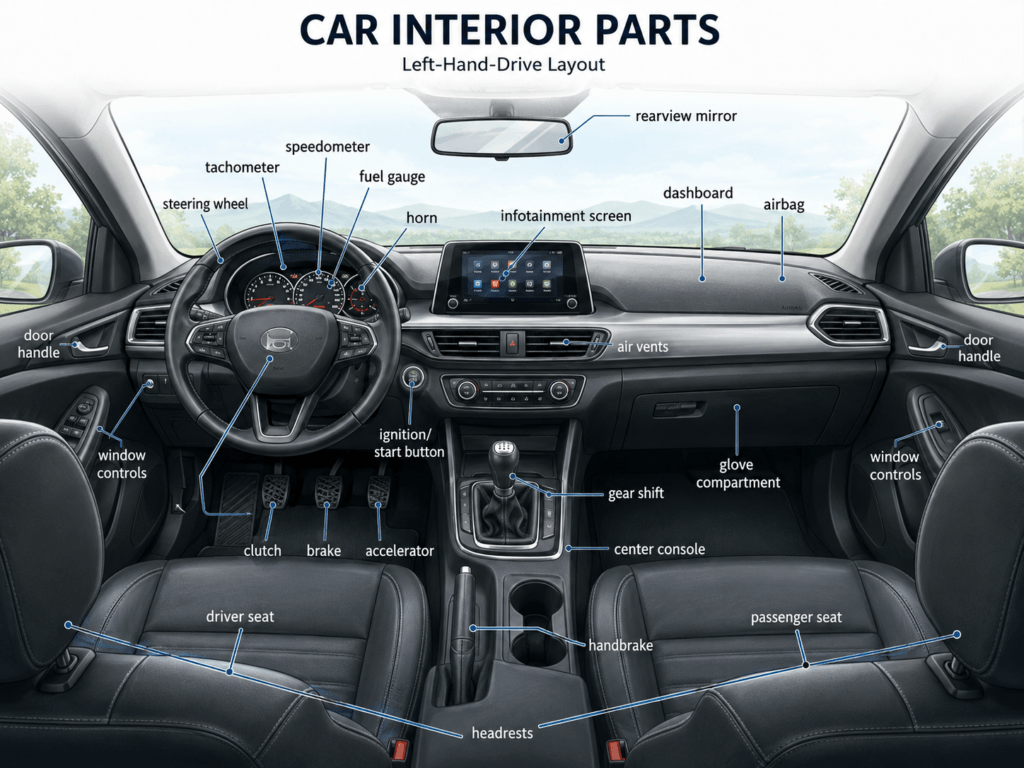
A car’s interior is far more than just seats and a steering wheel. Every component sitting inside has a specific job and when they all work together the driving experience becomes something that feels natural and almost effortless. Here is a closer look at the parts that make it all happen.
1.Steering Wheel
The steering wheel is the main steering control inside any car, also known as a driving wheel or handwheel. It connects to the steering system through mechanical systems that turn every hand movement into directional change.
Hydraulic power steering and electric power steering have made handling far smoother over time. The horn device sits right at the center, ready to send a quick alert whenever traffic demands it.
2.Airbag
The airbag is a flexible cloth bag stored out of sight until a serious collision happens. The impact sensor detects the force and immediately fires the inflation module, pushing the bag outward to form a cushion between the occupant and the interior.
It exists purely to reduce injury during motor vehicle accidents. Once the impact passes the bag deflates on its own keeping the interior clear.
3.Side Mirror
The side mirror, also called a wing mirror, extends the driver’s peripheral vision beyond what front-facing sight can cover. It provides a solid rear view of surrounding traffic making lane changes and parking safer.
Drivers can set the vertical and horizontal angle through either manual adjustment or remote adjustment to get the best possible coverage.
4.Rear View Mirror
The rear view mirror mounts near the windshield and lets the driver monitor traffic through the back window without turning their head. That small rear-facing glass keeps the driver informed about what is happening behind the vehicle at all times.
5.Brake Pedals
The brake pedal is a core part of the braking system and sits on the floor within easy reach of the right foot. Pressing it starts slowing the vehicle and brings it to a complete stopping point when needed. Safe driving depends entirely on this pedal responding accurately every single time.
6.Vehicle Audio
The vehicle audio system began with basic AM radio and FM radio and expanded over time to include CD players, DVD players and built-in navigation systems. Most modern setups now support CarPlay and Android Auto giving drivers full smartphone controllers access directly through the dashboard.
7. Seat and Seat Belt
The driver’s seat and passenger seat are where every journey begins but the seat belt is what makes it safe. It works as a vehicle safety device that holds the body firmly in place during a sudden stop or accident, preventing the occupant from being thrown forward into the interior.
8. Turn Signal Indicator
The turn signal indicator communicates the vehicle’s next move to surrounding traffic. Turn signal lights at all four corners blink in the chosen direction while small green arrows appear on the dashboard to confirm the signal is active. A simple lever near the steering wheel controls the whole system.
9. Glove Compartment
The glove compartment or glove box is a dashboard storage space sitting above the passenger footwell. It is designed for miscellaneous storage — keeping documents, tools, and small items within reach without cluttering the cabin.
10. Gas Pedal
The gas pedal sits on the floor to the right and controls how hard the engine works. Pressing the accelerator increases fuel flow which directly determines how fast the vehicle moves. Light pressure builds speed gradually while a firm push delivers immediate power.
11. Emergency or Parking Brake
The parking brake, also called the hand brake, sits inside the center console within easy reach. It locks the rear brakes through a cable that creates friction against the rotors holding the vehicle completely still. It is built for parked situations and urgent moments, not regular stopping.
12. Air Ventilation
Air ventilation keeps the cabin comfortable in any weather. Cooling units let the driver choose between drawing in fresh air from outside or running the AC to cool things down faster. Managing airflow through outside air or recirculation makes a real difference in both comfort and fuel use.
13. Clutch Pedal
The clutch pedal is found only in vehicles with a manual gearbox. Pressing it disconnects the motor from the gearbox so the driver can change gears through the stick shift cleanly. Releasing it restores power flow and gets the vehicle moving again at the new gear.
14. Power Window or Door Lock Controls
Power window and door lock controls removed the need for manual cranks by replacing them with simple buttons. Electric windows are now standard in most cars with switches in the door panel controlling motors that handle all the movement smoothly and quickly.
15. Floor Carpet
Floor mats protect the base of the cabin from the debris and moisture footwear drags in daily. Without them the interior floor wears down faster and the cabin holds onto dirt and odor that becomes difficult to clear out.
16. Transmission
The transmission controls how power reaches the wheels at different speeds. A manual transmission uses a stick shift lever in the center console to shift gears while the driver coordinates the accelerator and brake pedals together for smooth speed changes.
17. Emergency Flashers
Emergency flashers are activated through the hazard light button inside the cabin. Every turn signal light on the vehicle starts blinking at once signaling to other road users that the car is stopped, in trouble, or flagging a hazard on the road ahead.
18. Sun Visor
The sun visor is a small panel near the top of the windshield that pivots down to block glare from direct sunlight. Hinges hold it in place while still allowing smooth movement. One sits on each side of the cabin covering both the driver and passenger from harsh light.
19. Horn
The horn sits at the center of the steering wheel and works the moment the driver presses the switch. It sends a sharp sound outward that cuts through surrounding noise and alerts nearby drivers or pedestrians before a situation turns into something worse.
A satnav system pulls signals from space-based transmitters and matches them against digital maps to pin down the vehicle’s location accurately. Once a destination is set it builds a route and guides the driver in real time adjusting automatically if the path changes along the way.
21. Speedometer, Tachometer and Gauges
The speedometer and tachometer sit directly ahead of the driver showing speed and engine RPM without requiring any effort to read. The fuel gauge and temperature gauge handle two of the most critical levels any driver needs to watch during a journey. Everything comes together inside the instrument cluster giving the driver one clear view of what the car is doing at any moment.
22. Ignition Switch and Start/Stop Button
The ignition switch or start/stop button is the very first thing a driver uses before going anywhere. It fires up the engine and brings every system inside the vehicle online. Nothing else works until this step happens first.
23. Headlight Switch and Wiper Controls
These two controls handle visibility when conditions change on the road. The headlight switch manages all exterior lighting and the wiper controls keep the windshield clear during rain. Both sit within easy reach so the driver never has to search for them.
24. Armrest and Cup Holders
The armrest gives both the driver and front passenger a comfortable place to rest during longer trips reducing the tension that builds up in the shoulders and arms. Cup holders sit right beside it keeping drinks stable and within reach throughout the drive.
25. Headrest and Lumbar Support
The headrest takes care of neck strain on longer journeys and the lumbar support keeps the lower back sitting in a natural position. Together they make a real difference on trips where the driver spends extended time behind the wheel.
26. Heated and Cooled Seats
Heated seats warm up fast during cold weather and cooled seats bring genuine relief when summer temperatures push the cabin temperature up. Both work independently and the driver or passenger can adjust each one to whatever feels right for them.
27. Sunroof and Moonroof
A sunroof or moonroof changes how the cabin feels almost immediately. Natural light comes in and fresh air moves through the interior making the space feel open rather than enclosed. On a good day it turns an ordinary drive into something far more enjoyable.
28. Side Airbags and Curtain Airbags
Side airbags deploy from the door panels the moment a side impact is detected. Curtain airbags drop down from the roof lining to shield the head during the same event. They cover the areas a front airbag simply cannot reach on its own.
29. Knee Airbag
The knee airbag sits lower in the dashboard and pushes forward during a frontal crash to protect the driver’s legs. It works alongside the main airbag to reduce injury across more of the body during impact.
30. Seatbelt Pretensioner
The moment a crash is detected the seatbelt pretensioner pulls the belt tight and pins the occupant firmly back into the seat. It acts before the main impact force arrives giving the airbag the best possible conditions to do its job.
31. Blind Spot Monitor and Lane Departure Warning
The blind spot monitor watches the areas beside and behind the car that mirrors miss and alerts the driver when another vehicle moves into that zone. The lane departure warning system does a similar job by signaling whenever the car begins drifting out of its lane without the indicator being used.
32. TPMS Indicator
The TPMS indicator keeps a constant watch over tire pressure across all four wheels. When pressure drops below a safe level it sends a warning to the dashboard giving the driver time to act before it becomes a problem on the road.
33. Touchscreen Infotainment System
The touchscreen infotainment system handles music navigation calls and vehicle settings all from a single screen at the center of the dashboard. It has largely replaced the rows of buttons that older cars used and made the whole experience far more intuitive to use.
34. Bluetooth Controls and USB Ports
Bluetooth controls handle wireless audio and hands-free calling without a single cable involved. USB ports sit nearby keeping devices charged throughout the journey and both front passengers can usually reach them without any difficulty.
35. Wireless Charging Pad
The wireless charging pad sits inside the center console and charges any compatible phone simply by placing it flat on the surface. No plugging in required which makes it one of those features that becomes hard to go without once you have used it.
36. Heads-Up Display
The heads-up display takes key information like speed and navigation directions and projects it directly onto the windshield. The driver reads everything without dropping their eyes from the road ahead which keeps attention exactly where it needs to be.
37. Rearview Camera Display
The rearview camera display switches on automatically the moment reverse gear is selected. It shows a live feed of everything directly behind the vehicle making tight parking spots and blind reversing situations far safer to handle.
38. Door Pockets and Seatback Pockets
Door pockets run along each door panel giving every occupant a spot for bottles documents and small everyday items. Seatback pockets hang behind the front seats and give rear passengers their own dedicated storage without needing to reach forward.
39. Center Console Storage
The center console storage sits between the two front seats and keeps the most frequently used items like phones wallets and keys within easy reach of the driver. It stops the dashboard and seat from becoming cluttered with things that have nowhere else to go.
40. Overhead Console
The overhead console sits above the driver and holds flat items that do not belong on the seat or dashboard. Sunglasses garage remotes and toll cards all find a natural home up there out of the way but still easy to grab.
41. Trunk Release Button
The trunk release button opens the boot from inside the cabin without needing to use a key or walk around to the back of the car. It usually sits close to the driver’s door making it quick to reach whenever it is needed.
42. Dead Pedal and Footrest
The dead pedal gives the left foot a firm surface to rest against during long highway stretches reducing the fatigue that builds up without a proper support point. It is a small addition that makes a noticeable difference on extended drives.
43. Steering Column
The steering column runs from the steering wheel down into the steering system below and carries the indicator and wiper stalks on either side. Everything sits close enough that the driver rarely needs to move their hands far from the wheel to reach any of it.
44. Paddle Shifters
Paddle shifters sit directly behind the steering wheel and let the driver select gears manually without moving their hand to the gear selector. They respond instantly and give the driver a more engaged feel especially when pushing through corners or overtaking.
45. Gear Selector and Drive Mode Selector
The gear selector manages drive reverse neutral and park from a central position between the front seats. The drive mode selector sits close by and changes how the vehicle responds to throttle and steering input letting the driver switch between comfort sport and eco depending on the road and mood.
46. Dome Light and Reading Lights
The dome light floods the whole cabin with light the moment a door opens making it easy to find things in the dark. Reading lights mount above each seat and point downward so a passenger can use theirs without the light spilling across the whole interior and disturbing everyone else.
47. Ambient Lighting
Ambient lighting runs along the door panels dashboard edges and footwells producing a soft glow that gives the interior a more refined atmosphere at night. It does not interfere with driving but it does make the cabin feel noticeably more considered and well put together.
48. Vanity Mirror Lights
Vanity mirror lights activate when the sun visor mirror cover is flipped open. They shine a clean direct light without needing the dome light on which makes them useful for quick checks without lighting up the whole cabin.
49. Door Handle
The door handle releases the latch from both sides of the vehicle. Interior handles are usually a simple pull grip while exterior designs vary across models with some newer cars using flush or button operated handles built into the door surface.
50. Window Seal
The window seal runs along the door frame and roof edge and its job is keeping wind noise and water from finding their way into the cabin. A worn or damaged seal makes itself known quickly through noise and moisture getting inside.
51. A-Pillar and B-Pillar
The A-pillar frames both sides of the windshield and the B-pillar stands between the front and rear doors. Both are structural elements that hold the roof in place and give the cabin the rigidity it needs during normal driving and in the event of a serious impact.
52. Grab Handle
The grab handle mounts on the interior roof lining above each door and gives passengers something solid to hold during sharp turns or rough road surfaces. It also makes getting in and out of taller vehicles significantly easier especially for older passengers.
53. Door Trim Panel
The door trim panel covers the entire inner surface of the door and brings everything together in one integrated piece. The speaker the window switch the storage pocket and the door handle all sit within it making the door feel finished and functional rather than just a flat sheet of metal.