
Contents
Types of Cars: 20 Body Styles With Pictures
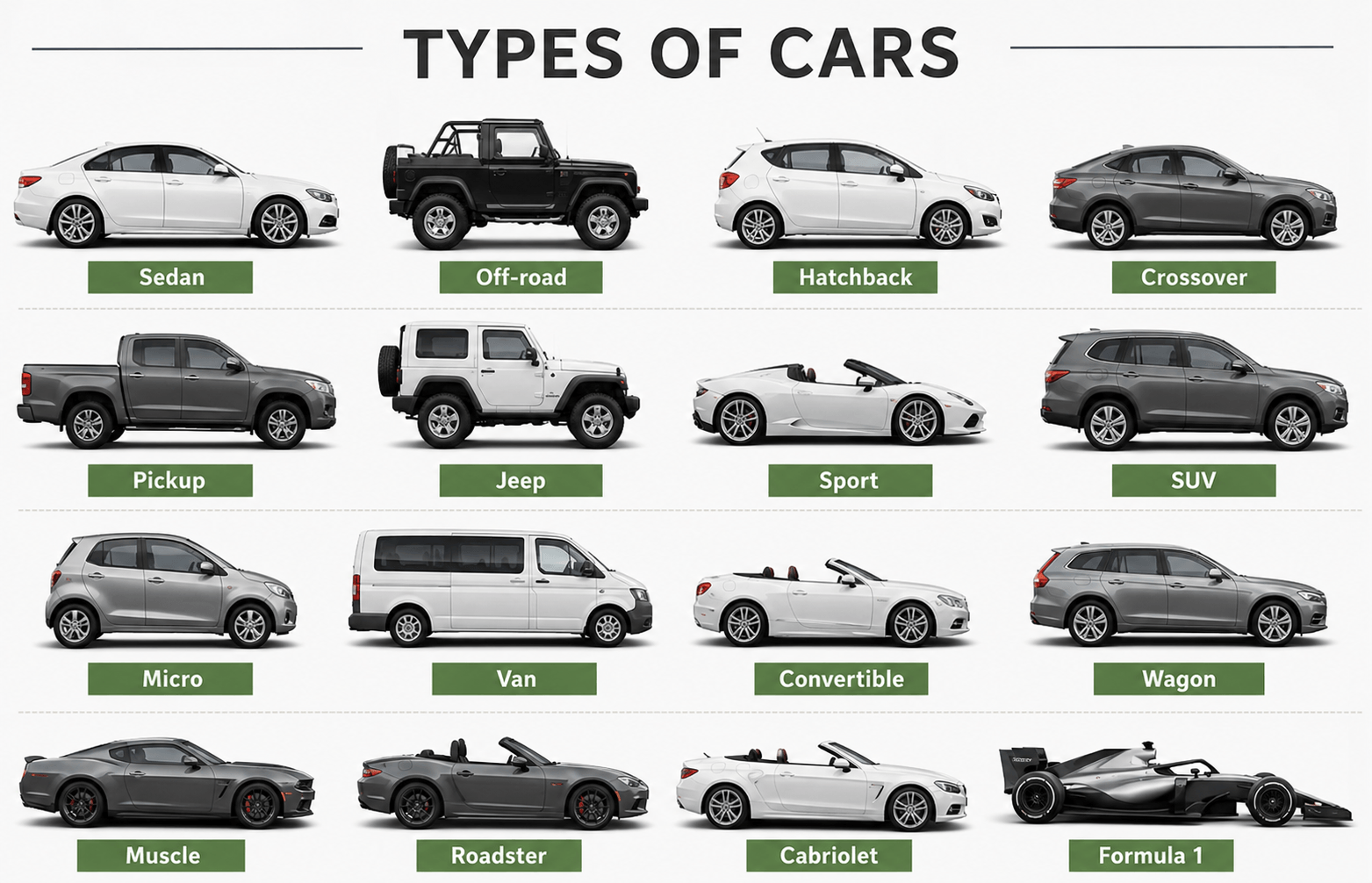
Cars are commonly classified by body style—the shape and layout of their passenger cabin, doors, roof and cargo area. This guide compares 20 car types by seating, luggage space, driving height, practicality and best use. It also explains commonly confused styles, helping you choose a vehicle that suits city driving, family travel, cargo needs or performance.
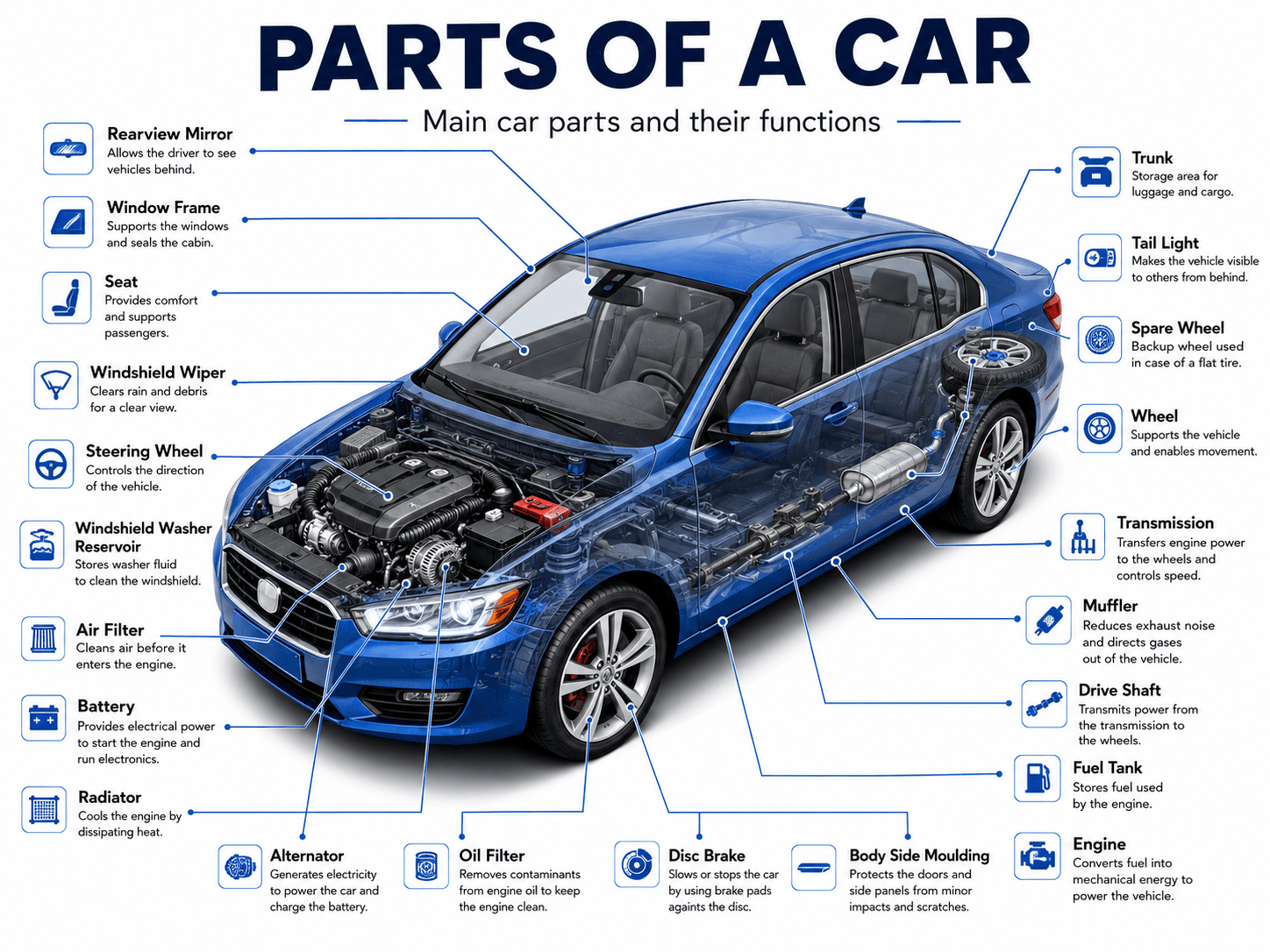
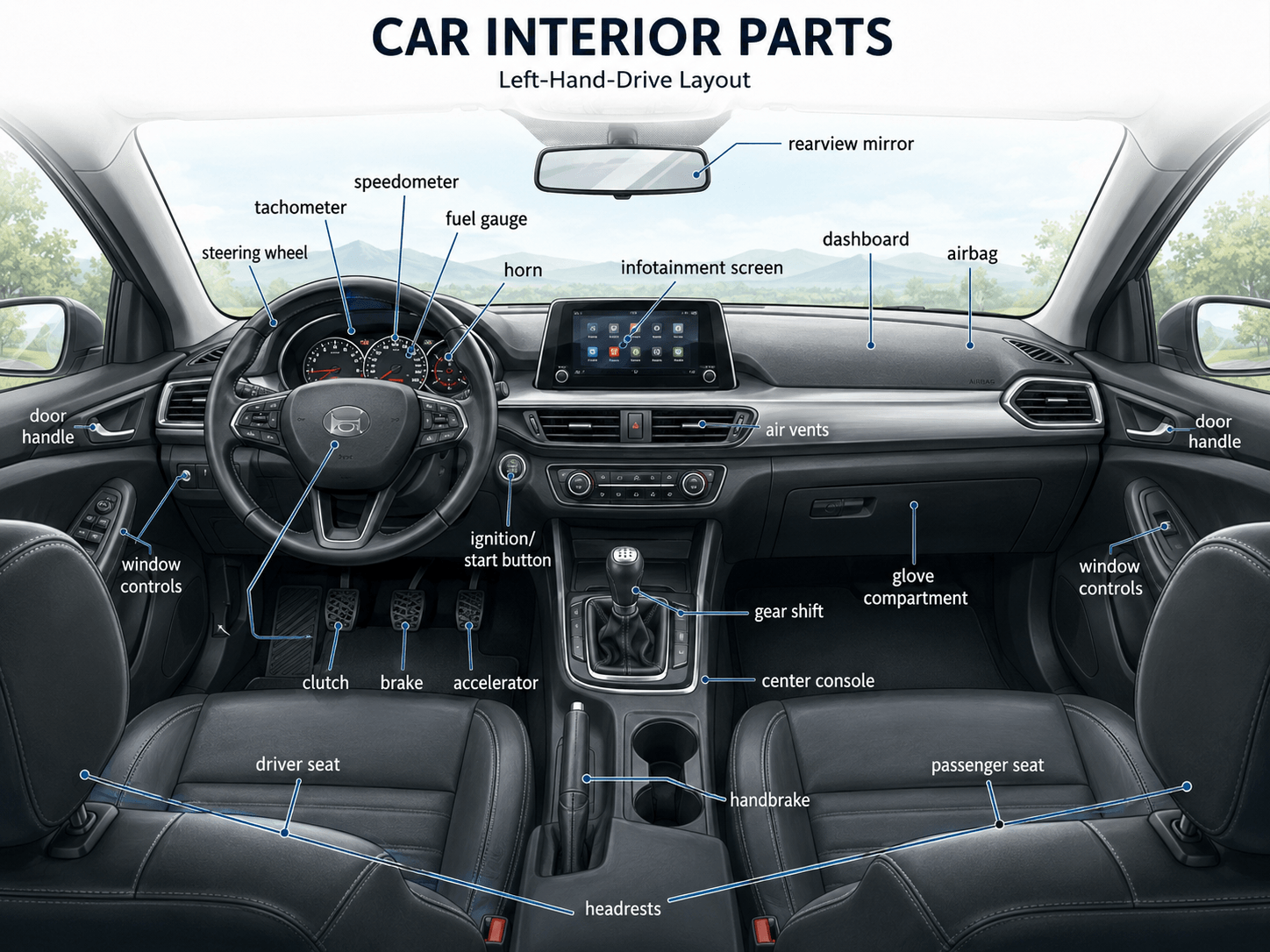
This piece breaks down automobiles by their car body styles and body type so you know exactly what each one offers. For a deeper look into how these vehicles are built inside and out also check out the various car parts and interior parts that make each body style function the way it does.
Types of Car Body Styles
1.Sedan
A sedan is a passenger car with a fixed roof and a separate enclosed trunk, usually creating a three-box shape for the engine, cabin and luggage area.
Most sedans have four side doors, seat four or five people and provide moderate cargo space that is isolated from the cabin. Their main advantage is a comfortable, stable and generally efficient road-going layout.
Their main disadvantage is that the narrow trunk opening limits bulky cargo. Sedans are best for commuting, business travel and long highway journeys. Unlike a hatchback, a sedan has a separate trunk lid rather than a rear door that includes the back window.
2.SUV
An SUV is a taller, enclosed passenger vehicle with raised seating, generous cabin space and a large rear cargo area. Most have four side doors plus a tailgate, seat five to seven people and offer medium-to-large luggage capacity.
Their main advantage is passenger space, visibility and available towing or rough-road capability. Their main disadvantage is greater size, weight and parking difficulty compared with a sedan.
SUVs suit families, long trips and mixed-road use. Unlike a crossover, a traditional SUV may prioritize heavier-duty construction and capability, but not every vehicle sold as an SUV is body-on-frame.
3.Sports Car
A sports car is a performance-focused vehicle designed around responsive handling, acceleration and driver engagement rather than one fixed body shape.
It commonly has two doors, seats two or four people and provides limited cargo space. Its main advantage is agile and engaging performance; its main disadvantage is reduced practicality, comfort or running economy.
Sports cars are best for enthusiastic road driving and suitable track use. Unlike a coupe, “sports car” describes purpose and performance: a sports car may be a coupe, convertible, roadster or occasionally another body format.
4.Station Wagon
Station wagons , also called an estate car, extends a sedan-like roof to the rear and uses a large liftgate instead of a separate trunk. Most have four side doors, seat five people and provide long, low and easily accessed cargo space.
Its main advantage is SUV-like luggage practicality with car-like road manners. Its main disadvantage is that it is longer than most hatchbacks and offers less ground clearance than many SUVs.
Wagons suit families, pets and long-distance travel. Unlike a hatchback, a wagon generally has a longer roof, larger rear side windows and more cargo length behind the rear seats.
5.Coupe
A traditional coupe is a fixed-roof passenger car with two side doors and a compact or sloping rear profile. It commonly seats two or four people, although rear seats are often small, and provides limited-to-moderate trunk space.
Its main advantage is style, structural focus and a driver-oriented layout. Its main disadvantage is difficult rear-seat access and reduced practicality. Coupes are best for individuals or couples who value design and driving enjoyment.
Unlike a sedan, a traditional coupe normally has two doors; “four-door coupe” is usually a marketing description for a sedan or liftback with a low roofline.
6.Hatchback
A hatchback has a rear door that lifts upward with the rear window, joining the passenger and cargo areas in a two-box layout.
It normally has three or five doors when the hatch is counted and seats four or five people. Folding the rear seats creates flexible cargo room for taller or bulkier items. Its main advantage is practicality within a compact footprint; its main disadvantage is that luggage is less isolated from cabin noise and temperature.
Hatchbacks are best for city driving, small families and easy parking. Unlike a wagon, a hatchback normally has a shorter rear overhang and less cargo length behind the rear seats.
7.Convertible
A convertible is a car with a roof that can be folded, removed or retracted for open-air driving. Most have two doors, seat two or four people and offer limited cargo capacity because the folded roof occupies storage space.
Its main advantage is the open-air experience; its main disadvantage is reduced luggage room, weather insulation and sometimes structural rigidity. Convertibles are best for leisure drives and mild climates.
Unlike a roadster, a convertible may have four seats and can be based on a coupe, sedan or other body design.
8.Utility Vehicle
A van is a tall, box-shaped vehicle designed to maximize enclosed passenger or cargo capacity. Depending on configuration, it may have two front doors plus sliding or hinged rear doors, carry two passengers in cargo form or several rows in passenger form, and provide very large interior volume. Its main advantage is usable enclosed space; its main disadvantage is size, visibility and car-park access. Vans are best for deliveries, trades, shuttles or large-group transport. Unlike a minivan, a full-size van usually prioritizes commercial capacity and may offer fewer family-oriented features.
9.Minivan
A minivan is a family-focused vehicle with a tall enclosed cabin, a rear liftgate and usually one or two sliding side doors. It normally has four passenger-access doors, seats seven or eight people and offers excellent cargo flexibility when the rear seats fold or are removed.
Its main advantage is easy access and efficient passenger packaging. Its main disadvantage is its large footprint and less rugged capability than many SUVs.
Minivans are best for large families, child seats and group travel. Unlike an SUV, a minivan normally sits lower and prioritizes cabin access over ground clearance or towing.
10.Pickup Truck
A pickup truck combines an enclosed passenger cab with a separate open cargo bed. It may have two or four side doors, seat two to six people and carry bulky, dirty or oversized loads outside the cabin.
Its main advantage is hauling and model-specific towing capability. Its main disadvantage is its length, exposed cargo and less efficient use of enclosed passenger space.
Pickups are best for work, farming, equipment transport and outdoor use. Unlike a van, a pickup keeps cargo in an open bed rather than inside an enclosed body. Construction and drivetrain vary by model.
11.Off-road Vehicles
An off-road vehicle is designed or equipped to travel beyond normal paved roads using suitable ground clearance, traction systems, tyres and suspension. It commonly has two or four side doors, seats two to seven people and provides cargo space that varies widely.
Its main advantage is difficult-terrain capability; its main disadvantage is road noise, weight and compromised on-road efficiency. It is best for trails, remote work and rough terrain.
Unlike an SUV, off-road vehicle describes capability rather than one body shape; pickups and other formats can also be off-road vehicles.
12.Luxury Vehicles
A supercar is an exclusive, high-performance road car positioned above ordinary sports cars in speed, technology, materials and price. Most have two doors, seat two people and provide very little cargo room.
Their main advantage is exceptional performance and engineering; their main disadvantage is cost, limited practicality and demanding ownership. Supercars suit collectors and drivers seeking extreme road-car performance.
Unlike a sports car, a supercar normally represents a much higher level of exclusivity and performance, although there is no universal legal boundary between the terms.
13.Hybrid Vehicles
A roadster is a compact, open-top car designed primarily for two occupants and an engaging driving experience. It usually has two doors, two seats and a small trunk.
Its main advantage is light, focused open-air driving; its main disadvantage is minimal passenger and luggage capacity. Roadsters are best for leisure driving, weekend trips and drivers who do not need rear seats.
Unlike the broader convertible category, a roadster is normally a dedicated two-seat open car rather than an open-roof version of a larger coupe or sedan.
14.Limousine
A limousine is a long-wheelbase passenger car designed to provide extra rear-seat space, privacy and chauffeur-driven comfort. It usually has four or more doors, seats four to eight people depending on configuration and provides moderate luggage space.
Its main advantage is rear-passenger comfort; its main disadvantage is length, weight and poor maneuverability. Limousines suit formal events, executive transport and ceremonial use. Unlike a standard luxury sedan, a limousine normally has a significantly extended wheelbase and may include a partition between driver and passengers.
15.Self-driving Car
A city car is a small conventional passenger car designed for congested streets, short journeys and tight parking spaces. It normally has three or five doors, seats four people and provides a small but usable cargo area.
Its main advantage is maneuverability and low urban running demands; its main disadvantage is limited rear-seat and luggage space for long trips. City cars are best for commuting and local errands.
Unlike a microcar, a city car is generally a full passenger car capable of broader everyday use, though size definitions vary by market.
16.Pony Car
A muscle car is a performance-oriented road car traditionally associated with strong straight-line power, rear-wheel drive and an American coupe or sedan platform.
It commonly has two or four doors, seats four or five people and provides more cabin and trunk space than many small sports cars. Its main advantage is powerful acceleration; its main disadvantage is weight, fuel use and less emphasis on lightweight handling.
Muscle cars suit drivers who prioritize power and road presence. Unlike a sports car, a muscle car is a performance and market category rather than a distinct body style.
17.Electric Car
An MPV, or multi-purpose vehicle, uses a tall cabin and flexible seating layout to carry passengers and luggage efficiently. It normally has four or five doors, seats five to seven people and offers configurable cargo room through folding or movable seats.
Its main advantage is interior flexibility; its main disadvantage is a less compact footprint and handling focused more on comfort than sportiness. MPVs are best for families and mixed passenger-cargo use.
Unlike a minivan, an MPV may be smaller and may use conventional hinged rear doors rather than sliding doors; market terminology overlaps.
18.Crossover
A crossover combines SUV-like height and cargo access with passenger-car-oriented construction and road manners. It usually has four side doors, a rear liftgate, five seats and flexible medium cargo capacity; larger versions may offer a third row.
Its main advantage is everyday comfort and practicality without the bulk of many traditional SUVs. Its main disadvantage is that model-specific towing and off-road ability may be limited. Crossovers are best for urban families and mixed daily use.
Unlike a traditional SUV, a crossover is normally designed primarily for road use, although manufacturers frequently use both labels interchangeably.
19.Shooting Brake
A shooting brake combines a coupe-like roofline and sporty proportions with an extended rear cargo area and liftgate. It normally has two or four side doors, seats two to five people and offers more luggage room than a conventional coupe.
Its main advantage is distinctive styling with added practicality; its main disadvantage is limited availability and less cargo volume than a full wagon. It suits buyers who want coupe styling without giving up all luggage space.
Unlike a station wagon, a shooting brake normally emphasizes a lower, sportier roof and more coupe-like proportions.
20.Microcar
A microcar is an extremely small passenger vehicle intended for short urban journeys and minimal road space. It commonly has two doors, seats one or two people and provides very limited cargo capacity.
Its main advantage is easy parking and low space requirements; its main disadvantage is limited passenger room, luggage capacity and highway suitability. Microcars are best for short city trips. Unlike a city car, “microcar” may refer to a smaller regulatory or size class, and its legal classification can vary between markets.
Quick Comparison Table
| Car type | Typical seats | Cargo space | Driving height | Best for | Main drawback |
| Sedan | 4–5 | Medium, separate trunk | Low | Commuting and highways | Narrow cargo opening |
| Hatchback | 4–5 | Flexible medium | Low | City use and small families | Less cargo isolation |
| SUV | 5–7 | Medium to large | High | Families and mixed roads | Size and weight |
| Crossover | 5–7 | Medium to large | Raised | Everyday family use | Limited heavy-duty ability |
| Coupe | 2–4 | Small to medium | Low | Style and driver focus | Rear-seat access |
| Convertible | 2–4 | Small | Low | Open-air leisure driving | Roof reduces cargo room |
| Station wagon | 5 | Large and long | Low | Families, pets and touring | Longer than hatchback |
| Pickup truck | 2–6 | Large open bed | Medium to high | Work and hauling | Exposed cargo |
| Minivan | 7–8 | Very large and flexible | Medium | Large families | Large footprint |
| Van | 2–15+ | Very large | Medium to high | Commercial or group transport | Parking and maneuverability |
| Sports car | 2–4 | Small | Low | Performance driving | Limited practicality |
| Supercar | 2 | Very small | Very low | Extreme performance | Cost and usability |
| Roadster | 2 | Very small | Low | Weekend driving | No rear seats |
| Limousine | 4–8 | Medium | Low | Chauffeured transport | Extreme length |
| Microcar | 1–2 | Very small | Low | Short urban trips | Limited versatility |
| City car | 4 | Small | Low | Congested streets | Limited long-trip space |
| MPV | 5–7 | Large and flexible | Medium | Passenger-cargo flexibility | Less compact than hatchback |
| Off-road vehicle | 2–7 | Varies | High | Rough terrain | On-road compromises |
| Muscle car | 4–5 | Small to medium | Low | Straight-line performance | Weight and fuel demand |
| Shooting brake | 2–5 | Medium | Low | Style plus luggage space | Limited availability |
Which Type of Car Is Best for You?
The right car type depends less on styling and more on how many people you carry, where you drive and what you regularly load. Compare your normal requirements rather than buying extra size or capability that you may rarely use.
| Your main requirement | Best starting options | Decision factor |
| City driving | Hatchback, city car, microcar | Short length, visibility and turning space |
| Family use | Crossover, SUV, minivan, MPV | Child-seat access, rear space and cargo room |
| Long trips | Sedan, wagon, crossover | Ride comfort, luggage space and efficiency |
| Maximum cargo | Van, pickup, minivan, wagon | Enclosed versus open cargo and load shape |
| Off-road driving | Capable SUV, off-road vehicle, pickup | Ground clearance, tyres and drivetrain |
| Fuel economy | City car, hatchback, sedan | Compare specific model and powertrain ratings |
| Performance | Sports car, muscle car, supercar | Handling, acceleration and ownership cost |
| Easy parking | Microcar, city car, hatchback | Vehicle width, length and camera visibility |
| Seven seats | Minivan, MPV, SUV, large crossover | Third-row space with luggage loaded |
Important: Body style alone does not determine fuel economy, safety, towing capacity or interior measurements. Compare the specifications and independent test results for the exact model, year and market.
FAQs
What are the main types of cars?
Common car types include sedans, hatchbacks, SUVs, crossovers, coupes, convertibles, station wagons, pickups, minivans, vans, sports cars and MPVs. Other terms may describe size, performance or intended use rather than a strict body shape.
What is the difference between an SUV and a crossover?
A crossover usually uses passenger-car-oriented construction and prioritizes road comfort. A traditional SUV may use heavier-duty construction and offer greater model-specific towing or off-road capability. Manufacturers often use the two names interchangeably, so check the exact vehicle specifications.
Is a hatchback smaller than a sedan?
Not always. Many hatchbacks are compact, but hatchback refers to the rear liftgate and shared passenger-cargo area rather than a fixed size. Some hatchbacks are larger than small sedans.
Which car type is best for a family?
Crossovers, SUVs, minivans, MPVs and station wagons are strong family options. The best choice depends on the number of seats required, child-seat access, luggage volume, parking space and usual road conditions.
Which car type has the most cargo space?
Full-size vans generally provide the greatest enclosed volume, while pickups handle large or dirty loads in an open bed. Minivans and MPVs provide strong passenger-and-cargo flexibility, and wagons offer a lower, car-like alternative.
Is a coupe always a two-door car?
Traditionally, a coupe has two doors and a fixed roof. However, some manufacturers market four-door sedans, liftbacks and crossovers as coupes because of their sloping rooflines. The actual door and cargo layout should therefore be checked.
Illustration methodology: The body-style illustrations in this guide use simplified, brand-neutral side profiles created to compare roof shape, cabin layout, doors, ride height and cargo access. They are educational representations and are not drawn to the exact scale of a specific vehicle model.