
Contents
- Airbag Light On? Meaning, Causes, Safety Risk, and How to Fix It
- What Does the Airbag Light Mean?
- Common Causes of an Airbag Light
- What Should You Do When the Airbag Light Comes On?
- How to Diagnose and Fix an Airbag Light Issue
- Perform a Full-System Scan With a Capable Tool
- Document Codes and Freeze-Frame Data Before Touching Anything
- Visual Inspection of Known Failure Points
- Electrical Testing With the Right Safety Procedures
- Resolve the Root Cause, Not Just Clear the Code
- Post-Repair Verification and Any Required Calibrations
- FAQs
- Final Words
Airbag Light On? Meaning, Causes, Safety Risk, and How to Fix It
Your car dashboard lights are there to alert you when something not functioning properly needs attention and one of the most alarming warnings is the airbag light. This warning is also called the Supplemental Restraint System or SRS light. When the indicator is turned on, it usually means that there is a problem in airbag system.
In some cases, the airbag won’t deploy in an accident, which can be compromising safety for the driver and passengers. The main causes of the airbag light illuminate can include a dashboard warning, restraint system issue, vehicle safety fault, or weak accident protection. A glowing airbag warning light may also point to a safety system fault, airbag system problem, bad warning indicator, or general malfunction.If the airbag light appears with other dashboard warnings like service brake assist , esp bas light , or tire pressure sensor fault, check each warning separately. These lights may appear together after low voltage, sensor faults, wiring issues, or module communication problems, but each system still needs its own scan and repair.
This driver alert should not be ignored because it affects crash protection, passenger safety, and the whole car safety system. A steady SRS warning on the vehicle dashboard can mean blocked airbag deployment, serious safety risk, system failure, airbag fault, or another warning signal that needs proper checking.
What Does the Airbag Light Mean?
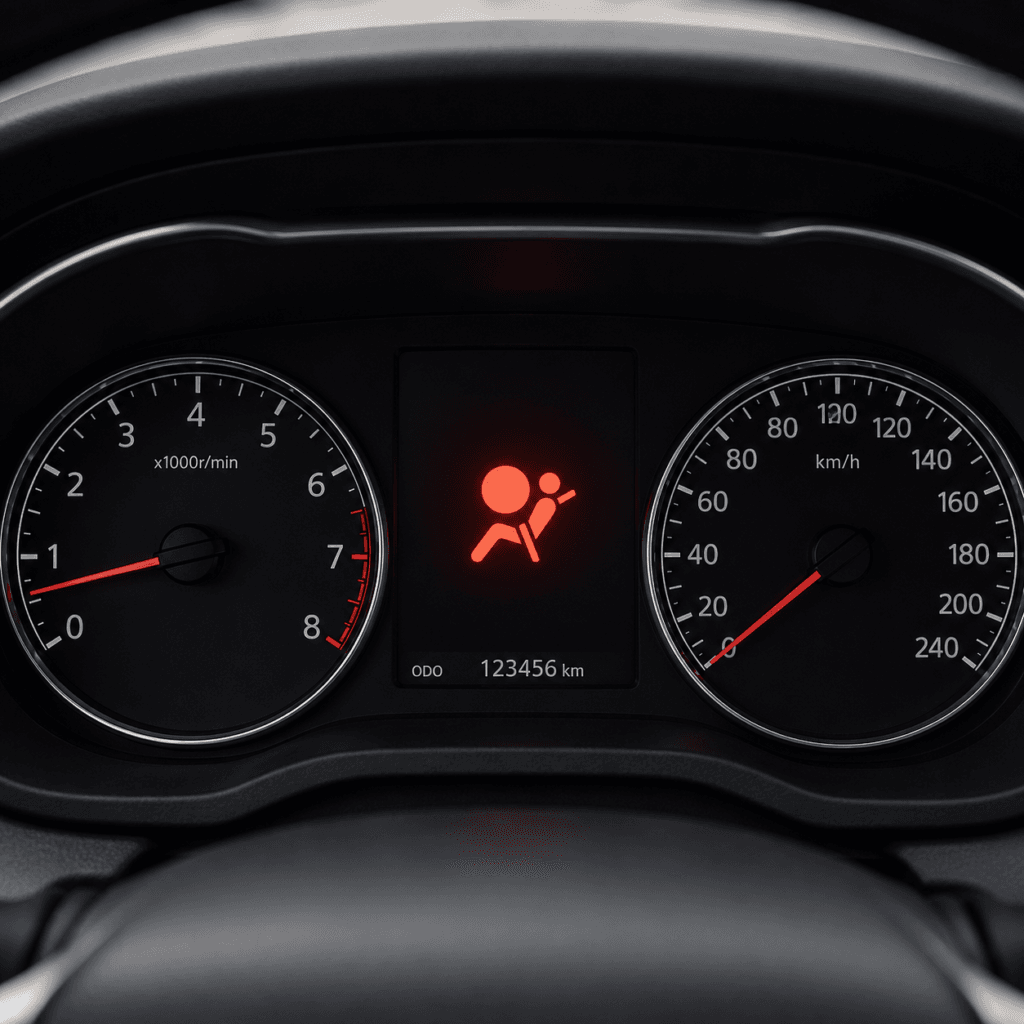
The airbag light shows that your car’s SRS system has found a possible fault. Normally, the airbag symbol or SRS light appears on the dashboard during the vehicle startup self-test and then turns off. But if the light stays on, flashes or comes back again, it may mean the airbags, seat belt sensors, wiring or passenger airbag system may not work correctly in a crash. This warning matters because the airbag system is made to protect the driver and seated passenger during an accident, so it should be checked instead of ignored.
The SRS module runs key-on self-tests when the car starts and also makes periodic checks while a person driving is on the road. It watches for out-of-range resistance, whether it is too high or too low, inside the airbag squib circuits. It can also notice unexpected voltage drops, strange sensor data that doesn’t make sense, or communication errors in the vehicle network. When the system finds a fault, it sets the light and records a DTC. After that, the light stays on until the fault is fixed and the code is cleared with a scan tool.
Common Causes of an Airbag Light
Common patterns make this easier to understand. In most cars, the airbag light is usually triggered by a few problems that appear again and again across different makes and models.
Faulty Airbag Sensors
A vehicle uses multiple crash sensors and occupancy detectors that work together to determine when and which airbags should deploy during an impact. If these sensors fail or send incorrect signals, the system display a warning through the airbag light.
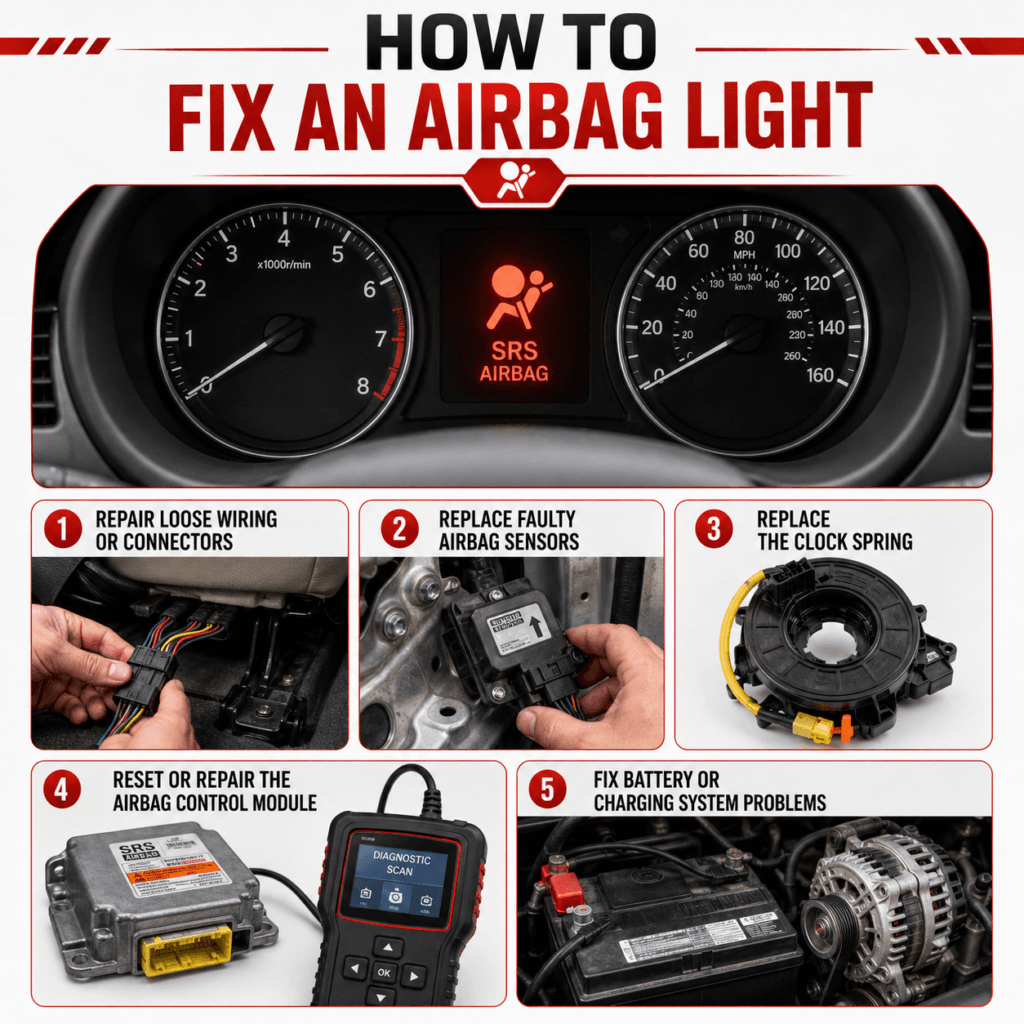
In some cases, Airbag Control Module Repair Options may help resolve these issues without needing a complete replacement, but the fault should still be checked properly before trusting the SRS system again.
Loose or Damaged Wiring Under the Seat
In many vehicles, the passenger seat occupancy mat helps the system know if someone is sitting there. This mat can be pressure based or strain-gauge based, and it helps decide whether to arm the passenger airbag. The problem usually starts when there are broken mats, damaged harnesses under the seat, or loose yellow connectors. These wires can get tugged when the seat slides, which may cause intermittent opens in the circuit. That is why owners often notice the light appears after moving the seat all the way back or after vacuuming underneath.
Seat Belt Sensor or Pretensioner Problem
Seat belt pretensioners are part of the SRS system and are monitored like airbags so even a small fault can turn the warning on.A high-resistance condition from corrosion at the connectors near the B-pillar can set the light on. Buckle switches that detect belt latched can also fail, which ends up confusing the system.
In simple words, seatbelt pretensioners belong to the SRS system, and faulty buckle sensors can trigger the warning light
Damaged Airbag Clock Spring
The clock spring keeps the electrical connection working between the driver’s airbag and wheel controls while the steering wheel can still turn. Over time, its thin ribbon cable can crack, especially in vehicles that use a lot of low-speed steering input, like tight parking or delivery routes. Too much wear or wrong steering wheel removal can also damage the clock spring. Common symptoms include an SRS light, a horn that stops working, or steering-wheel buttons that do not respond.
Low Battery or Voltage Drop
A dying battery, failing alternators or sometimes low system voltage while cranking can confuse the airbag system and trip SRS self-tests.A sudden drop in vehicle voltage can trigger random dashboard warnings. If this happens, you should diagnose your service battery charging system immediately.
If the light appeared soon after a jump-start or battery replacement, first check the charging power and battery condition. Once you finish confirming voltage health, the system may need a proper scan and code clear.
Airbag Control Module Problem or Stored Crash Data
The SRS control module works just like brain of the airbag system, so after a minor collision, it may module store crash event data and lock the system for safety. In this case, the car may need replacement or manufacturer-approved reprogramming before the warning goes away.
Sometimes internal failures are rare but real, especially from moisture ingress, internal capacitor issues, or voltage spikes after a power surge. Age-related electronic failure can also make the airbag module need a reset or replacement.
Wet Airbag Module
If your vehicle has experienced water damage, it may have affected the airbag module that is located under the driver or passenger seat. If it is shorted out or corroded, it won’t work properly.
Passenger Airbag Switched Off
Some makes of car have a cut off switch for the front passenger side. If the airbag switch is off, it will deactivate the front passenger’s airbag and show the passenger airbag light on. Drivers usually do this for vulnerable passengers, like a baby in a rear-facing child seat so they turn off the airbag for safety.
Aftermarket Modifications and Previous Repairs
Aftermarket work can sometimes create airbag system problems. Non-OEM steering wheels, seat swaps, or stereo installs may disturb SRS wiring and trigger faults if someone fits them badly.
This issue is also common in salvage rebuilds. Some cars may have missing curtains, defeated connectors, resistors in place of airbags, or mislabeled components. When the system runs its check, these hidden problems can light the SRS lamp.
What Should You Do When the Airbag Light Comes On?
whenever the airbag light comes on,you have to:
Check the Seat Belt and Passenger Airbag Switch
First of all, check the simple things and Make sure that the seat belt is clicked in properly and nothing is stuck inside the buckle.
You might Also check the passenger airbag switch,if your car has one. If it is turned off by mistake, the passenger airbag light may stay on.
Check for Loose Wires Under the Seat
Look under the front seats carefully. Loose yellow connectors, damaged wires or a plug pulled by seat movement can trigger the airbag warning. Do not pull the wiring hard. Just check if anything looks loose, broken or disconnected.
Restart the Car Once
You can turn the car off and restart it. Sometimes the airbag light appears because of a temporary system check or low voltage moment.
If the light disappears and does not return, it may not be serious.But If it comes back, the fault still needs checking.
Get an SRS Diagnostic Scan
The next step is an SRS diagnostic scan. A normal basic scanner may not read airbag codes, so use a scanner that can access the SRS system.
It can show whether the problem is a sensor, seat wiring, clock spring, buckle switch, module fault, or stored crash code.
Do Not Randomly Reset the Airbag Light
Do not reset the airbag light without fixing the cause. Clearing the code may hide the warning for a short time, but the airbag system can still be unsafe.
Fix the real fault first, then clear the code properly.
How to Diagnose and Fix an Airbag Light Issue
Perform a Full-System Scan With a Capable Tool
A proper full-system scan needs a capable tool, not just something beyond generic OBD-II. The SRS is a manufacturer-specific system, so a professional uses a scan tool that can access the SRS module, read codes, clear codes, view live data, check seat occupancy status, buckle switches, sensor health, and run guided tests.
Document Codes and Freeze-Frame Data Before Touching Anything
Before any repair starts, it is smart to document codes and save freeze-frame data before touching anything. Good documentation captures exactly which circuit failed, including voltage, resistance, and the moment of failure. It also shows if the fault is intermittent or permanent, which avoids misdiagnosis later.
Visual Inspection of Known Failure Points
A careful visual inspection can reveal known failure points without guessing. Check under-seat connectors, especially yellow plugs or orange plugs, plus seat rail harness rub, steering-wheel clock spring condition, and sensor connectors near the front crash bar or rocker panels. Also look for evidence of water ingress, because many faults are physical.
Electrical Testing With the Right Safety Procedures
Proper electrical testing must follow the right safety procedures. Trained techs measure circuit resistance and continuity with approved resistor substitutes, because SRS circuits are very sensitive. Professionals use OEM service information to avoid deployment risk while testing.
Resolve the Root Cause, Not Just Clear the Code
The goal is to resolve the root cause, not just clear the code. The real repair may involve reseating connectors, repairing connectors, replacing a seat mat, installing a new clock spring, or replacing an impact sensor. If the module stored crash data, it may need OEM-approved replacement and proper coding.
Post-Repair Verification and Any Required Calibrations
After repair, post-repair verification and required calibrations help confirm the system is safe. In modern vehicles, post-collision repairs, seat repairs, or component repairs may need module coding and specific calibrations. SRS calibration is often internal or self-learning, but some safety features interact with restraint timing and need reset procedures. If the airbag light follows a collision repair, advanced driver-assistance systems, ADAS calibrations, camera, radar, crash detection, advanced safety features, automatic emergency braking, AEB, and lane support should be checked so everything stays synchronized as designed.
FAQs
Is It Safe to Drive With the Airbag Light On?
No!Driving with an illuminated airbag light has significant risks. Your vehicle’s entire airbag system may be disabled. Seatbelt pretensioners might not function properly in a collision and airbags couldnot deploy all in a crash.
Can You Reset the Airbag Light Yourself?
Yes, you can reset the airbag light yourself, but only after fixing the real problem. If you only clear the code, the light may come back and the airbag system may still be unsafe. A normal OBD-II scanner may not read SRS codes, so use an SRS-capable scan tool.
How Much Does It Cost to Fix an Airbag Light?
Fixing an airbag light can cost anywhere from a small wiring repair to several hundred dollars, depending on the fault. Loose connectors are usually cheaper to repair, while a clock spring, crash sensor, seat mat, or SRS control module can cost more because parts and labor vary by vehicle.
Airbag Recalls You Should Check Before Paying for Repairs
Before paying for airbag repairs, check your vehicle for open airbag recalls using the VIN. Some airbag problems may be covered by the manufacturer, especially safety recalls. If there is an active recall, a dealer may repair the issue for free.
Airbag Light Coming Off and On
If you see the airbag light coming off and on or the airbag light flashing on and off on the dash when starting your car, it is not always a serious problem. Most dashboard warning lights come on momentarily at startup. The airbag lights come on too because this is usually normal and part of the car self-testing its vehicle’s systems.
Final Words
An airbag light may look like a small dashboard warning, but it is connected to one of the most important safety systems in your car. If the light stays on, flashes, or comes back while driving, it means the SRS system has found a fault that should not be ignored. The issue could be something simple like a loose connector, low battery voltage, or a passenger airbag switch turned off. It could also be something more serious like a bad sensor, damaged clock spring, wet airbag module, or stored crash data.
The best step is to check the simple things first, then get a proper SRS scan if the warning does not go away. Do not just reset the airbag light without fixing the real cause, because the system may still fail when you need it most. A working airbag system helps protect you and your passengers in a crash, so it is always better to diagnose the fault properly and repair it before trusting the car again.