
Contents
- Nine Common Signs and Symptoms of a Bad Front or Rear Differential
- Warning Signs Your Differential Needs Attention
- 1. Strange Noises Coming From the Differential
- 2. Differential Getting Too Hot
- 3. Unusual Vibration While Driving
- 4. Poor Steering Control
- 5. Grinding Noise From the Gears
- 6. Uneven or Excessive Tyre Wear
- 7. Fluid Leaking Under the Vehicle
- 8. Driveshaft Feels Unbalanced
- 9. Burning Smell From the Gearbox Area
- What Causes a Differential to Fail?
- Important Tips for a Long-Life Rear Differential
- FAQs
- Warning Signs Your Differential Needs Attention
Nine Common Signs and Symptoms of a Bad Front or Rear Differential
The differential is one of those parts that works silently every time you drive. Most drivers do not think about it until something starts going wrong.
Its main job is to transfer power from the engine to the wheels. The reason it is so important is that it lets the wheels rotate at different speeds when needed. This is especially useful when turning because the outside wheel has to travel farther than the inside wheel, so it naturally needs to spin faster.
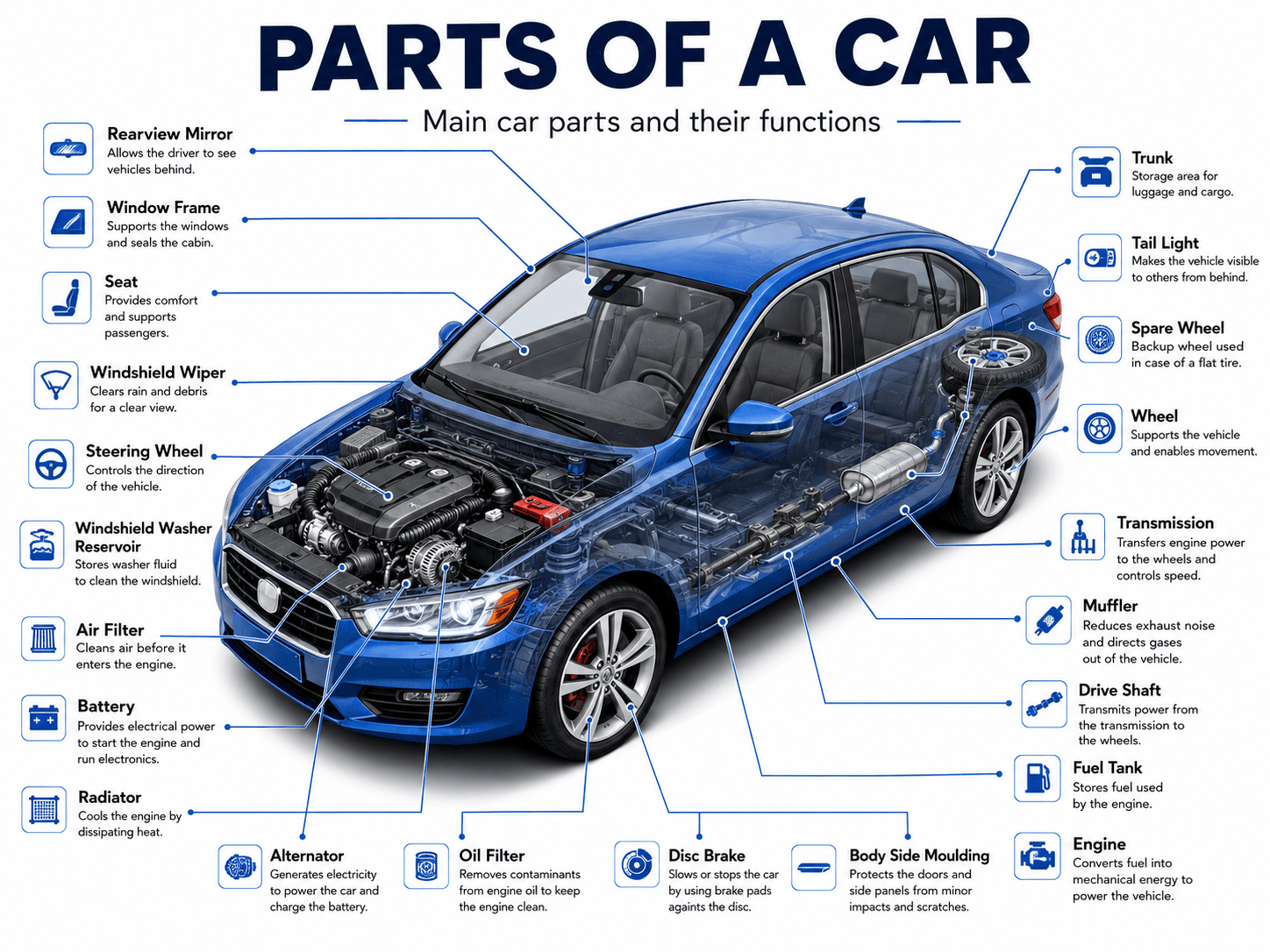
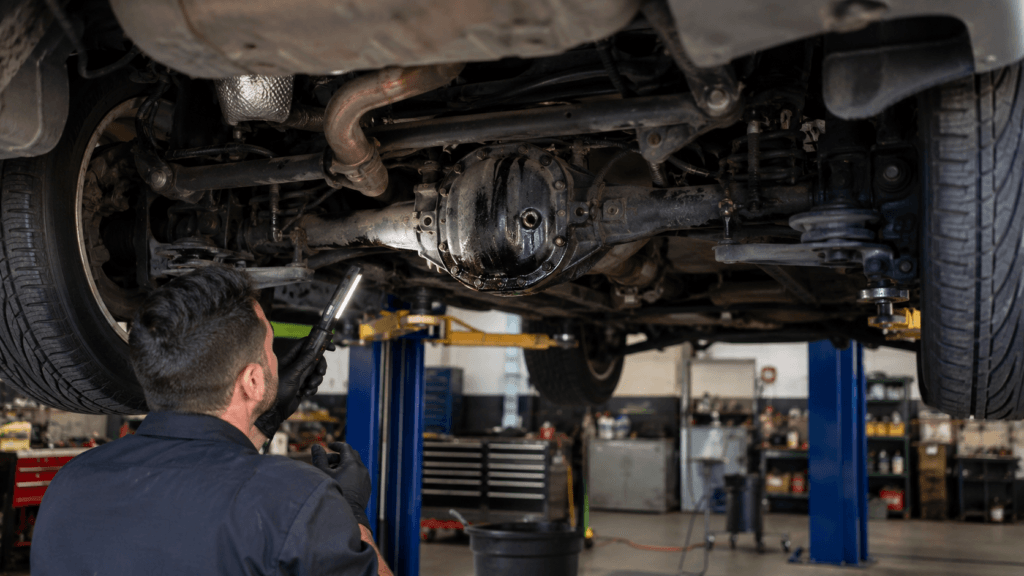
In front-wheel drive vehicles, the differential is usually located near the transmission housing. In rear-wheel drive vehicles, it sits between the rear wheels. A four-wheel drive vehicle normally has two differentials, one at the front and one at the rear.
A normal differential includes several important parts such as:
- Axle shafts
- Differential side gear
- Differential pinion
- Drive pinion
- Driveshaft
- Housing
- Ring gear
Knowing the early symptoms of a failing differential can save you from serious damage and a much higher repair bill later.
Warning Signs Your Differential Needs Attention
1. Strange Noises Coming From the Differential
Whining, humming, whirring, howling, or growling noises are often the first warning signs of a differential problem. These sounds may become more noticeable when you accelerate, slow down, or turn a corner.
If you hear clicking or clunking sounds while turning or pressing the accelerator, that is also a serious sign. These noises can come from worn axle bearings, damaged gears, or a problem around the drive pinion.
2. Differential Getting Too Hot
Driving at high speed for a long time or towing heavy loads such as a trailer or caravan can put extra strain on the differential. When the differential is under too much stress, it can overheat.
Too much heat can break down the oil and damage the internal parts. Excessive wheel spin can also create similar damage. If you often drive roughly or carry heavy loads, the differential should be checked more regularly.
3. Unusual Vibration While Driving
A vibration that gets stronger as you accelerate should not be ignored. Even if you are not sure the differential is the cause, it is still a sign that something in the drivetrain may be wrong.
If the noise seems to be coming from deeper in the drivetrain rather than the wheel itself, it could point to a failing differential instead.
This kind of vibration can come from worn differential parts, a damaged driveshaft, or poor torque delivery to the wheels. The longer you keep driving like this, the more expensive the repair can become.
4. Poor Steering Control
If your vehicle becomes difficult to control while turning, the differential could be one of the possible causes. A failing differential can affect how power is distributed to the wheels, especially when cornering.
You may feel the vehicle pulling to one side, resisting turns, or behaving strangely during steering. This should be checked quickly because it can affect safety and handling.
5. Grinding Noise From the Gears
A grinding sound from the differential area usually means the internal gears are wearing down or not getting proper lubrication.
This noise may become more obvious when accelerating or turning. Once grinding starts, the damage usually keeps getting worse until the problem is repaired. Ignoring it can lead to complete differential failure.
6. Uneven or Excessive Tyre Wear
A bad differential can also affect your tyres. When the differential is not working properly, the wheels may not rotate as smoothly or evenly as they should.
This can cause uneven tread wear, faster tyre damage, or visible wear on the outer edges of the tyres. If your tyres are wearing unevenly and the alignment seems fine, the differential should be inspected.
7. Fluid Leaking Under the Vehicle
The differential needs gear oil to keep its parts lubricated and cool. If the differential starts leaking, you may notice fluid pooling underneath the vehicle near the axle area.
Low oil can quickly damage the gears and bearings inside the differential. Even a small leak should be repaired early before the differential runs dry.
8. Driveshaft Feels Unbalanced
When the differential cannot send the correct torque to the wheels, the driveshaft or propshaft can feel unbalanced.
This may cause shaking, shuddering, knocking, clicking, or squeaking sounds from underneath the vehicle. You may also feel vibration while driving or difficulty when turning. These signs usually mean something in the drivetrain needs attention.If alignment and tyres have already been ruled out, the pull could be caused by uneven torque delivery from a worn rear differential.
9. Burning Smell From the Gearbox Area
A burning smell near the gearbox or differential area can mean the differential oil is dirty, old, or contaminated.
When the oil cannot protect the gears properly, heat builds up inside the system. That heat can create a strong burning smell. This should be fixed quickly before the heat causes serious internal damage.
What Causes a Differential to Fail?
Lack of Oil
Low oil is one of the fastest ways to damage a differential. Even a small leak can reduce the oil level enough to leave the gears and bearings without proper protection.
Once the oil level becomes too low, metal parts start rubbing against each other. This creates heat, friction, and serious wear. Regular oil checks and scheduled differential fluid changes can prevent most of these problems.
Wrong Oil Type
Using the wrong oil can also damage the differential. Different vehicles need different types of gear oil. If the oil is too thin, too thick, or not suitable for your vehicle, it may not protect the gears properly.
Poor lubrication leads to heat buildup, gear wear, seal damage, and bearing problems. Always check the vehicle manual or ask a trusted mechanic before choosing differential oil.
Reckless Driving
Hard driving can shorten the life of a differential. Fast driving for long periods, hard launches, rough acceleration, and excessive wheel spin all put extra pressure on the drivetrain.
This pressure creates heat inside the differential and can damage the rear axle system over time. Driving smoothly is one of the simplest ways to protect the differential.
Normal Wear and Tear
A differential works every time the vehicle moves, so some wear is normal. It handles turning, acceleration, road pressure, and load changes every day.
In some cases, what feels like a CV joint issue may actually originate further back — a bad differential can produce very similar clicking and grinding sounds.
With good maintenance, many differentials can last around 150,000 miles or even longer. However, the real lifespan depends on driving habits, oil condition, servicing, and how much stress the vehicle goes through.
Important Tips for a Long-Life Rear Differential
A long-lasting rear differential needs regular maintenance, careful driving, and the right oil. Do not wait until you hear noises, see leaks, or feel vibration before checking it.
Small maintenance habits can help prevent bad rear differential symptoms and keep the vehicle smoother on the road.
Follow Scheduled Oil Changes
Differential fluid should be changed according to the service interval recommended for your vehicle. This oil is thicker than engine oil and works under heavy pressure.
Many vehicles need differential service somewhere between 30,000 and 60,000 miles, but the correct mileage depends on the vehicle. Always follow the manufacturer’s recommendation.
Use the Recommended Oil
Always use the correct oil during servicing. The wrong oil can reduce lubrication, increase heat, and damage gears, seals, and bearings.
Using the recommended oil helps protect the differential and gives it a longer life.
Drive Carefully on Bad Roads
The differential is located underneath the vehicle, so it can be damaged by rocks, potholes, road debris, and rough surfaces.
If the housing gets cracked or damaged, fluid can leak out. Drive carefully on bad roads and inspect the underside of the vehicle if you hit something hard.
FAQs
What happens when your rear differential goes out?
When a rear differential goes out, you will usually notice strange noises first. These can include whirring, whining, growling, or howling sounds. The noise may become louder when you accelerate or decelerate.
You may also feel vibration while driving, poor handling, or difficulty controlling the vehicle. In some cases, the differential can become dangerously hot and may produce a burning smell. If the damage gets worse, the vehicle may become unsafe or even impossible to drive.
What noise does a bad rear differential make?
A bad rear differential can make several different noises. The most common sounds are whining, humming, growling, whirring, and howling.
A whining or howling noise often points to worn or damaged ring and pinion gears. A clunking or clicking sound may suggest worn bearings or loose internal parts. These sounds usually become more noticeable during acceleration, deceleration, or turning.
Can you drive with a broken rear differential?
Driving with a broken rear differential is not recommended. A bad differential can damage other drivetrain parts and may eventually leave you stuck on the road.
If the differential becomes completely unserviceable, the wheels may not receive power correctly. This can create serious safety problems. It is better to have the vehicle checked by a mechanic before the damage becomes worse.
How often should you flush your differential?
Differential service intervals vary by vehicle. Some automakers recommend changing the differential fluid around every 30,000 miles, while others may recommend around 60,000 miles.
The best option is to follow your vehicle’s service manual. Differential fluid changes can be a dirty job, but they are important for protecting the gears, bearings, and seals inside the differential.
How long do differentials last?
Differentials can last a long time with proper care. Under normal driving conditions and good maintenance, a differential can last around 150,000 miles or even the life of the vehicle.
However, lifespan depends on driving habits, oil quality, service intervals, towing, road conditions, and how the vehicle is used. Poor maintenance or rough driving can reduce differential life much faster.
Can a bad differential cause a transmission problem?
A bad differential can affect the drivetrain and may feel like a transmission problem. The differential helps transfer power from the transmission and engine to the wheels.
If it fails, the vehicle may vibrate, pull, make noise, or lose smooth power delivery. While the transmission itself may not be the original problem, a failing differential can put extra stress on related drivetrain components.