
Contents
- Bad Wheel Bearing Symptoms: Causes and Fixes
Bad Wheel Bearing Symptoms: Causes and Fixes
That low hum that is growing louder every time you accelerate is not something you should brush off. A subtle vibration through the steering wheel is your car telling you something is wrong. Most drivers ignore these warnings until the damage is already done.
These are the classic warning signs of a bad wheel bearing. It is a small but vital component that keeps your wheels rolling the way they should. Once a bearing wears out it can no longer spin smoothly and the minimal friction it once maintained starts building up fast. That extra friction puts real stress on your wheel and steering system.
The problem turns serious quicker than most people expect. You will start noticing handling issues and uneven tire wear that get worse with every drive. Catch it early or risk a full dangerous breakdown on the road. Your wheels your tire and the entire spin of your axle depend on those components staying in good shape.
What Is a Wheel Bearing?
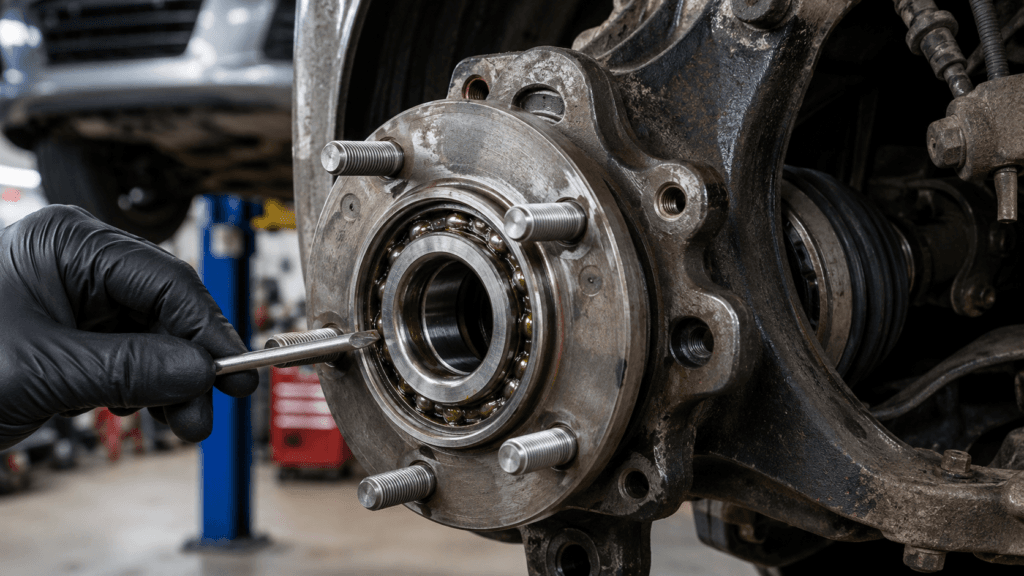
A wheel bearing is a set of steel balls held inside a metal ring called a race which sits right inside the hub of your wheel. It wraps around the axle shaft and lets the wheel spins freely by working to reduce friction between the moving parts.
One thing worth knowing is that car bearings are nothing like engine bearings. They are not lubricated on a continuous basis so they rely completely on staying sealed tight to block out water and road dust. The moment that seal wears out damaged wheel bearings start taking constant abuse from everything the road throws at them.
On top of that they support the full vehicle weight while driving and endure every hit from rough roads and potholes. The lateral forces during turning add even more pressure on that small piece of metal. Being directly exposed to the road means the friction and stress never really stops.
How to Identify a Bad Wheel Bearing Noise
A bad wheel bearing usually starts with a low-pitched hum that most drivers mistake for road noise. That humming noise while driving is easy to ignore at first but it gets worse over time. As the damage builds the sound shifts into a growl or rumble that rises in intensity with vehicle speed.
The classic sounds to watch for are cyclic chirping, squealing and growling noises. A clear sign that your wheel bearing noise is the real culprit is when the noise changes in proportion to your speed. Sometimes a failing CV joint can produce similar sounds so pay close attention to when and how the sound behaves.
Howling is another noise worth knowing. If it only shows up during deceleration it often points to a loose pinion-bearing preload. When howling happens during acceleration at different speeds it could be worn-out gears but worn-out bearings that fail to support the gears correctly make the exact same sound.
As things worsen the bearing may produce a harsh grinding, clicking or snapping sound. The volume tends to shift when turning, accelerating or decelerating which makes it easier to isolate the problem. If you are still unsure a proper wheel bearing noise test will confirm what your wheel and bearing are trying to tell you.
8 Common Bad Wheel Bearing Signs
A bad wheel bearing rarely fails without warning. It starts with small signs like grinding or humming that are easy to brush off. Those warning signs matter because catching early can save you from an expensive repair involving the hub, axle and suspension components. Here is what to watch for:
Grinding or Humming Noise
Most drivers miss the early signs because a bad wheel bearing starts as a faint light hum that blends right into road noise or tire droning. The difference shows up in how the sound behaves with speed. As you accelerate the hum starts to grow louder and more pronounced unlike general road noise which stays fairly consistent.
What makes it easier to spot is the pitch shift when you change lanes or take a sweeping curve. That is your worn bearing reacting to pressure. The grinding or humming noise follows the wheel rotation and stays on every road surface which means the noise is coming from the bearing and not the wheels or the road itself.
Steering Wheel Vibrations
A loose steering wheel or unexpected vibration through the steering wheel is something you should never ignore. It often points directly to a bad wheel bearing that has already started to wear. The feeling tends to get stronger during turning or when driving at highway speeds where the pressure on the bearing increases. Over time that bad wheel bearing will intensify the bearing play on your wheels making every turns and high speeds situation feel increasingly unstable. The more the bearing wear progresses the worse the steering wheel vibrations get.
If you also notice a power steering fluid leak alongside these vibrations it is worth getting the entire steering system inspected at the same time.
Loose Steering
Loose steering is not always an alignment issue. When your steering starts feeling vague or less responsive than usual a bad wheel bearing could be the real cause.
That looseness happens because excessive play builds up in the bearing over time which creates instability especially when turning corners. The wheel stops feeling precise and the steering wheel starts giving you unusual feedback that just does not feel right. Do not wait on this one. Schedule an inspection before the play in the bearing gets worse and the corners become genuinely difficult to handle.
Pulling to One Side
A worn wheel bearing can make your vehicle start pulling to one side while driving. As the bearing deteriorates it builds uneven resistance on the affected wheel which stops it from staying track straight and puts unequal forces on the drivetrain.
The tricky part is this symptom looks just like alignment problems and can make your car pull the same way. If your wheel alignment checks out fine then a worn bearing is likely the underlying reason being overlooked. You can read more about why your car might be pulling to one side and what else could be causing it. Get the bearing inspected before the resistance and forces make things worse.
Loose or Wobbly Wheel
A loose wheel or wobbly wheel is a serious safety concern that needs immediate attention. It means the bearing worn to a point where it can no longer hold wheel firmly in place. A severely worn bearing creates excess play in the wheel which shows up as a wobble at highway speeds or an unstable floating feeling through the steering.
You can check this yourself with a simple wheel shake test. Get the car lifted safely off the ground then grip tire at the 12 and 6 o’clock position and try rocking it back and forth. Any noticeable movement or clunking means the bearing failed and the play in the wheel has gone too far. So do not drive the vehicle until it has been inspected and repaired because the movement and speeds will only make things worse.
Uneven Tire Wear
A worn wheel bearing creates instability at the wheel hub that slowly ruins your tire. When the hub loses stability the tire loses consistent contact with the road surface and irregular wear begins. That eventually turns into excessive wear on one edge leaving a clear pattern behind. If you are already seeing other bearing symptoms on that same wheel then the uneven tire wear and the bearing damage are almost certainly connected.
ABS Light
Loose wheel bearings cause a loss of tight tolerances making the wheel and tire assembly flex and send vibrations through the system. Those vibrations can trigger the Anti-lock Braking System and set off the ABS or traction control warning light.
The brake rotors, calipers and pads pick up that movement too. The real issue is that bad wheel bearings are often misdiagnosed as a faulty sensor so always check the bearing before replacing the sensor.
Burning Smell
The grease inside a wheel bearing works to reduce friction and keep everything running cool. When that grease starts to lose its lubricating properties the friction builds fast and generates excessive heat.
That heat is usually what produces a burning smell or something acrid and plasticky coming from your wheel. If you catch that smell it means the bearing is already close to failing completely.
What Causes a Bad Wheel Bearing?
Wheel bearings are built to last but they are not invincible. Several factors can wear them down faster than expected and knowing what causes the damage helps you avoid it.
Bearing Quality
Not all bearings are made the same. A low quality bearing wears out much faster and fails under conditions that a premium one would handle without any issue.
Dust, Deep Water, and Harsh Weather Conditions
Bearings rely on their seals to stay protected. Exposure to dust, deep water, or extreme weather forces contaminants inside and breaks down the grease that keeps everything running smoothly.
Potholes, Speed Bumps, and Curbs
Every hard hit from a pothole, speed bump, or curb sends a sharp impact directly through the bearing. Over time that repeated stress cracks the bearing down from the inside.
Failed Wheel Bearing Seals
Once a seal fails the bearing is fully exposed. Dirt and moisture get in and the grease gets out which speeds up wear faster than almost anything else.
Loose or Overtightened Axle Nut
Too loose and the bearing shifts under load. Too tight and it binds under pressure. Either way the axle nut being off creates uneven stress that shortens the bearing’s life significantly.
Correct vs. Incorrect Installation
A bearing installed incorrectly will fail early every single time. Even a small mistake during fitting can create misalignment that puts the whole assembly under unnecessary strain.
Tire Size, Quality, Balance, and Pressure
Running the wrong tire size or driving on unbalanced and underinflated tires puts uneven load on the bearing constantly. Over time that imbalance takes a real toll.
Proper (or Lack Thereof) Suspension Alignment
Poor suspension alignment means the bearing carries load at the wrong angle. That puts stress on parts of the bearing that were never designed to handle it.
Excessive Weight
Bearings are rated for a specific load. Consistently carrying excessive weight pushes them past their limit and accelerates wear much sooner than expected.
How to Diagnose a Bad Wheel Bearing?
A bad wheel bearing usually gives itself away through a humming, growling or roaring noise that grows with vehicle speed. Before heading to a mechanic there are a few simple diagnostic methods you can try yourself to diagnose the problem early.
The Road Test
The road test is the first and most telling diagnostic step. Drive at highway speeds and gently wave vehicle side to side or perform smooth lane changes while paying close attention to how the noise changes. When you steer left the weight of the car weight transfers to the right wheels loading the right-side bearing and unloading the left bearing. If the humming or droning gets louder while weaving in one direction that side is likely the problem. A worn bearing gets noisier under load and you will notice the sound swell and fade as you shift direction.
The Jack-and-Spin Test
The jack-and-spin test gives you a much closer look. Lift vehicle at the suspect corner and spin wheel by hand while listening carefully. A healthy bearing spins quietly but a bad one produces a grinding, rumbling or gritty sensation like something rolling through gravel inside the hub. You can also try rocking the wheel at the 12 and 6 o’clock position to feel for noticeable play or clunking. Never work under a vehicle with only a floor jack. Always use a jack stand under a solid frame point and engage the parking brake while you chock wheels on the opposite side for safety.
Using a Mechanic’s Stethoscope
A mechanic’s stethoscope pinpoints the exact source of the noise with far greater precision than any other method. With the vehicle safely raised have a helper start the engine and bring the spinning wheels up to speed. On a front-wheel-drive vehicle you can drive the engine with the wheels off the ground. Press the stethoscope probe directly against the hub or bearing housing to isolate the bad corner. Keep the stethoscope probe away from any rotation parts and make sure your hands stay clear of all drivetrain components throughout the entire test.
Is It Safe to Drive With a Bad Wheel Bearing?
No. Driving with a bad wheel bearing is never safe and the risks are serious. A broken wheel bearing can seize without warning, overheat under pressure or in the worst case cause the wheel detach completely while you are moving. That alone makes it a major safety concern that should never be ignored.
The damage does not stop there. A failing bearing can interfere with your ABS and anti-lock braking system sensors which directly affects your braking performance. Your stopping distances get longer and ABS warning lights start showing up on your dashboard as the system struggles to function properly.
If you are wondering what happens when a wheel bearing goes out the answer is straightforward. Loss of steering control, brake failure and complete wheel lock-up are all real possibilities. The longer you keep driving on a bad bearing the closer you get to losing full control of your vehicle. Do not wait for the failure to happen on the road.
How Much Does It Cost to Replace a Wheel Bearing?
Wheel bearing replacement cost depends on your vehicle, the bearing type and whether you are paying for parts only or a full shop repair. An independent shop typically charges between $150 and $600 per wheel while a dealership pushes that figure even higher.
Press-in bearings found on older vehicles need a hydraulic press for proper removal and reinstallation making the work labor-intensive and equipment-dependent which drives labor costs up. Modern vehicles use bolt-on hub assemblies where the entire hub and bearing unit gets swapped as one piece making it a straightforward swap that keeps costs lower.
Tire position also plays a role. Front wheel bearings cost more because they connect to the steering knuckle and must fit around the CV axle on driven axles adding complexity to the job. Rear bearings on non-driven axles are simpler and cheaper in both parts and labor.
FAQs
How Long Can You Drive On A Bad Wheel Bearing?
Driving on a bad wheel bearing is simply not recommended. Once a bad wheel bearing is confirmed the vehicle should not be pushed beyond a few miles. The risk of severe steering loss or sudden wheel separation is very real and no destination is worth that kind of danger on the road.
How To Check For Bad Wheel Bearing?
Start by lifting the car and shake tire to feel for any play. Then spin the tire and press on the coil spring to detect vibrations. Any humming or grinding sounds that change when you turn point directly to a bad bearing. These quick checks can save you from a much bigger problem down the road.
Is A Bad Wheel Bearing Dangerous?
Yes a bad wheel bearing is extremely dangerous and unsafe. It causes unpredictable handling, loss of steering control and can even lock up the vehicle completely while driving. Never ignore a failing bearing because your wheel, steering and control all depend on it.
Can I drive with a noisy wheel bearing?
No. A noisy wheel bearing means it is already failing. Driving on it risks losing steering control and causing serious damage.
What causes wheel bearings to fail early?
Poor roads, heavy loads, water exposure, bad seals and incorrect installation all wear bearings down faster than expected.
Should I replace the hub assembly or just the bearing?
On modern vehicles replacing the full hub assembly is easier and more reliable. On older vehicles a press-in bearing replacement may work but costs more in labor.