
Contents
- Hard Brake Pedal: Causes, Tests & Safe Next Steps
- What Does a Hard Brake Pedal Feel Like?
- Is It Safe to Drive With a Hard Brake Pedal?
- 7 Common Causes of a Hard Brake Pedal
- 1. Failed Brake Booster
- 2. Cracked or Disconnected Vacuum Hose
- 3. Faulty Brake-Booster Check Valve
- 4. Weak or Failed Vacuum Pump
- 5. Seized Brake Caliper or Wheel-Cylinder Component
- 6. Restricted Brake Line or Contaminated Brake Fluid
- 7. Electronic Brake Booster, Sensor, or Software Fault
- 8.Hydroboost or Hydraulic Brake-Assist Fault
- How to Test the Brake Booster in Under a Minute
- Diagnostic Order: What Should You Check First?
- Estimated Hard Brake Pedal Repair Costs
- Why Is the Brake Pedal Hard After Brake Work?
- Can Worn Brake Pads Cause a Hard Brake Pedal?
- Frequently Asked Questions
- Final Conclusion
Hard Brake Pedal: Causes, Tests & Safe Next Steps
A hard brake pedal usually means the vehicle has lost some or all power-brake assistance. Common causes include a leaking vacuum hose, failed brake booster, faulty check valve, weak vacuum pump, hydroboost problem or electronic brake-assist fault. Because stopping may require much more force, treat a sudden hard pedal as urgent and have the braking system inspected before normal driving.
Safety warning: A suddenly hard brake pedal can substantially increase the force required to slow or stop the vehicle. If braking effort changes suddenly, stopping performance feels reduced, warning lights appear or you are unsure the vehicle can stop safely, leave traffic only when safe and arrange professional inspection or towing. Do not continue normal driving merely because some braking force remains.
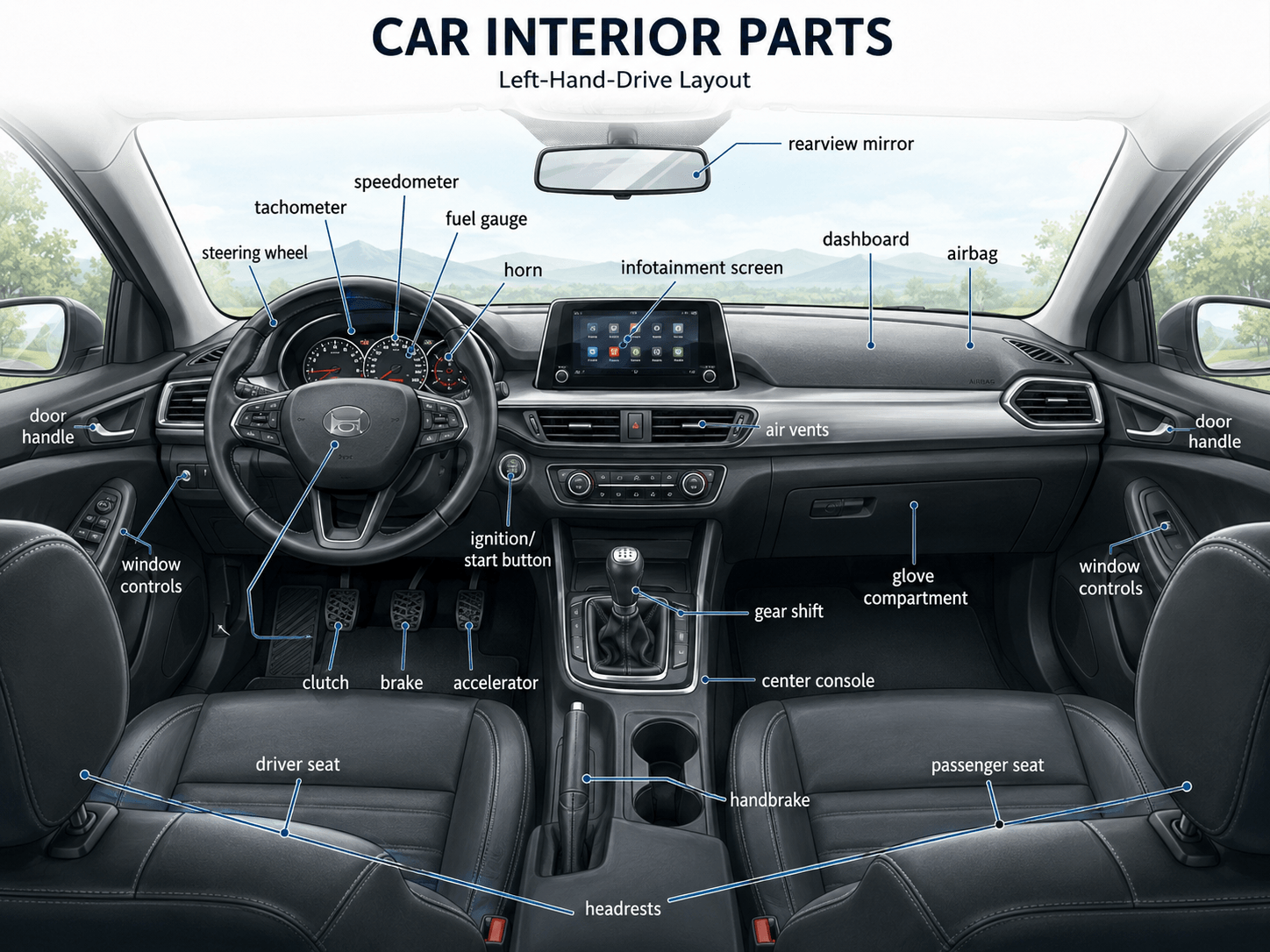
Not sure which pedal you’re even talking about? Check our guide on which side the brake pedal is on in automatic and manual cars first.
Don’t jump straight to “the booster is dead.” A split hose or a ten-dollar check valve can mimic booster failure almost perfectly. Check the cheap stuff first. Save the expensive parts for last.
What Does a Hard Brake Pedal Feel Like?
It feels like pressing against a wall. Stiff. Barely any travel, no matter how hard you push.
Drivers describe it as pushing into concrete. The pedal sits high instead of sinking the way it normally would.
That’s a very different animal from other brake complaints. Here’s how to tell them apart:
| Pedal condition | What it feels like | Likely problem area |
| Hard or stiff | Very difficult to press | Brake booster, vacuum supply, pump or caliper |
| Soft or spongy | Compresses easily, feels springy | Air in lines, fluid leak or flexible hose |
| Pedal goes low | Travels close to the floor | Hydraulic leak, adjustment issue or master cylinder |
| Pedal pulsates | Pushes back repeatedly | ABS operation, warped rotor or wheel-speed issue |
One caveat: a hard pedal with the engine off isn’t automatically a problem. The stored vacuum just runs out after a few pumps — that’s normal. It becomes a real fault when the pedal is still hard after you start the engine, or when it suddenly stiffens up while you’re driving.
Is It Safe to Drive With a Hard Brake Pedal?
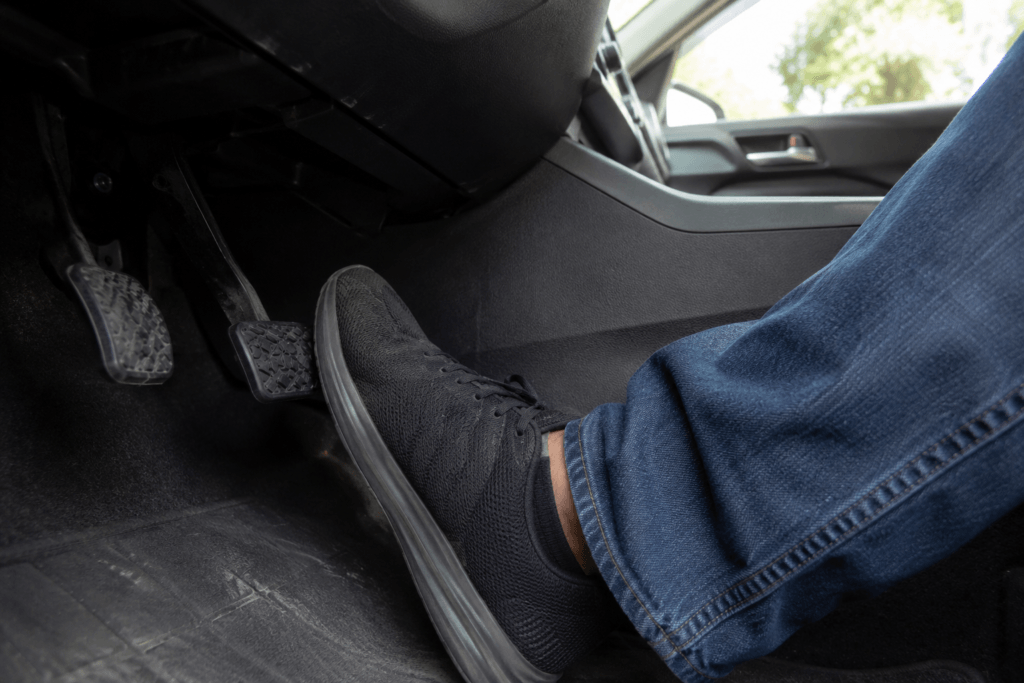
No.You’ll probably still have mechanical and hydraulic braking. But without power assistance, the force needed to stop the car climbs fast — and a failing booster can mean longer stopping distances right when you need them shortest. Don’t wait on this one.
If the pedal goes hard on you mid-drive:
- Push through it. Keep firm, steady pressure on the pedal.
- Don’t pump it repeatedly — unless your manufacturer specifically says to.
- Drop into a lower gear to help slow the car down.
- Hazards on.
- Work your way out of traffic as soon as it’s safe.
- Stop. Get it inspected or towed.
The car still stopping doesn’t mean it’s fine to keep driving. Treat this as urgent.
7 Common Causes of a Hard Brake Pedal
1. Failed Brake Booster
This is the usual suspect.
The booster sits between your pedal linkage and the master cylinder. On most gas engines, it borrows vacuum from the engine to multiply the force your foot puts in.
Inside, there’s a flexible diaphragm. Tear that diaphragm, or lose the booster’s ability to hold vacuum, and your assist disappears. The pedal stays high and hard — but stopping the car now takes real effort.
Watch for:
- Pedal stays hard even after the engine starts
- Longer stopping distances
- Hissing near the firewall or pedal area
- Idle changes when you press the brake
- First brake application feels fine, then it gets harder with each press after
A large internal vacuum leak can also drag your idle down or even stall the engine when you hit the brakes.
2. Cracked or Disconnected Vacuum Hose
The booster can be perfectly healthy and you’ll still get a hard pedal — if the hose feeding it has failed.
That hose runs from the intake manifold (or a vacuum pump) to the booster. Heat, age, oil contamination, vibration — any of it can split the rubber, soften it, collapse it, or work a fitting loose.
Check the whole run, especially:
- Both connection points
- Bends near the engine
- Anywhere touching hot components
- Soft, swollen, brittle, or collapsed sections
- Loose clamps and fittings
A hissing or whistling sound that shifts when you press the brake — that’s your tell. Firestone points out that a damaged hose losing vacuum produces the exact same stiff-pedal symptom as a failed booster.
The hose is cheap. It’s easy to swap. Rule it out before you authorize a full booster replacement.
3. Faulty Brake-Booster Check Valve
A bad one-way check valve lets stored vacuum bleed right back out of the booster.
It sits where the vacuum hose meets the booster, and its whole job is letting vacuum in while blocking it from flowing back out. When it fails, that first brake press might feel totally normal — then each one after gets a little harder. Stop-and-go traffic and repeated braking make this especially noticeable.
A technician can test it for proper one-way airflow, and replacing it costs a fraction of a full booster swap.
4. Weak or Failed Vacuum Pump
Diesels, turbocharged engines, and some hybrids often can’t generate enough intake-manifold vacuum on their own to run a standard booster. So they rely on a separate pump — and when that pump fails, the pedal goes hard.
Possible culprits:
- Failed electric vacuum pump
- Broken pump drive or belt
- Blown fuse or bad relay
- Wiring fault
- Restricted vacuum line
- Contaminated pump oil
- Faulty vacuum sensor
Some vehicles skip vacuum entirely and use a hydraulic booster powered off the power-steering system instead. Firestone notes that on those, low power-steering fluid, a dead pump, or a missing drive belt will produce the same stiff pedal.
5. Seized Brake Caliper or Wheel-Cylinder Component
Less common, but it happens — a seized caliper stops brake components from moving freely, and the pedal fights you.
You’ll usually see other symptoms alongside it:
- Car pulls to one side
- Burning smell near a wheel
- One wheel noticeably hotter than the rest
- Uneven pad wear
- Sluggish acceleration or worse fuel economy
- Brake drag after you let off the pedal
If your car is also pulling to one side, that’s a strong clue pointing to the caliper. See our full breakdown of why a car pulls to one side for more.
One important warning: never touch a rotor or caliper right after driving to check for this. They get hot enough to burn skin badly.
6. Restricted Brake Line or Contaminated Brake Fluid
Old brake fluid pulls in moisture over time. Combine that with corrosion, degraded rubber, or debris, and small hydraulic passages can restrict flow enough to make the pedal feel unusually firm. Firestone even lists sludge buildup in the lines as a possible cause once the booster has already checked out fine.
But don’t assume every fluid issue causes this. Low fluid, air in the lines, and external leaks are far more likely to give you a soft or sinking pedal — the opposite problem.
Look out for:
- Dark or cloudy fluid
- Swollen rubber seals
- Uneven braking side to side
- A wheel that won’t release properly
- Recent top-off with the wrong fluid type
One hard rule: never add power-steering fluid, engine oil, or transmission fluid to the brake reservoir. Petroleum products will eat through the seals in your braking system.
7. Electronic Brake Booster, Sensor, or Software Fault
Hybrids, EVs, and a growing number of gas vehicles now run electric motors, pressure accumulators, control modules, or full brake-by-wire setups instead of a simple vacuum booster. When something in that electronic chain fails, you get a hard pedal too.
Signs to watch for:
- ABS or stability-control warning lights
- A “brake system fault” message
- Sudden shift in pedal effort
- Hard pedal following a low-voltage event
- Regenerative braking that stops blending in
- Diagnostic trouble codes
Seeing a dashboard warning instead of just a hard pedal? Read our dedicated guide on Service Brake Assist warnings for what those messages actually mean
You’ll need a scan tool that can actually read the ABS or brake-control module here — a basic engine-code reader won’t cut it. Worth checking the VIN against manufacturer recalls or service campaigns too, while you’re at it.
8.Hydroboost or Hydraulic Brake-Assist Fault
Some vehicles use hydraulic pressure rather than engine vacuum to provide brake assistance. A hard pedal can result from insufficient hydraulic assistance, a pump problem, damaged hose, control-valve fault or accumulator issue. Steering symptoms may also appear on some designs, but this is not universal. Identify the exact system and follow its OEM diagnostic procedure before replacing components.
How to Test the Brake Booster in Under a Minute
This checks whether the pedal drops when the engine kicks in vacuum assist. Only do this parked, engine off, car secure.
- Switch off the engine.
- Press and release the pedal several times.
- Keep going until it goes firm.
- Hold steady pressure on it.
- Start the engine without lifting your foot.
- Watch what the pedal does.
Drops slightly? The booster is getting at least some assistance. Stays rock-hard? Either the vacuum isn’t reaching it, or the booster’s shot. Both Firestone and Direct Brakes list this engine-start check as a solid first move.
It won’t tell you which part failed, though. The hose, valve, pump, vacuum source, and booster all still need separate testing.
Diagnostic Order: What Should You Check First?
Start cheap. Work your way up.
- Confirm the pedal is only hard with the engine off.
- Check for brake and ABS warning lights.
- Listen for hissing while pressing the pedal.
- Inspect the vacuum hose and fittings.
- Test the booster check valve.
- Run the engine-start booster test.
- Measure vacuum supply with a gauge.
- Scan the brake-control module on electronic systems.
- Inspect calipers, hoses, fluid condition, and hydraulic restrictions.
- Confirm the diagnosis before buying any parts.
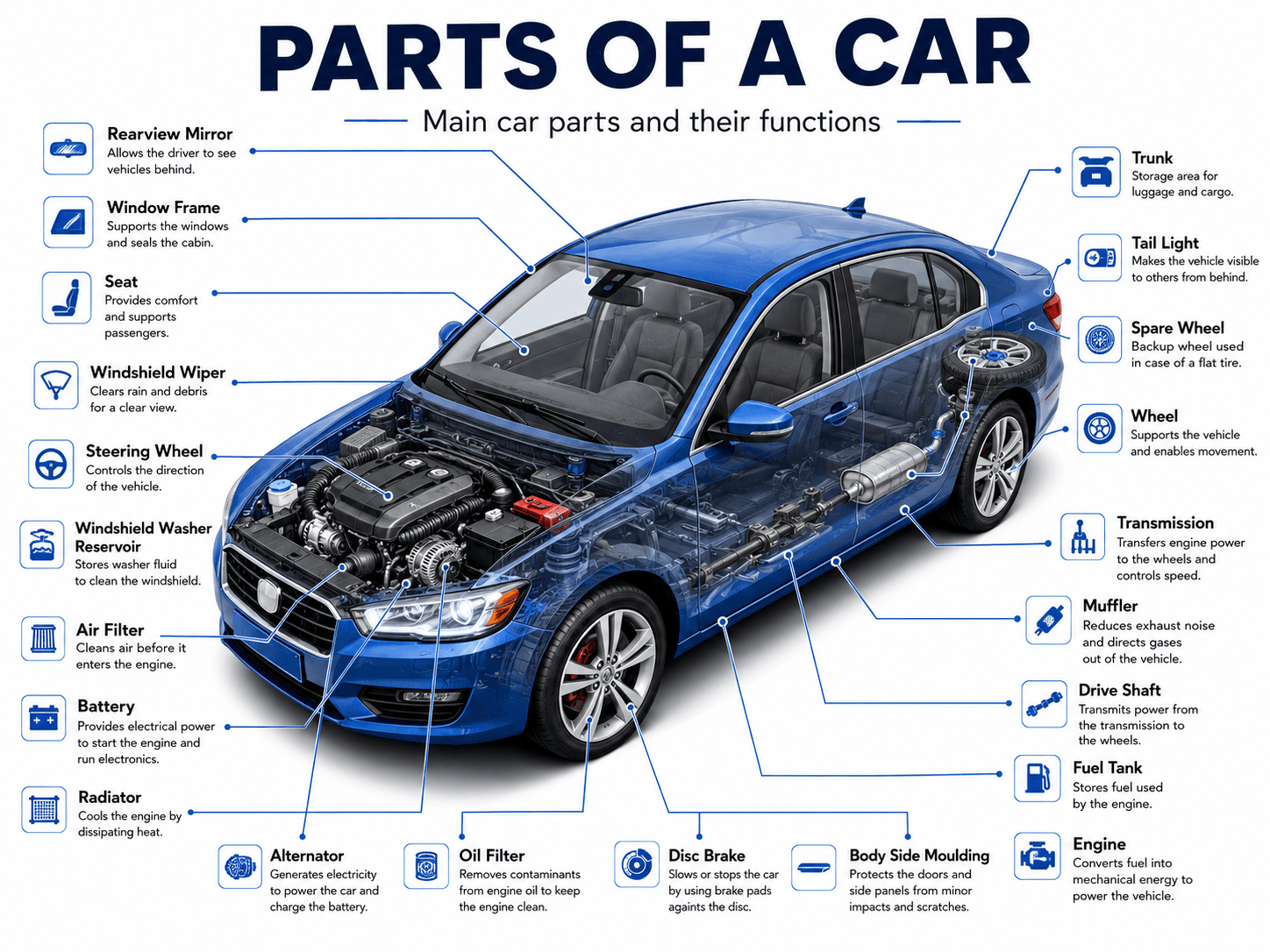
A vacuum gauge does the real work of separating a bad booster from a weak vacuum supply. If you’re not familiar with where each brake component sits in the system, our guide to the main parts of a car breaks down the full layout, brakes included.
AutoZone’s advice is simple: confirm vacuum is actually reaching the booster before you condemn the booster itself.
Estimated Hard Brake Pedal Repair Costs
What you pay depends entirely on whether this is a fifteen-dollar hose or a full electronic booster unit. These are broad U.S. estimates for planning purposes — your actual invoice will shift based on vehicle, labor rates, parts quality, and location.
| Possible repair | Estimated parts | Estimated labor | Estimated total |
| Vacuum hose | $15–$70 | $40–$120 | $55–$190 |
| Booster check valve | $10–$60 | $40–$100 | $50–$160 |
| Brake-fluid flush | $15–$40 | $70–$160 | $85–$200 |
| Vacuum pump | $120–$500 | $120–$350 | $240–$850 |
| Brake caliper replacement | $100–$350 | $100–$250 | $200–$600 |
| Vacuum brake booster | $150–$600 | $200–$600 | $350–$1,200 |
| Electronic booster unit | $500–$1,800+ | $250–$700 | $750–$2,500+ |
One question can save you real money: ask the shop whether the booster actually failed internally, or whether it simply wasn’t getting vacuum in the first place. That distinction is often the difference between a $150 hose and a $1,200 booster.
Why Is the Brake Pedal Hard After Brake Work?
If this started right after a repair, the problem is probably installation, adjustment, or something disturbed during the job. Common causes:
- Vacuum hose left disconnected
- Check valve installed backward
- Booster hose damaged during the work
- Incorrect booster pushrod adjustment
- Binding pedal linkage
- Master cylinder installed wrong
- Caliper or slide hardware binding
- Electronic booster calibration never completed
- Wrong brake fluid used
A slightly firm pedal right after new pads go in can be normal. Excessive effort is not. Don’t push the car hard on a test drive until you’ve confirmed the brake assist is actually working properly.
Can Worn Brake Pads Cause a Hard Brake Pedal?
Not really. Worn pads typically bring noise, weaker braking, or a pedal that travels farther — not one that turns to stone.
Pads clamp onto the rotors once hydraulic pressure reaches the calipers. That’s the whole relationship: pedal, fluid pressure, calipers, pads, rotors. A seized or badly installed caliper can contribute to a hard pedal indirectly, but plain old pad wear on its own isn’t where you should be looking.
If squeaking or grinding is your main complaint instead of a hard pedal, check out why your car squeaks when reversing — that’s usually a pad or rotor issue, not a booster problem.
Frequently Asked Questions
Why is my brake pedal hard when the engine is off?
That’s usually normal — the booster’s stored vacuum has simply run out. It should ease up or drop slightly once the engine’s running. If it’s still hard with the engine on, look at the vacuum supply, check valve, pump, and booster.
Can a vacuum leak cause a hard brake pedal?
Yes. A leak stops the booster from multiplying your pedal force, whether it’s in the hose, check valve, booster diaphragm, intake connection, or vacuum pump. Hissing plus an idle change when you brake — that combination is a strong clue.
Can low brake fluid make the brake pedal hard?
Not usually — low fluid is far more likely to cause a soft, low, or inconsistent pedal. If your reservoir’s low, go looking for leaks and worn components. Fluid doesn’t just vanish on its own, and topping it off won’t fix whatever’s actually causing the loss.
Final Conclusion
A hard brake pedal most often directs diagnosis toward lost or reduced brake assistance, but the failed component may be a hose, check valve, vacuum pump, booster, hydroboost system or electronic brake-control component. Confirm the assist-system type and test its supply before replacing parts. If pedal effort changes suddenly or safe stopping is uncertain, stop normal driving and arrange professional inspection.