
Contents
Introduction
Most car owners have faced or at least feared running out of gas, especially in the middle of a journey, and it quickly turns into a frustrating experience when the gasoline level drops and the car running suddenly stops. I have seen how poor fuel management and lack of fuel awareness lead to this common occurrence prevention issue, even though many human beings rarely think about the weight of gas or how a gallon of gas adds up in terms of gas weight and gasoline weight. Looking at volume charts and understanding weight according to volume helps explain differences like gas vs water, gas vs diesel, and how diesel weight compares to water weight in real fuel comparison scenarios. This kind of gasoline information and practical fuel knowledge improves fuel usage, smarter fuel planning, and avoids journey interruption, fuel shortage, and problems with smooth vehicle operation caused by poor fuel consumption control.
How Much Does Gas Weigh?
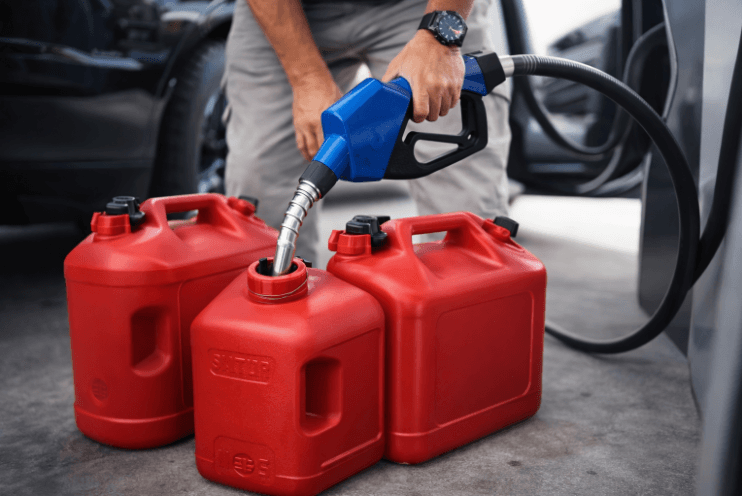
Many car owner questions come down to a simple gas weight question, especially for freshers looking for principal information about keeping a car running smoothly. The gallon of gas weight depends on fuel weight, and on average gasoline weight is about 6.1 pounds per U.S. gallon, as noted in the science and technology desk reference. Compared to other liquid stuffs, the density and molecule content explain why gasoline lighter than water, making a gallon of gas lighter, while diesel heavier than gasoline due to density difference and higher number of molecules. Think of a gallon of gasoline like a bottle of soda or a 2 litres bottle, lighter than a toaster weight comparison, which helps in understanding real gas weight comparison, fuel density, molecular structure, and overall liquid comparison, especially when storing gas in a container alongside diesel weight and water weight comparisons.
What Is The Gas Weight Of A Full Tank?
The gas weight of a full tank depends on the tank size of the car or boat. Smaller cars often have a gas tank of 12 gallons, while larger cars may have a bigger gas tank with 15 gallons or 16 gallons and more capacity. Even grilling tanks show how storage affects weight, since an empty grilling tank may be around 17 pounds and reach a maximum 20 pounds. So, gasoline capacity, fuel capacity, storage volume, vehicle fuel tank size, tank measurement, fuel storage, and final gas tank weight all go together.
How Much Does a Gallon of Gas Weigh?
A gallon of gas weigh around 6.1 lbs or about 2.7 kg, depending on fuel weight measurement standards like the U.S. gallon of gas referenced in the science and technology desk reference. When comparing diesel weight comparison and water weight comparison, the density difference becomes clear because of varying molecules, where gasoline density, diesel density, and water density all differ. Understanding these weight units like kilogram and pounds helps in accurate liquid density comparison and better real-world fuel estimation.
Does The Weight of Gasoline Change When It’s Colder or Warmer?
Yes, the weight of gasoline can show a tiny difference when it is colder or warmer, because gas weight change is linked to temperature change, humidity, and overall weather condition, though the slight difference in real weight variation usually rarely exceeds 1 pound and is often a lesser amount. Ideas like Charles’ law and Gay-Lussac’s law explain the temperature and volume relationship and directly proportional relationship between pressure, a given mass of gas, and absolute temperature. If gas volume kept constant and gasoline becomes hotter, pressure increases, and vice versa, showing normal gas behavior under thermal change. In simple terms, fuel weight variation, gas pressure, temperature effect, volume effect, weather impact, and humidity effect all matter a little, but not enough to worry most drivers.
Different Types of Gas
There are different types of gas, mainly the 3 types of gas sold at gas stations in the United States, and they are separated by octane rating for easy gas comparison. These include regular gas, mid-grade gas, and premium gas, each with a different octane level such as 87 octane, 88 to 90 octane, and 91 to 94 octane. The right one depends on vehicle type, because most regular vehicles use basic fuel, while special vehicles and some super vehicles with extremely high performance may need high-octane gas or even very high octane gas. These fuel grades, gas categories, gasoline types, fuel options, octane comparison, and overall U.S. gas types help drivers choose properly.
Regular gas
Regular gas is the common gas most often sold and used by most vehicles, because many vehicle manufacturers tell car owners it is the recommended fuel and the optimum standard for most vehicles. It is usually cheaper than other types of gas and normally comes at 87 octanes, making it the usual standard gasoline, everyday fuel, common fuel type, affordable gas, and best match for regular vehicles.
Mid-grade gas
Mid-grade gas is a specialty gas made for a certain type of vehicle and some specific make and models that are designed to run better with a higher octane level. Certain specific SUVs and cars needing higher octane levels may get more optimal performance and better engine performance from 88 to 90 octanes, although it is relatively more expensive in a regular gas comparison. So it works as mid-level fuel, specialty fuel, vehicle-specific gas, and sometimes a useful performance fuel.
Premium gas
Premium gas has the highest-octane level commonly sold at gas stations in the U.S., but most cars do not need it. It is mainly for high-performance cars that require an actual high octane level, often sold as premium fuel with 91 to 94 octanes. It costs more than mid-grade gas and regular gas, but for the right engines it works as high octane gas, super gas, and the best option for super high performing vehicles engines, performance vehicles, and drivers choosing an expensive fuel with the top fuel grade.
Learn about parts of car door
FAQs
Q: How much does a gallon of unleaded gasoline weigh?
A gallon of unleaded gasoline or unleaded gas in a U.S. gallon weighs about 6.1 pounds, while an imperial gallon is closer to 7.2 pounds due to different volume sizes like 2.7669 liters vs 3.2659 liters. This breakdown of weights helps in fuel measurement, weight comparison, and understanding gasoline weight in pounds and liters, especially when calculating gas pricing, gallon of gas cost, or national average gas price like an estimated cost of 3.416 dollars in simple imperial vs U.S. gallon comparisons.
Q: What does 5 gallons of gas weigh?
For 5 gallons of gas, using unleaded gasoline at 6.1 pounds per gallon gives around 30.5 pounds, and in volume that equals about 13.8345 liters from 2.7669 liters per gallon. This simple arithmetic shows how gas quantity and numbers of gallons have a direct influence on weights of gas, useful for a boating trip or car trip, where gasoline burn, boat engine, or car engine efficiency, engine fuel mileage, and how many gallons needed or what the tank takes matter for a sufficient quantity in every trip, improving fuel planning, trip calculation, and gas weight calculation.
Q: What does 100 gallons of gas weigh?
Around 100 gallons of gas can weigh close to 700 lbs, which is far beyond what small cars with small fuel tank capacity like 12 gallons of gasoline or 15 gallons can carry. Even a boat gas tank with 30 gallons of gasoline weighs roughly 183 to 189 pounds, depending on boat size like a small boat using 5 gallons, while a large yacht may hold 250,000 gallons of gasoline. This shows how fuel tank capacity, gasoline storage, large capacity tank, boat fuel volume, and car fuel volume all affect gallon weight calculation.
Q: What is heavier water or gasoline?
Between heavier water or gasoline, water is heavier because among liquid substances they differ in weight due to greater density. That is why gasoline float on water, since a gallon of gasoline is lighter than a gallon of water which weighs about 8.4 pounds. This comes from differences in density, molecular content, and overall liquid comparison and density comparison, showing clear contrast between gasoline weight, water weight, and flotation in fuel and liquid comparison.
Q: Is jet fuel heavier than gasoline?
Yes, jet fuel is heavier than gasoline because it is a hydrocarbon with 12 to 15 carbon atoms compared to gasoline’s 7 to 11 carbon atoms, making it closer to kerosene. This fuel mix with added injected addictive elements makes it heavier in every respect, and in gasoline comparison, its longer carbon chain, different fuel structure, higher fuel density, and specific aviation fuel design show stronger hydrocarbon content and richer additive mixture.
Q: How much does a gallon of 93 octane gasoline weigh?
A gallon of 93 octane gasoline usually weighs around 6 to 6.1 pounds, similar to 91 octane gasoline, since octane does not change weight much. Even though it is more expensive than regular gas, it falls under 91 to 94 octane in the premium gas category, compared with mid-grade gas at 88 to 90 octane and 87 octanes for standard fuel. So premium gasoline, octane rating, fuel grade, gas category, and octane comparison mainly affect fuel cost, not gasoline weight.
Q: Does gas weigh the same as diesel?
No, gas and diesel are different, as a gallon of diesel fuel weighs about 7.1 pounds, while a gallon of gasoline is around 6.1 pounds, meaning diesel 1 pound heavier. This difference in weight comes from larger density, bigger molecules, and different fuel molecules, along with higher autoignition temperatures and flashpoints. So in diesel vs gasoline comparisons, fuel density, diesel weight, gasoline weight, and overall fuel properties and combustion characteristics all differ clearly.