
Contents
- How To Open A Locked Car Door — 7 Methods That Actually Work
- Understanding Your Car’s Door Lock First
- All 7 Methods at a Glance
- What About Using a Shoelace?
- How To Prevent Getting Locked Out Again
- Frequently Asked Questions
- Can I open a locked car door with a credit card?
- Will my car alarm go off if someone opens the door without a key?
- Is it illegal to break into your own car?
- My key is inside the car but the spare is at home — what’s the quickest option?
- What if my key is stuck in the ignition rather than locked inside the car?
- Can extreme cold or heat affect my car’s door lock?
- Final Word
How To Open A Locked Car Door — 7 Methods That Actually Work
In a hurry? The fastest and safest ways to open a locked car door are: use your spare key, call a locksmith, or contact roadside assistance. The DIY methods further down this guide work in a pinch — but read each one carefully before you try anything, because some can cause real damage if done wrong.
It happens to almost every driver at some point. You close the door, hear the click, pat your pockets — and nothing. The keys are sitting on the seat, or on the floor, or somewhere inside the car staring back at you. That sinking feeling is all too familiar, and when you’re already running late, it’s even worse.
Knowing how to open a locked car door before this happens puts you in a much better position than panicking and trying whatever looks promising on YouTube. Some methods genuinely work. Others look good online but end up damaging your door seal, lock mechanism, or window — adding an expensive repair on top of an already frustrating day.
This guide covers seven real methods — from the completely safe and obvious to the absolute last resort — with honest advice on when to use each one and what to watch out for. And if the problem isn’t a locked door but a key that won’t turn or come out, that’s actually a different situation — check the guide on car key stuck in ignition instead, because the fix is completely different.—
Understanding Your Car’s Door Lock First
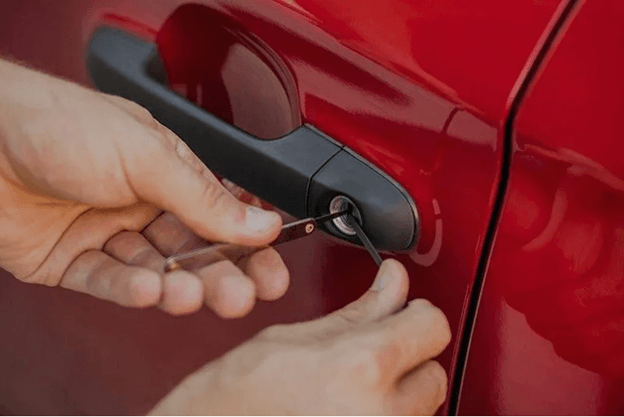
Before trying anything, it helps to know what type of locking system your car has — because the method that works on one car might not work on another, and could even make things worse if you try it on the wrong type.
| Lock Type | Common In | What To Know |
|---|---|---|
| Manual (vertical post lock) | Older vehicles, budget cars | Visible lock post near window — some DIY methods apply |
| Power locks (electrical) | Most modern cars | Controlled by a switch inside — wiring inside the door is delicate |
| Keyless / smart lock | Newer models | No physical key slot — proximity-based; different lockout scenario |
For a deeper look at how your door is built — the components inside the panel, the latch, the lock rod — the guide on car door parts and their functions covers all of it. Understanding the structure helps you see why some of the DIY methods below carry real risks, especially on modern doors with power locking systems.—
All 7 Methods at a Glance
| Method | Risk Level | Works On | Cost |
|---|---|---|---|
| Spare Key | ✅ None | All vehicles | Free |
| Key Fob / Remote | ✅ None | Cars with power locks | Free |
| Call a Locksmith | ✅ Very Low | All vehicles | Paid service |
| Roadside Assistance | ✅ Very Low | All vehicles | Usually covered |
| Air Wedge + Rod | ⚠️ Moderate | Most cars (carefully) | Free / Low |
| Coat Hanger / Slim Jim | ⚠️ High | Older manual locks only | Free |
| Breaking the Window | 🚨 Emergency Only | All vehicles | Window replacement |
—
Method 1 — Use Your Spare Key
This is the most obvious solution, but it’s worth saying clearly: the single best thing you can do right now, before you ever need it, is to make sure you have a spare key and that it’s accessible.
Most people keep a spare at home. That works fine if you’re locked out near your house, but not if you’re at a petrol station an hour away from home. The better approach is one of these:
- Give a spare to someone you trust — a family member, a friend who lives nearby, or a neighbour. One phone call and your problem is solved.
- Magnetic key box under the car — small metal boxes attach to your car frame and hold a spare key. The risk is that they can fall off on rough roads, so check it’s firmly attached to a flat, concealed surface.
- Keep one in your wallet — most modern keys have a basic mechanical key (usually hidden inside the fob) that can open the door manually. Ask your dealer about a thin “valet key” copy.
If you don’t have a spare yet — make one this week. A basic key copy costs very little and can save you a lot of trouble down the road. Literally.—
Method 2 — Key Fob / Remote Unlock
This sounds obvious, but it’s easy to forget in a stressful moment. If your car has a remote key fob and the door locked automatically while the fob was left inside, check whether you can unlock it via a second fob, a phone app, or a manufacturer’s remote service.
Many newer cars can be unlocked remotely through:
- A secondary key fob (some cars come with two)
- A smartphone app linked to the car (e.g., BMW Connected, Toyota Remote Connect, Hyundai Bluelink)
- Calling the manufacturer’s roadside assistance — many can unlock the car remotely over their connected systems
If the fob isn’t responding and you’re not sure why, it’s worth knowing that a dead key fob battery is one of the most common and overlooked causes. The guide on keyless remote battery low explains the symptoms and how to check — it’s a quick fix that avoids the entire lockout problem in the first place.—
Method 3 — Professional Locksmith
When all the easy options are off the table, calling a locksmith is almost always the smartest move. A trained automotive locksmith carries the right tools — air wedges, long-reach tools, bypass equipment — and knows how to use them without damaging the door panel, weather sealing, wiring, or the lock mechanism itself.
The common worry is cost. And yes, a locksmith visit has a price attached. But compare that to the cost of a damaged door seal, a bent lock rod, or a scratched paint job from a DIY attempt gone wrong — professional help is often the cheaper outcome overall.
A few practical things:
- Search “automotive locksmith near me” — choose one with reviews specifically mentioning car lockouts, not just door locks
- Ask for a rough price before they arrive
- Most respond within 30–60 minutes depending on your location
- Legitimate locksmiths will ask you to prove ownership (ID, registration) before opening the car — this is normal and correct
—
Method 4 — Roadside Assistance Service
If your car insurance, credit card, or vehicle warranty includes roadside assistance, a lockout call is almost always covered. This is essentially a free professional locksmith service that you’ve already paid for through your policy or membership.
Before you try anything else, check:
- Your car insurance policy documents — many include emergency assistance
- Your credit card benefits — premium cards often include roadside assist
- The car manufacturer’s warranty package — new cars frequently include this for the first few years
If you’re stuck somewhere unfamiliar, late at night, or with a child in the car, this is your safest, most reliable option. Don’t try DIY methods in an unsafe location when professional help is just one call away.—
Method 5 — Air Wedge + Rod Method
This is the method professionals actually use — and the one that gets misunderstood when people try to replicate it at home. The idea is to gently create a small gap at the top corner of the door (using an inflatable wedge or a thin wedge pad) and then feed a long, thin reach tool through the gap to press the unlock button inside the car.
Done properly, it works cleanly and leaves no damage. Done wrong — especially if you’re forcing the gap with a screwdriver — it bends the door frame, tears the weather stripping, or in the worst case, cracks the window or damages electrical wiring hidden inside the door panel.
1
Find the top corner of the door on the hinge side — this is the most flexible point in the door frame.
2
If using a wedge pad, gently press it into the corner to create a small gap — about 1–2 cm is enough. Do not force it wider.
3
Feed a long, thin rod (a proper long-reach tool — not a screwdriver) through the gap.
4
Carefully navigate the rod to the door’s interior lock button or door handle and press or pull to unlock.
5
Remove the wedge and tool before opening the door — leaving them in while opening can bend the door frame.
⚠️ Important: A screwdriver is not a wedge and should never be used as one. The metal edge concentrates force on a tiny point — it will bend the door frame and damage the paint and seal. If you don’t have proper tools, skip this method and call a locksmith.
To understand why the door structure makes this tricky, it helps to know what’s inside your door panel — the lock rod, the latch mechanism, the wiring. The guide on car door parts gives a clear picture of all of that.—
Method 6 — Wire Hanger / Slim Jim
You’ve probably seen this in old movies. Someone bends a wire coat hanger into a long hook, slips it between the window and weather stripping, and somehow pops the lock. In theory, it works. In practice, it’s much harder than it looks and carries a real risk of damage.
A Slim Jim is a flat metal tool designed to slip between the window glass and the door’s rubber weather seal, then hook or push the lock rod inside the door to unlock it. Wire hangers are a rougher DIY version of the same idea.
When this might apply: Older vehicles with vertical manual lock posts — the kind you can see sticking up near the window — where the lock mechanism is simpler and easier to reach.
Why it’s risky on modern cars: Newer vehicles have power lock systems with electrical wiring running inside the door panel. Slipping a metal tool through the weather stripping and dragging it around blindly can snag wiring, scratch the inner window surface, tear the seal, or damage the lock mechanism — turning a lockout into a much more expensive repair.
Even on older vehicles, you need to know exactly where the lock rod is located inside that specific door before attempting this. Getting it wrong bends the rod and can jam the lock permanently. Unless you genuinely know the internal layout of your car door — and most people don’t — this method is best left to the professionals who actually have the right Slim Jim equipment and the experience to use it safely.—
Method 7 — Breaking the Window
This is the last option on this list for a reason — it’s expensive, messy, and completely irreversible. But there are real situations where it’s the right call, and knowing how to do it properly matters.
When breaking the window is justified:
- A child or pet is locked inside in hot weather — this is a genuine emergency and should not be delayed
- A medical emergency inside the vehicle
- No other option is available and help is far away
How to do it properly:
1
Choose the right window — not the windshield (laminated safety glass, extremely hard to break) and ideally not the driver’s window if you need to reach inside comfortably. A smaller rear side window is usually the easiest and least expensive to replace.
2
Use a proper glass breaker tool if you have one — they are designed to shatter car glass with minimal force and are small enough to keep in a glove box. A centre punch tool works the same way.
3
Strike the corner or edge of the window — not the centre. The corners are the weakest points. The centre of tempered car glass is actually quite strong and resists direct blows much better than the edges.
4
Once the window shatters (tempered glass breaks into small blunt pieces, not sharp shards — but still be careful), clear the remaining glass from the frame before reaching inside.
5
After regaining access, cover the broken window with a plastic sheet or bin bag and keep the car in a sheltered spot until the glass can be replaced. Most auto glass shops offer same-day or next-day service.
💡 Tip: Keep a glass breaker keychain tool in your car. It costs almost nothing and takes up no space — but in a real emergency with a child locked in during summer heat, those few seconds matter enormously.—
What About Using a Shoelace?
You’ll find this method on various websites, and it’s worth addressing directly: the shoelace technique involves working a looped piece of string into the gap between the door and the frame, positioning the loop around a vertical lock post, and pulling the ends of the string to tighten the loop and pull the post up.
Here’s the honest answer: this only has any chance of working on older vehicles with a tall vertical lock post that sits near the window and protrudes clearly above the door panel. On practically every car made in the last 20 years — including most budget modern cars — the locking mechanism is recessed inside the door, completely inaccessible by string. Even on older cars, getting the loop to sit correctly around the post is far harder in practice than it appears.
It’s not dangerous to try, but don’t count on it working. Spend that energy making a phone call instead.—
How To Prevent Getting Locked Out Again
Getting locked out once is understandable. Getting locked out repeatedly because nothing changed — that’s the avoidable part. A few habits make a real difference:
- Always make a spare key — keep it with a trusted person, not just at home where it can’t help you
- Check for your key before closing the door — especially in a rush; that moment of habit costs nothing
- Keep your key fob battery fresh — a fob that doesn’t respond feels like a lockout even when it isn’t one. If yours has been sluggish, check the keyless remote battery guide for when and how to replace it
- Save your locksmith and roadside assistance numbers — don’t search for them while you’re stressed on the roadside
- Add a hide-a-key box to your vehicle — properly secured under the frame, not loosely attached
It’s also worth understanding what powers your door lock system. If you’ve ever seen a battery saver active warning on your dashboard, the car was protecting its charge — and a weak battery can sometimes cause power locks to behave strangely, including not responding as expected. Keeping your car’s electrical system healthy reduces the chance of lock-related electrical failures.
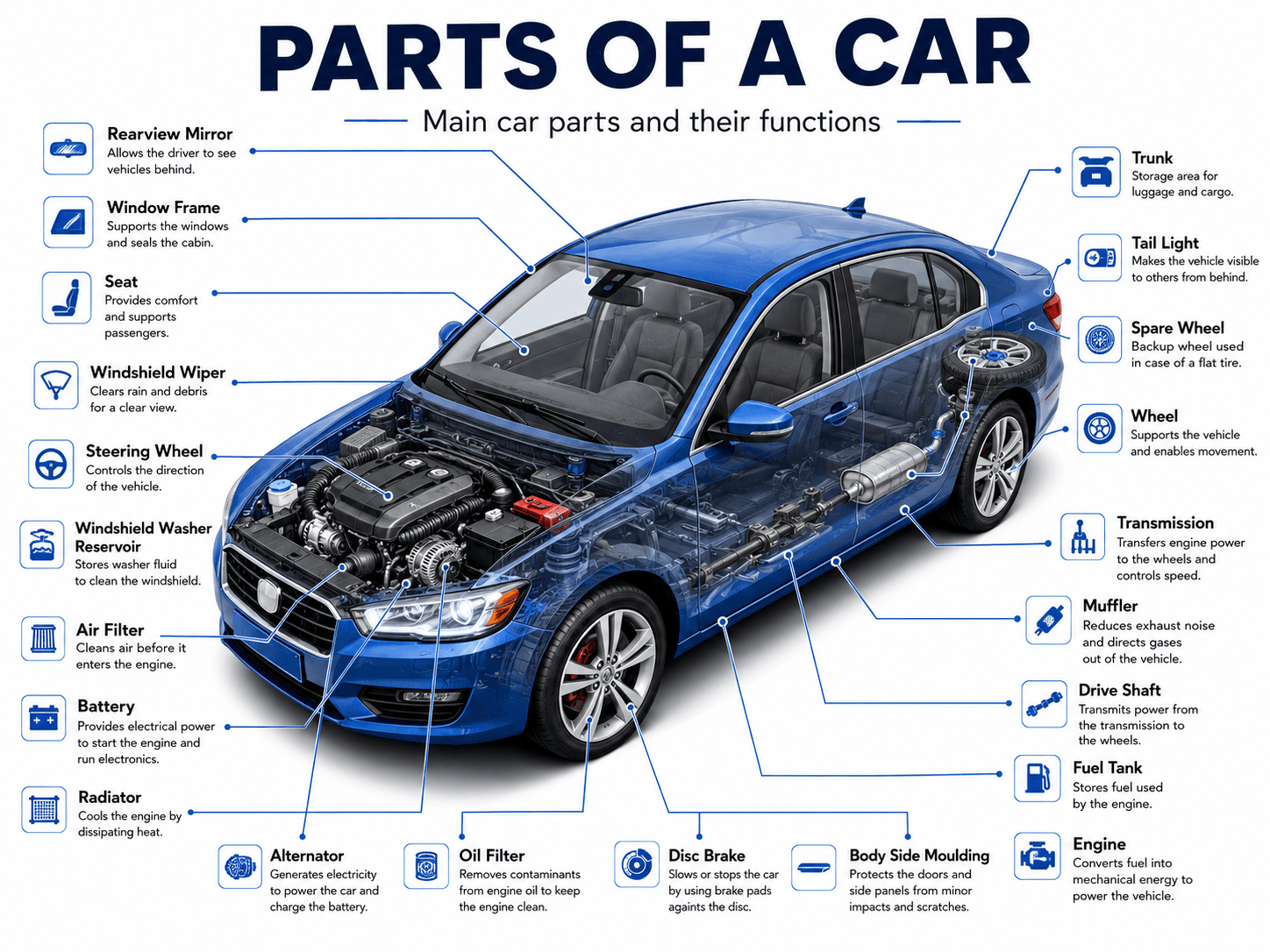
And if you want a broader understanding of all the systems in your car — including the door locks, electrical system, and security features — the guide on all major parts of a car is a solid place to start.—
Frequently Asked Questions
Can I open a locked car door with a credit card?
The credit card method only works on certain interior privacy latches — the kind on hotel rooms or lightweight door catches. Car door locks are completely different mechanical systems. Sliding a card into a car door gap does nothing useful and can crack or damage the card and the door seal. Don’t bother.
Will my car alarm go off if someone opens the door without a key?
It depends on the car’s security system. Modern cars with immobilisers and sensors will typically trigger the alarm if the door is forced open without the correct key signal. Professional locksmiths usually know how to disarm or bypass this cleanly. If you’re attempting a DIY method and the alarm goes off, it can usually be stopped by unlocking with the key fob or by disconnecting the battery briefly — though that resets your radio presets and clock.
Is it illegal to break into your own car?
Generally, no — it’s your vehicle. However, if you’re breaking in on a public road and a passerby calls the police, be prepared to show ID and proof of ownership such as your registration document. Police can also assist with lockouts in many situations, particularly emergencies involving children.
My key is inside the car but the spare is at home — what’s the quickest option?
Call someone at home to bring the spare key, or call a locksmith to come to you. These two options are the fastest path back into your car without any risk of damage. If your insurer or card provider offers roadside assistance, that call is worth making first — it may be free.
What if my key is stuck in the ignition rather than locked inside the car?
That’s a completely different problem with different causes — most commonly a locked steering column, a worn key, or an ignition cylinder issue. The guide on car key stuck in ignition covers the exact steps to handle that situation safely without forcing or breaking anything.
Can extreme cold or heat affect my car’s door lock?
Yes. In very cold climates, door locks can freeze — the keyhole mechanism and the door latch can both ice up. Specialised lock de-icer spray thaws it quickly. In extreme heat, rubber door seals can temporarily swell or stick, making doors feel harder to open. These are usually temporary and resolve once temperatures normalise.—
Final Word
Getting locked out of your car is stressful, but it’s a manageable situation — as long as you don’t panic and try something that makes it worse. The three options that will almost never let you down are your spare key, a locksmith, and roadside assistance. Everything else involves trade-offs between risk, effort, and possible damage.
If you take one thing from this guide: go make a spare key after reading this. Give it to someone reliable. It’s the cheapest and most effective insurance against this problem ever causing you real trouble again.
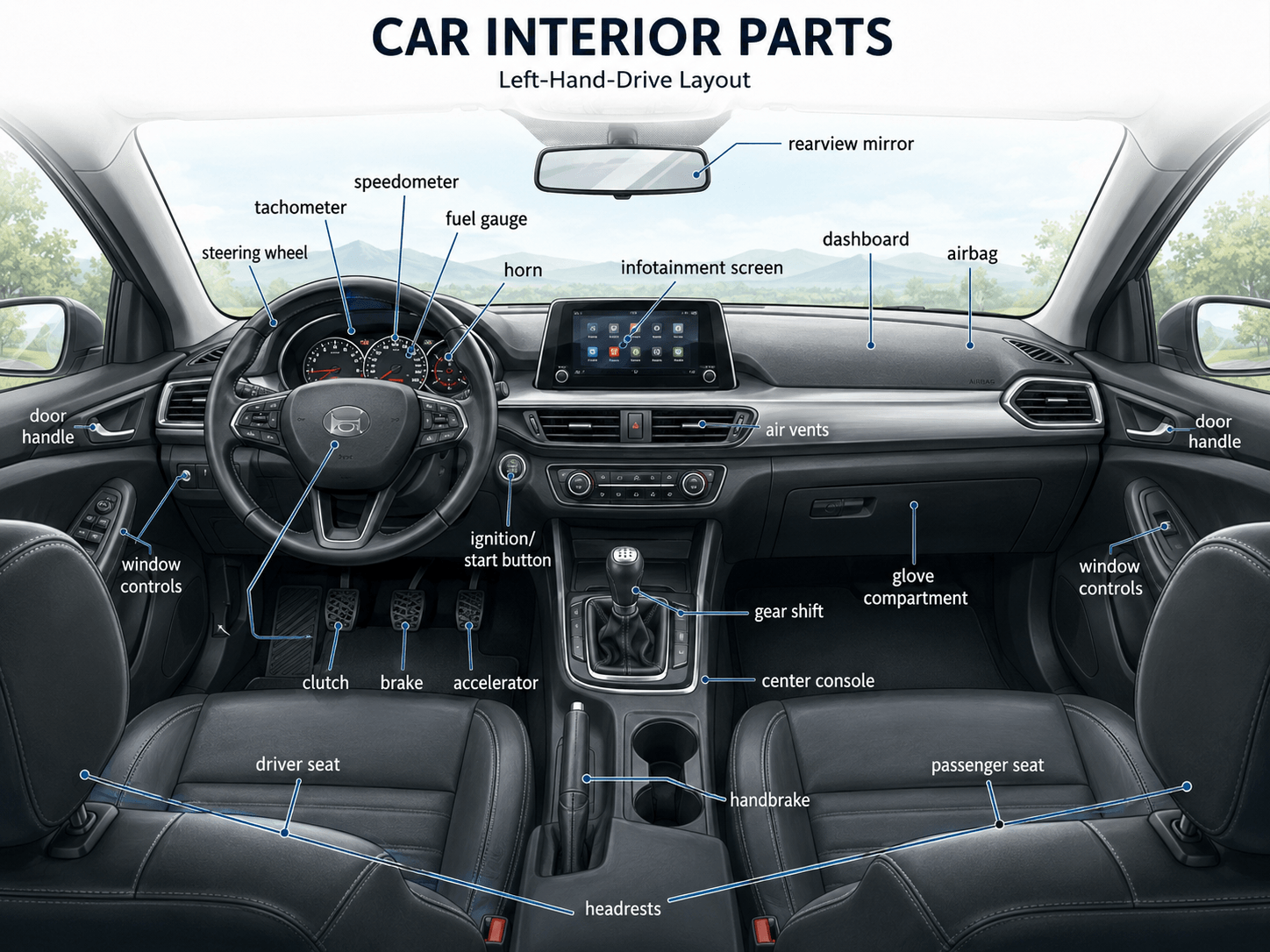
And if you want to understand your car a bit better overall — from the door and locking mechanisms to the full electrical system — the guides on car door parts and car interior parts are worth a quick read. The more you know about how your car works, the less it can surprise you.