

Contents
- steering wheel shake while driving
- Quick Answer
- What Steering Wheel Vibration Really Means
- When Your Steering Wheel Shakes and What It Indicates
- Main Causes of Steering Wheel Shaking
- Tire Issues (Unbalanced, Misaligned, Uneven Wear, Low Pressure)
- Brake System Problems (Warped Rotors, Worn Pads, Calipers)
- Suspension and Steering Component Wear (Tie Rods, Ball Joints, Shocks)
- Wheel and Rim Damage (Bent Wheels, Poor Quality Tires)
- Wheel Bearings and Hub Issues
- Axles, CV Joints, and Drivetrain Faults
- Loose or Worn Mechanical Parts (Bolts, Mounts, Rubber Components)
- How to Diagnose the Exact Problem Based on Symptoms
- Best Ways to Fix Steering Wheel Vibration
- Estimated Repair Costs
- Step-by-Step Quick Action Plan to Fix the Issue
- When Steering Wheel Vibration Becomes Dangerous
- Vibration Severity Guide
- How to Prevent Steering Wheel Shaking in Future
- Final Thoughts
- FAQs
- Why does my steering wheel shake at a specific speed?
- Why does steering wheel vibration happen during braking only?
- Can bad tires cause steering wheel shaking?
- Why does vibration increase during acceleration?
- Is steering wheel vibration always from front wheels?
- How much does it cost to fix steering wheel shaking?
steering wheel shake while driving
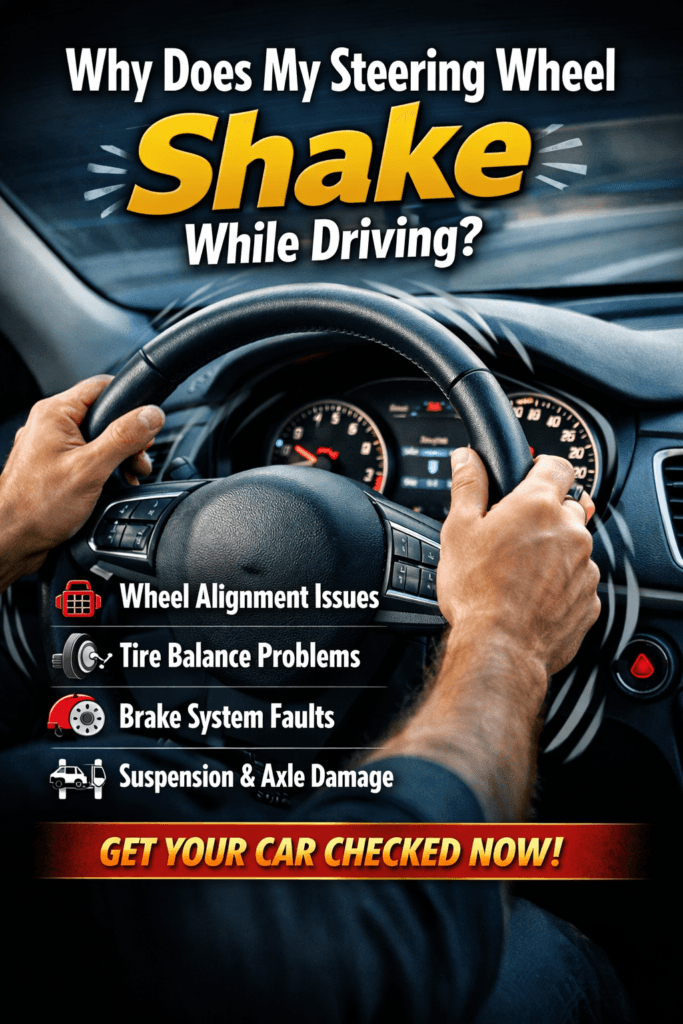
So here is the thing. A shaky steering wheel rarely shows up like a big dramatic failure. It sneaks in. First a tiny vibration. Then a bit more. Then suddenly you cannot ignore it anymore.
At first, most people brush it off. Maybe wind, maybe road surface, maybe nothing serious. But if it keeps happening… yeah, something underneath is not happy. I have seen cars drive flawlessly for weeks like that, then boom—turns out the brakes were unevenly worn or the tires were nearly worn out.
Sometimes the tremble is faint, almost like a hum.Other times it hits harder, like the wheel is arguing back. Either way, the car is basically talking to you. You just need to notice when and how.
Quick Answer
Usually indicates trouble with your tires, brakes, wheels, suspension, steering components, or drivetrain. Wheel balance is sometimes the problem if it occurs at high velocity. Common causes for warped brake rotors are if it occurs during braking. Worn mechanical components might be to blame if it occurs during turning or acceleration..
What Steering Wheel Vibration Really Means
Let us clarify it. Your steering wheel’s vibrations often indicate that something is not turning, gripping, or moving as intended.
Consider your automobile to be a team. All operating together: tires, wheels, brakes, suspension, steering components, bearings, driveline.If one part goes slightly off, the steering wheel becomes the messenger. And sometimes… not a very polite one.
A lot of people jump straight to tires. Fair. Tires are common troublemakers. But it is not always that simple. Rotors can warp. Rims can bend. Suspension parts loosen up. Even a tired wheel bearing or a worn CV joint can send weird feedback up through the steering.
Basically, the wheel is telling you what is happening underneath your car, whether you asked for it or not.
When Your Steering Wheel Shakes and What It Indicates
Timing matters. Seriously. When the vibration shows up tells you almost everything.
Situation Most Likely Cause
Steering wheel shakes while driving Tire imbalance, uneven tire wear, bent wheel, or poor alignment.
Steering wheel shakes at high speed Wheel balancing issue, bad tires, or damaged rims.
Steering wheel shakes while braking Warped rotors, worn brake pads, or sticking calipers.
Steering wheel shakes during acceleration CV joints, axles, or drivetrain faults.
Steering wheel shakes when turning Tie rods, ball joints, wheel bearings or worn suspension parts.
Steering Wheel Shakes While Driving
If the steering wheel shakes while driving normally, not braking, not accelerating hard—just cruising—then tires and wheels are the first suspects.
An unbalanced tire, uneven wear, or even a slightly bent wheel can create that steady annoying vibration. Alignment issues also make the car feel a bit unstable, like it cannot decide where to go.
And yeah, this kind of problem rarely stays the same. It starts small. Then slowly gets worse.
Steering Wheel Shakes at High Speed
Now this one is classic. Smooth at low speed, then shaky once you push faster.
That usually screams wheel balance. A tiny imbalance might be invisible in city driving, but at higher speeds it becomes obvious. I have driven cars that felt fine at 40 km/h and then suddenly uncomfortable on the highway.
Bad tires, twisted rims, misaligned wheels—all of these display their true hues under speed. If the vibration hits a particular speed range, say 90 to 110 km/h, that is almost a giveaway.
Steering Wheel Shakes While Braking
If the shake only appears when braking, then yeah… brakes are the main suspect.
Warped rotors are the usual culprit. The surface becomes uneven, so when the pads press against it, you feel a pulsing effect. Straight into your hands.
Worn pads or sticky calipers can do something similar. And once it starts, it rarely disappears on its own.
Steering Wheel Shakes During Acceleration
This one feels different. The car might feel okay when coasting, but the moment you accelerate, vibration shows up.
That often points toward drivetrain issues. Axles, CV joints, maybe even mounts. When power flows through worn parts, they react.
I have noticed this kind of shake can feel stronger under load. Like the car is struggling a bit.
Steering Wheel Shakes When Turning
Turning adds stress. So if the shake happens during turns, pay attention.
Tie rods, ball joints, worn bushings, even wheel bearings—all can act up when cornering. CV joints too, especially if they are already tired.
And honestly, this type of vibration is not something to ignore. Turning already pushes the car harder than straight driving.
Main Causes of Steering Wheel Shaking
No single cause. But there are usual suspects. Always.
Tire Issues (Unbalanced, Misaligned, Uneven Wear, Low Pressure)
Tires cause more problems than people think. Unbalanced ones create repeating vibration. Misaligned ones wear unevenly and mess with handling. Uneven wear then makes everything worse.
Misaligned ones wear unevenly and mess with handling, which is often linked to wheel alignment issues.
Low pressure… sounds simple, but it is not harmless. It speeds up damage and modifies the tire’s position on the road.
The remedy is occasionally straightforward. Sometimes it is already too late.
Brake System Problems (Warped Rotors, Worn Pads, Calipers)
Brake issues are obvious once you connect the dots.Warped rotors create that pulsing feel. Worn pads reduce smooth braking. Calipers that stick can overheat everything.And once brakes start acting weird, they usually keep doing it until fixed.Brake issues often start with sounds like noise when braking at low speed before turning into vibration.
Suspension and Steering Component Wear (Tie Rods, Ball Joints, Shocks)
This is where things get a bit more serious.
Loose tie rods? Steering feels vague. Worn ball joints? Not just vibration, but safety risk too. Weak shocks? The car starts bouncing instead of gripping.Many of these issues come from worn car body parts like tie rods and joints.
A worn suspension setup makes the whole car feel… unsettled. Hard to explain, but you feel it.
Wheel and Rim Damage (Bent Wheels, Poor Quality Tires)
Hit a pothole? Yeah, that can bend a rim.
Sometimes you see it. Sometimes you do not, but you feel it. The car never feels smooth again.
And cheap tires… well, they can be inconsistent even when new. That means vibration might come built-in. Frustrating, honestly.
Wheel Bearings and Hub Issues
Bearings are supposed to keep everything spinning smoothly. When they wear out, things get noisy, loose, and sometimes shaky.
You might hear a hum that changes when turning. That is a clue.
Hub issues can also mess things up if there is play or damage.
Axles, CV Joints, and Drivetrain Faults
These parts deal with power. So when they wear out, vibration shows up during acceleration.
A bad CV joint might click. A bent axle might shake. Either way, it usually gets worse over time.
Loose or Worn Mechanical Parts (Bolts, Mounts, Rubber Components)
Sometimes it is not dramatic at all.
Loose bolts. Worn mounts. Old rubber bushings.
Small things, but in the wrong place, they cause big problems. Rubber parts especially lose their ability to absorb vibration over time.
How to Diagnose the Exact Problem Based on Symptoms
Honestly, the best approach is simple observation.
When does it happen? At speed? During braking? While turning?
Each scenario points somewhere specific.
Also check visually. Tires, rims, wear patterns, missing weights, leaks, loose parts. Sometimes you catch it yourself. Sometimes you need a mechanic.
Still, describing the symptom clearly helps a lot. It saves time.
Best Ways to Fix Steering Wheel Vibration
Once you find the cause, fixing it becomes much easier.
Wheel Balancing and Tire Alignment
Balancing fixes uneven weight distribution. Alignment corrects wheel angles.
Different things. People mix them up all the time.
Sometimes you need both.
Brake Inspection and Rotor Replacement
If braking causes vibration, inspect everything.
Rotors, pads, calipers. If rotors are warped, replacement is usually the way to go.
Trying to save bad brake parts rarely works.
Suspension and Steering Repairs
Replacing worn tie rods, ball joints, bushings, or shocks can completely change how the car feels.
Seriously. It feels like a different car sometimes.
Wheel Repair or Replacement
Bent wheel? Fix or replace it.
Same with bad tires. No point keeping something that keeps causing problems.
Bearing, Axle, and CV Joint Fixes
Worn bearings need replacing. Same for bad axles or CV joints.
These parts are not worth delaying. They fail harder over time.
Tire Pressure Adjustment and Tire Maintenance
Simple but important.
Correct pressure. Regular checks. Tire rotation.
Boring stuff… but it prevents bigger issues later.
Estimated Repair Costs
Repair cost depends on the exact cause, but these are common price ranges:
• Wheel balancing: €10 to €30
• Wheel alignment: €50 to €100
• Tire replacement: €80 to €250 per tire
• Brake rotor and pad replacement: €150 to €400
• Suspension or steering repair: €200 to €800
• Wheel bearing replacement: €150 to €500
• CV joint or axle replacement: €300 to €1000
Step-by-Step Quick Action Plan to Fix the Issue
Alright, quick checklist.
Check tire pressure and condition.
Think about when vibration happens.
Look for wheel or rim damage.
Balance wheels and check alignment.
Inspect brakes if braking causes shake.
Check suspension and steering parts.
Look into bearings, axles, CV joints if needed.
Fix loose mounts and worn rubber parts.
Follow this order.It Saves time.
When Steering Wheel Vibration Becomes Dangerous
Not all vibrations are equal.
Light shake? Maybe manageable for a short time.
Strong, sudden, worsening vibration? That is different.
If the car pulls, clunks, or feels unstable… stop driving it. Seriously.Some issues are just uncomfortable. Others are unsafe.
Vibration Severity Guide
Not every vibration feels the same, and not every one carries the same level of risk.
• Light vibration: Often manageable for a short time, but it still needs inspection
• Moderate vibration: Should be diagnosed soon before it causes more damage
• Strong or sudden vibration: Unsafe to ignore, especially if the car pulls, clunks, or feels unstable
If the steering wheel shakes hard enough to affect control, the car should not be driven until it is checked properly.
How to Prevent Steering Wheel Shaking in Future
Prevention is mostly maintenance.
Keep tires properly inflated. Rotate them. Balance when needed. Check alignment after hits or repairs.
Also, do not ignore small signs.
A tiny vibration today can turn into a big repair later. Happens more often than people admit.
Final Thoughts
A shaking steering wheel is not one simple issue. It is a signal.
Tires, brakes, suspension, drivetrain—all possible causes.
The pattern of vibration tells you where to look. Speed, braking, acceleration, turning—each gives clues.
Fixing it early is easier. Waiting… usually costs more.
FAQs
Why does my steering wheel shake at a specific speed?
Usually wheel balance or uneven tires. The vibration becomes noticeable at certain speeds.
Why does steering wheel vibration happen during braking only?
Most likely warped rotors or brake-related issues.
Can bad tires cause steering wheel shaking?
Yes, definitely. Uneven wear, low pressure, or poor quality tires can all cause it.
Why does vibration increase during acceleration?
Likely drivetrain issues like axles or CV joints under load.
Is steering wheel vibration always from front wheels?
Not always. Rear issues or drivetrain faults can also affect what you feel.
How much does it cost to fix steering wheel shaking?
Depends on the cause. Simple fixes like balancing are cheap. Bigger repairs like suspension or drivetrain can cost more.
Pingback: What Does The Service StabiliTrak Warning Light Mean? (Causes, Fix & Safety Guide) -
Pingback: Noise When Turning Steering Wheel While Stationary - Engineer Wala -