
Contents
- Engine Knocking When Accelerating: Causes Symptoms Diagnosis and Fixes
- Quick Answer
- What engine knocking when accelerating actually sounds like
- Engine knocking when accelerating causes
- Fast comparison table
- When engine knocking when accelerating is dangerous
- How to diagnose engine knocking when accelerating properly
- How to fix engine knocking when accelerating
- Common mistakes people make
- Can you still drive with engine knocking when accelerating
Engine Knocking When Accelerating: Causes Symptoms Diagnosis and Fixes
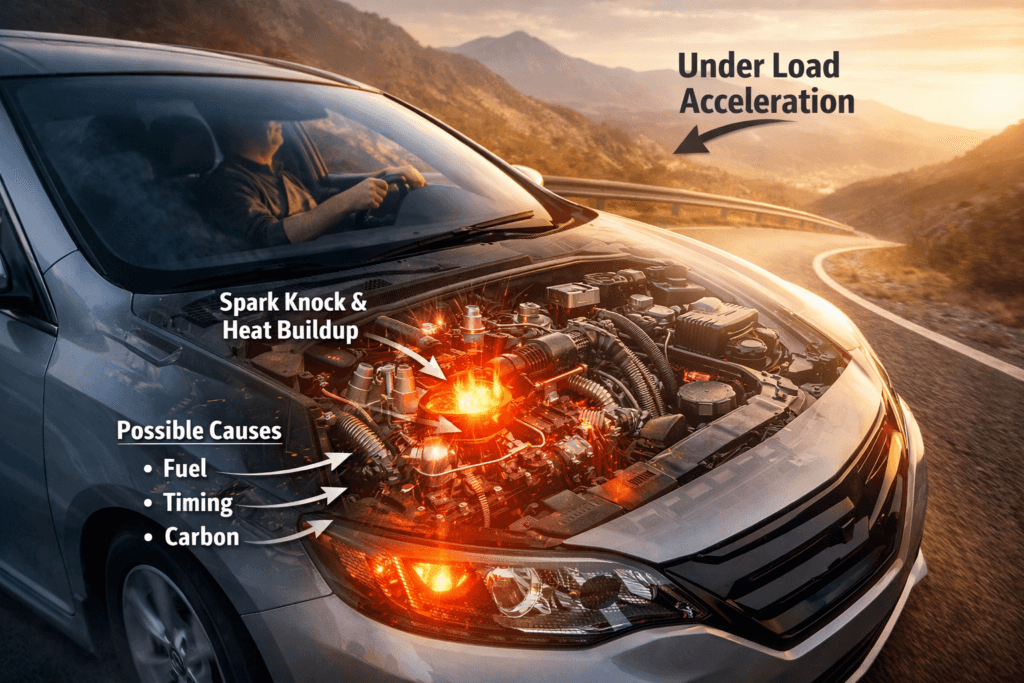
When you accelerate engine load rises quickly and that is when hidden combustion or mechanical problems start showing up. Some noises are only light spark knock under load while others are deeper mechanical knocks that can point to internal damage. That is why correct sound identification matters before you assume it is only a fuel issue.
Quick Answer
Engine knocking when accelerating usually happens because the engine is under load and the fuel air mixture starts burning too early or unevenly. The most common causes are low octane fuel bad spark plugs carbon deposits a lean fuel mixture advanced ignition timing overheating or a faulty knock sensor. A deeper heavy knock can also point to low oil pressure or worn internal parts.
What engine knocking when accelerating actually sounds like
A lot of people use the word knocking for every engine noise and that is where wrong diagnosis starts.
A true combustion knock is usually a metallic ping or light rattling sound. It often appears when you press the throttle harder climb a hill or accelerate from low rpm. It may reduce when you back off the throttle. That pattern usually points toward detonation or pre ignition.If your engine is also running hot you should check common engine overheating causes because high temperature increases knocking risk
A mechanical knock is different. It is heavier deeper and more serious. If the sound is loud dull and present beyond just throttle load then you have to think about rod bearing wear piston slap or other internal damage. Many articles in SERP do not explain this difference clearly enough and that is why people waste time changing plugs when the real problem is inside the engine.
Engine knocking when accelerating causes
1. Low octane fuel
This is one of the most common causes. If the engine needs higher octane fuel and you fill it with fuel that resists knock poorly then the compressed mixture can ignite abnormally under load. Acceleration makes this easier to hear because cylinder pressure rises. On many cars this starts as a light ping not a deep thud.
2. Carbon buildup in the combustion chamber
Carbon deposits reduce chamber space and can create hot spots. Those hot spots can ignite the mixture too early. This is a classic reason for engine knocking when accelerating especially on older direct injection engines or engines with long service intervals and poor fuel quality history.
3. Lean air fuel mixture
When the engine runs lean there is too much air and not enough fuel. That raises combustion temperature and increases the chance of knock. Vacuum leaks weak fuel delivery dirty injectors bad MAF readings or sensor faults can all push the engine in that direction. Under acceleration the problem becomes easier to expose because demand increases.
4. Wrong ignition timing
If spark happens too early the mixture starts pushing against the piston at the wrong time. That can create knock under load. On older engines timing issues may be more direct. On modern engines software sensor input and adaptation values play a bigger role. Either way bad timing belongs high on the diagnosis list.
5. Bad spark plugs
Worn wrong heat range damaged or incorrectly gapped spark plugs can disturb combustion. They may not be the only cause but they are a common trigger. This is why a basic tune up inspection still matters before chasing complex theories.
6. Faulty knock sensor
Modern engines depend on the knock sensor to detect abnormal combustion so the ECU can pull timing and protect the engine. If the sensor fails or the signal is wrong the engine may not correct itself fast enough and knock continues under load.
7. Overheating
Hot engines knock more easily. High coolant temperature raises combustion chamber heat and reduces knock margin. If the engine is already running warm and then you accelerate hard the noise may become more obvious. This part is often under explained in weak articles but in real diagnosis it matters a lot.
8. Low oil level or internal wear
This is where you must stay careful. Some pages mix this together with normal spark knock but it is not the same thing. Low oil or worn bearings can create a heavier knock that gets worse with load. If the sound is deep and rhythmic and your oil pressure is low then stop treating it like a simple fuel issue.
Fast comparison table
| Symptom | Most likely cause | Risk level | First check |
|---|---|---|---|
| Light ping only during hard acceleration | Low octane fuel | Medium | Correct fuel grade |
| Ping under load with rough running | Lean mixture | High | Scan data and fuel trims |
| Knock with hot engine on hills | Carbon buildup or overheating | High | Cooling system and chamber deposits |
| Knock after missed service | Bad spark plugs | Medium | Plug condition and gap |
| Knock with timing related codes | Timing issue or knock sensor | High | Scan tool live data |
| Deep heavy knock with low oil | Bearing wear or oil starvation | Critical | Stop driving and inspect |
When engine knocking when accelerating is dangerous
If the noise is a brief light ping after bad fuel then the fix can be simple. But if the sound is strong repeatable and getting worse then you should treat it as urgent.
These signs mean higher danger:
| Warning sign | What it may mean |
|---|---|
| Deep heavy knock | Internal engine wear |
| Check engine light with poor power | Mixture or timing fault |
| Knock plus overheating | Combustion heat problem |
| Knock plus low oil pressure | Lubrication failure |
| Knock that stays even off throttle | Possible mechanical issue |
A lot of SERP pages say do not ignore the sound but they stop there. Real advice is this: if the sound is deep and heavy do not keep testing it with harder acceleration. That is exactly how people turn a repairable issue into engine rebuild territory.
How to diagnose engine knocking when accelerating properly
This is the section most competitor pages handle weakly. The best approach is not random parts replacement. It is a clean order of checks.
Step 1. Confirm the sound type
Ask yourself this first. Is it a light metallic ping under load or a deep knock from the lower engine. That single distinction changes the whole direction of diagnosis.
Step 2. Check fuel grade and recent refill history
If the problem started right after refueling and the sound is light then wrong fuel grade is one of the first suspects. Drain and refill is not always necessary but using the correct fuel and monitoring the result is a smart first move.
Step 3. Scan for trouble codes and live data
Look for knock sensor codes misfire codes fuel trim issues intake leaks and temperature related faults. A modern car tells a lot through live data. This is where an engineer style article should go deeper than generic blog posts.
Step 4. Inspect spark plugs
Pull the plugs and read them. White blistered tips can hint at heat issues or lean running. Heavy deposits can point toward carbon contamination. Wrong part number or wrong gap can also trigger trouble.
Inspect for vacuum leaks weak fuel pressure dirty injectors MAF contamination and oxygen sensor related behavior. If fuel trims are strongly positive then lean operation becomes more likely.
Step 6. Review timing and knock control
On vehicles with adjustable timing strategy you need to see whether the ECU is pulling timing or whether knock correction is missing. If the knock sensor is lazy or dead the ECU cannot protect the engine properly.
Step 7. Rule out mechanical knock
If oil level is low if the sound is heavy if it follows engine speed strongly and if performance feels rough then check oil pressure and internal condition before doing anything else. This is the line many lightweight articles fail to draw.
How to fix engine knocking when accelerating
The right fix depends on the cause. There is no one magic treatment.
Use the correct fuel
If your manufacturer requires a certain octane then follow it. Going below spec is asking for knock under load.
Replace worn spark plugs
If plugs are old damaged wrong type or wrongly gapped then replace them with the correct specification parts.
Remove carbon buildup
If the engine has chamber deposits then decarbonizing can help. On severe buildup the proper method matters more than miracle bottle claims.
Fix lean mixture problems
Repair vacuum leaks restore proper fuel pressure clean or replace injectors when needed and verify sensor readings.
Timing issues should be verified with scan data and service information not guessed. Modern engines can hide timing problems behind adaptation until load exposes them.
Repair cooling system issues
If the engine runs hot then fix the root cause. A hot engine will keep pushing back toward knock.
Stop driving if mechanical knock is suspected
This is not optional advice. A bearing knock will not heal itself.
Common mistakes people make
One common mistake is assuming every knock is fuel related. It is not. Another mistake is adding random additives without checking plugs fuel trims or temperatures. The biggest mistake is hearing a deep knock and still driving hard to “test” it.
That is where a human expert article should be better than the average SERP post. It should save the reader from the wrong first move not just list textbook causes.
Can you still drive with engine knocking when accelerating
Maybe for a very short distance only if the sound is mild clearly fuel related and disappears after backing off. But that is not a green light to ignore it. If the sound is frequent loud or getting worse then driving it further is risky. Severe knock can damage pistons rings rod bearings and the head gasket over time.