
Contents
- CV Joint Noise When Driving Straight – Causes and Fixes
- What Causes CV Joint Noise When Driving Straight?
- Diagnosing CV Joint Noise
- FAQs
- Q: Can a Bad CV Joint Sound Like a Bearing?
- Q: What Does a Bad CV Joint Sound Like?
- Q: Is It Safe to Drive With a Clicking CV Joint?
- Q: How Long Will a CV Joint Last Once It Starts Making Noise?
- Q: What Might Signal That My Car Has a Tire Noise or a Wheel Bearing?
- Q: How Much Does It Cost to Fix a CV Joint?
- Q: What Are the Symptoms of a Bad CV Joint?
- Conclusion
CV Joint Noise When Driving Straight – Causes and Fixes
FWD and front-wheel-drive vehicles use CV joints on the drive shaft — a ball type joint for the outer CV joint and a tripod type joint for the inner CV joint. These mechanical elements of your suspension system handle inboard and outboard motion for smooth driving and comfort on the road.
Once you experience a bad CV joint, the CV joint noise ruins your handling and makes driving straight or negotiating turns genuinely uncomfortable and difficult. A proper fault inspection becomes critically important at this stage — check your boots carefully for a cracked boot or torn boot and listen for any clicking noise, grinding noise, popping sound, or vibration underneath the car.
Worn joint problems mostly come down to lost lubrication or dried-out grease, which leads to joint wear, joint failure, and poor power transfer throughout the system. The fix usually means performing proper repairs — either change or replace the CV axle to bring torque, steering, and cornering back to where they should be.
Keep reading to understand what causes CV joint problems, how to properly inspect your drivetrain, and when a boot replacement or a full axle replacement becomes necessary.
What Causes CV Joint Noise When Driving Straight?
Noticing squeaky noises while driving straight or handling rough turns often points toward a defective joint that is struggling to hold its performance. Your joints rarely fail all at once — multiple factors wear them down gradually until total failure hits. The most common starting point is always faulty CV boots.
Faulty CV Boots
Broken boots, cracked boots, or torn boots are where most of the trouble begins. The moment a tear or crack develops, a grease leak starts pulling dirt and debris directly into your CV boot and cutting off the lubrication the joint depends on. Without it, corrosion quietly takes hold and speeds up wear out far faster than normal. You will likely spot grease collecting around your wheel rim and drive wheel area — and as your CV axle continues rotating, that leakage works its way further into the chassis. The situation gets noticeably worse while accelerating, pushing through sharp bends, or driving at high speed, and every day you delay makes the joint more damaged.
Damaged Boot Clamps
Damaged boot clamps are another reason your CV joint begins acting up. These clamps hold your boots sealed tightly against the joint, keeping any outside exposure from reaching it. Once they weaken or snap, your CV boot starts loosening and a gap forms — wide enough for debris accumulation to begin inside the joint. That buildup directly triggers an inner CV joint clunk that turns into consistent noises every single time you drive your vehicle. Whenever you pick up a clunking or squeaky sound around the joint area, start with a thorough boot inspection — go through the entire boot and the clamps before assuming anything else is responsible.
Loss of Lubrication
Loss of lubrication is one of the more straightforward causes of CV joint trouble yet it gets overlooked more than it should. When your joints are not properly lubricated, friction builds up quickly and prevents your CV axle from rotating freely. The second the axle starts to turn under those conditions, that absence of grease forces the joint to produce noise. That inner CV joint noise becomes a regular part of every drive and grows considerably louder once you push the speed up. The only moment things stay relatively quiet is when moving at a controlled low speed.
Aging
Aging is something no mechanical component escapes and your axles are no different. Running them hard over a long time without regular attention will eventually bring on a steering noise or general noise coming straight out of the joints. The joints become fully worn out after years of constant use and simply reach the point where replacement is the only option left. It has nothing to do with poor care necessarily — every part has a lifespan and these are no exception. They may hold strong for years but time always catches up and spotting this early saves you from far bigger damage later.
Diagnosing CV Joint Noise
When your CV axles start producing noise when driving straight, it is easy to jump to conclusions but the smarter move is learning how to properly diagnose the actual problem before touching anything. Going into repairs without identifying the real source wastes both time and money. Getting the right steps down from the beginning keeps you in control.
1. Listen for Clicking Sounds
A clicking noise coming from underneath is usually the first sign that your CV joint is in trouble. Most people notice it during turning first but if the joint is severely worn, that CV joint noise when driving straight does not go away even with the wheel pointed forward. The sound sharpens and becomes more noticeable the longer it is left alone — never assume it will sort itself out.
2. Check for Vibrations
A vibration CV joint noise that builds while driving straight particularly during acceleration is your car telling you something serious is developing. That shake points straight at your CV axle or driveshaft losing its ability to run smoothly.
Get your vehicle inspected the moment that vibration becomes consistent — the longer you wait the harder and more expensive the fix becomes.
3. Inspect the CV Boot
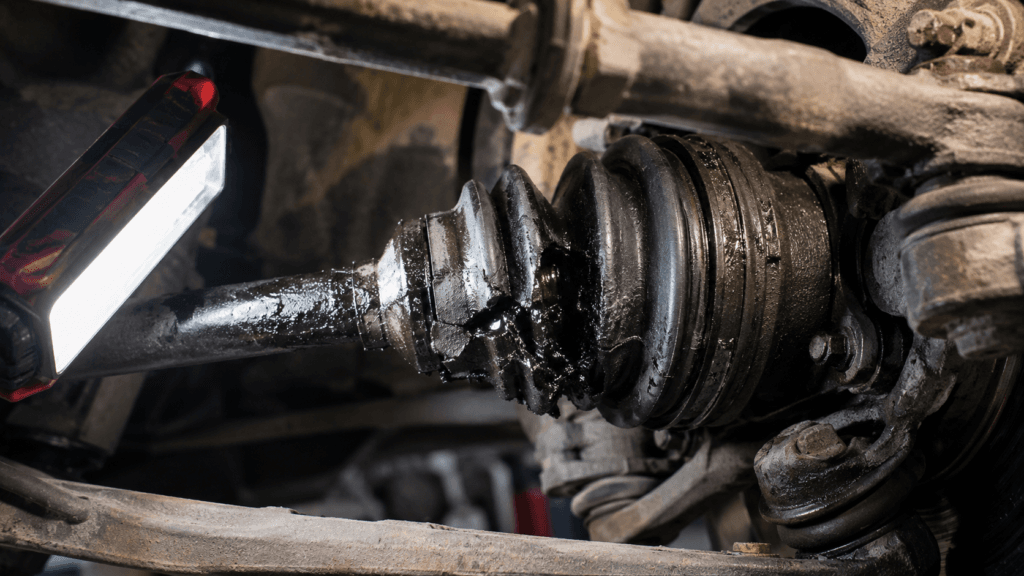
Sometimes the answer is sitting right in plain sight. Visually inspect the CV boot and check for any signs of damage or leaking grease around the joint. A torn boot might not look serious at first but it allows contaminants straight inside and triggers rapid degradation of your CV joints much faster than most people expect.
4. Seek Professional Help
If you are genuinely unsure about what you are looking at a mechanic with real hands-on experience is your best option.
A professional will properly diagnose the issue without guesswork — they will lift the vehicle, check the CV joints from underneath, and tell you exactly what needs to be replaced before the damage reaches something far more serious.
FAQs
Q: Can a Bad CV Joint Sound Like a Bearing?
Bearing sounds are not always simple to separate from CV joint problems. A bad CV joint sound typically shows up as clicking or humming while bad wheel bearing sounds lean more toward growling, squealing, or chirping.
Unevenly worn tires can also cloud the picture and make an accurate diagnosis harder than it needs to be.
Q: What Does a Bad CV Joint Sound Like?
A failing CV joint usually starts with a loud click or popping that deepens into a clunk as the damage grows. Taking a tight turn often brings out a grinding noise from underneath.
Inside the cabin a vibration moves through the steering wheel and floorboard making it hard to ignore. Switching from drive to reverse regularly triggers clunking noises that get louder while accelerating through corners.
The car may also shudder under heavy load and cracking sounds from the rubber boots or plastic boots around the joint are not uncommon either.
Q: Is It Safe to Drive With a Clicking CV Joint?
Those clicking and popping sounds are never something to brush off. Technically you can keep driving with a worn joint for a period but there are no guarantees on how long it holds.
The worst outcome is a fully damaged CV joint that leads to a breaking axle — and at that point your car won’t move at all.
A noisy CV joint puts the entire assembly at risk and that is exactly why learning how to test CV joints before things escalate matters so much.
Q: How Long Will a CV Joint Last Once It Starts Making Noise?
A bad CV joint can realistically hold on for around four to five months before the situation becomes urgent. Pushing toward the six months mark is where it turns genuinely risky and getting it replaced or repaired at a mechanic shop becomes non-negotiable.
People in dry areas with low rainfall might squeeze a little more time out of it but those in wet areas regularly dealing with mud, rain, dirt, or snow should act well before that window closes.
Having someone check the CV joint within the first three months is always the safer call no matter where you live.
Q: What Might Signal That My Car Has a Tire Noise or a Wheel Bearing?
A bad wheel bearing announces itself through a grating noise or grinding sound from the wheel or tire area that keeps getting louder as speed increases.
That growling or rumbling often gets mistaken for worn tires which is an understandable error. A faulty bearing can also produce a squealing or high pitch grinding noise that matches the tire rotation speed exactly.
Going around corners amplifies everything — especially when turning toward the side with the problem. Unlike tire noise that shifts based on the road surface, a bad bearing stays loud and consistent regardless of the terrain.
Q: How Much Does It Cost to Fix a CV Joint?
A standard CV joint replacement without labor usually lands between $90 and $220. Taking your car into a shop brings the full cost up to somewhere between $160 and $850 depending on the situation.
The market price moves based on whether you need a single axle replacement or a double. Older vehicle models make it harder to source spare parts and that difficulty almost always pushes the final bill higher. According to RepairPal, costs can vary significantly based on your make and model so getting a quote beforehand always helps.
Q: What Are the Symptoms of a Bad CV Joint?
The clearest signals come through sound — clicking, popping, and clunking during decelerating or accelerating are difficult to miss once they begin. A persistent vibration throughout the drive adds to the discomfort and makes every trip feel wrong.
Finding grease on your car’s undercarriage usually means a ruptured boot or leaking oil has been going on longer than you realized. Noises that appear specifically when the car turns into a corner point to excessive wear building inside the joint.
Left alone that excess vibration only intensifies and the damage compounds faster than most people expect.
Conclusion
A CV joint is not the kind of problem that fixes itself over time — it only gets worse the longer it sits. Whether you are dealing with broken boots, loss of lubrication, damaged boot clamps, or simple aging, catching the issue early is always what separates a small repair bill from a much larger one.
The moment you notice clicking noise, grinding noise, vibration, or any squeaky noises while driving straight or taking rough turns, take it seriously. Run a proper fault inspection, check your boots, and listen to what your car is telling you. These sounds are not random — they are direct signals that something inside your drivetrain needs attention.
If the damage is limited to the CV boot, a straightforward boot replacement gets you back on track without much expense. But if the CV joint itself has worn past the point of recovery, a full axle replacement becomes the only real path forward. Either way acting sooner rather than later protects your steering, your torque, your cornering, and ultimately keeps you safe on the road.
When in doubt bring a mechanic into the picture — a proper diagnosis from someone experienced is always worth more than guessing and getting it wrong.