
Contents
- Bad Spark Plug Symptoms: Causes and Solutions
- Quick answer
- Why spark plugs matter more than people think
- 10 bad spark plug symptoms you should not ignore
- Symptoms ranked by severity
- What bad spark plugs look like
- What causes spark plugs to go bad
- Bad spark plug vs bad coil vs bad injector
- How to confirm bad spark plug symptoms properly
- Can you keep driving with bad spark plug symptoms
- How long do spark plugs last
- Replacement intervals by plug type
- Best fix for bad spark plug symptoms
- Fast diagnostic table
- FAQs
- Final verdict
Bad Spark Plug Symptoms: Causes and Solutions
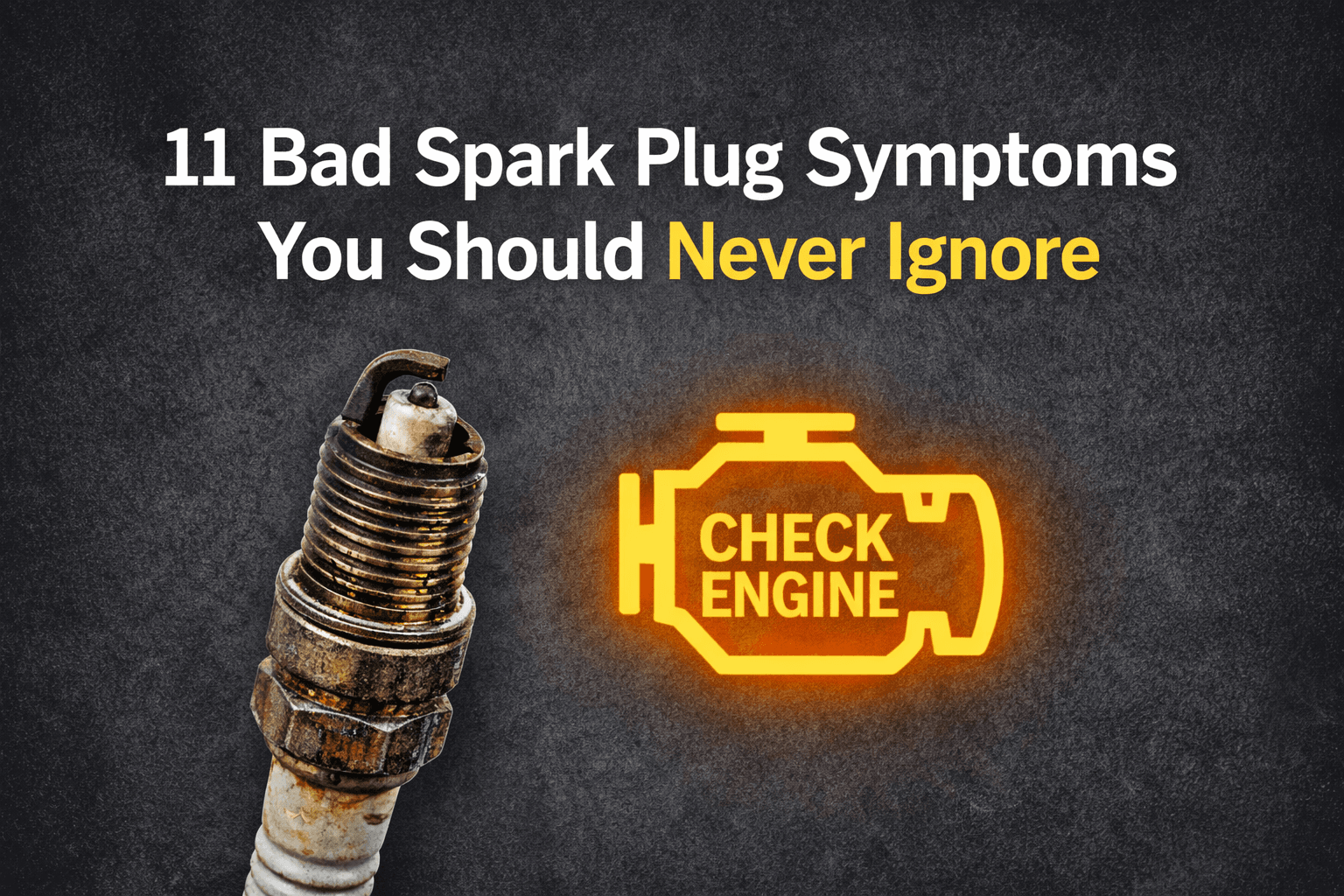
If your engine feels rough starts harder than usual or loses power for no clear reason a bad spark plug is one of the first things I would check. Spark plugs wear slowly so many drivers miss the early signs. Then the problem grows into misfires poor fuel economy and in some cases catalytic converter damage. The most common bad spark plug symptoms are rough idle,engine misfire,weak acceleration,hard starting and a check engine light.
Quick answer
Bad spark plug symptoms usually include rough idle engine misfire,poor acceleration,hard starting,weak fuel economy,hesitation under load and a check engine light. A worn or fouled plug can also make the engine shake at idle surge while driving or smell rich from incomplete combustion. If the misfire becomes severe and you keep driving raw fuel;can overheat and damage the catalytic converter.
Why spark plugs matter more than people think
A spark plug has one job. It must create a strong clean spark at the right moment so the air fuel mixture burns properly. When the plug is worn, fouled, cracked, or incorrectly gapped, the spark gets weak or unstable. That weak spark turns into incomplete combustion. In real life, that means rough running, wasted fuel, poor response, and a car that no longer feels sharp. Misfires can come from carbon fouling, excessive gap, damaged plugs, and deteriorated ignition components.
10 bad spark plug symptoms you should not ignore
1. Engine misfire
This is the classic sign. The engine stumbles, jerks, or feels like one cylinder drops out for a moment. You may notice it most during acceleration or when climbing a hill. Misfire is one of the main warning signs.
2. Rough idle
When a spark plug is weak, the engine may shake or vibrate while the car is stopped. It often feels worse in Drive with your foot is on the brake. This happens because the combustion is not even across all cylinders.
3. Hard starting
A worn plug can still work sometimes but cold starts often expose the weakness. The engine may crank longer than normal or need more than one attempt to fire up. Denso also ties poor starting to carbon fouling and other plug faults.
4. Weak acceleration
A car with bad plugs often feels lazy when you press the throttle. The engine runs but it does not pull the way it should. That loss of sharpness is common with worn electrodes or fouled firing tips.
5. Poor fuel economy
If the spark is weak the fuel does not burn as efficiently. You end up using more fuel to get the same result. This is one of the early signs many people ignore because it creeps up slowly.
6. Check engine light
Modern engine management catches repeated misfires quickly. A steady check engine light can happen with an ongoing plug issue. A flashing light is more serious because active misfire can damage the catalytic converter.
7. Hesitation under load
A weak plug can seem acceptable at light throttle but fails when cylinder pressure rises. That is why many cars hesitate during overtaking, uphill driving or heavy acceleration.
8. Engine surging or unstable RPM
Sometimes the RPM rises and falls in a strange way because combustion is inconsistent. This can feel like the car is gaining and losing power by itself. Recent guidance from Trodo lists surging among common bad spark plug signs.
9. Occasional stalling
When one or more plugs are very weak the engine may stall at idle or after a rough cold start. It does not happen on every vehicle but it is a real symptom once the issue gets worse.
10. Failed emissions or rich exhaust smell
Poor combustion can leave more unburned fuel in the exhaust stream. In the workshop this often shows up as a strong fuel smell, rough running, and increased emissions.
Symptoms ranked by severity
| Level | What you may notice | What it usually means | Action |
|---|---|---|---|
| Early | small MPG drop mild roughness slower start | plug wear or light fouling may be starting | inspect soon |
| Moderate | clear misfire weak acceleration hesitation CEL | plug condition is now affecting combustion | diagnose now |
| Severe | flashing CEL heavy shaking strong fuel smell stalling | active misfire with converter risk | stop driving and repair fast |
Active misfire is the turning point. That is where a simple plug issue can grow into a much more expensive exhaust repair.
What bad spark plugs look like
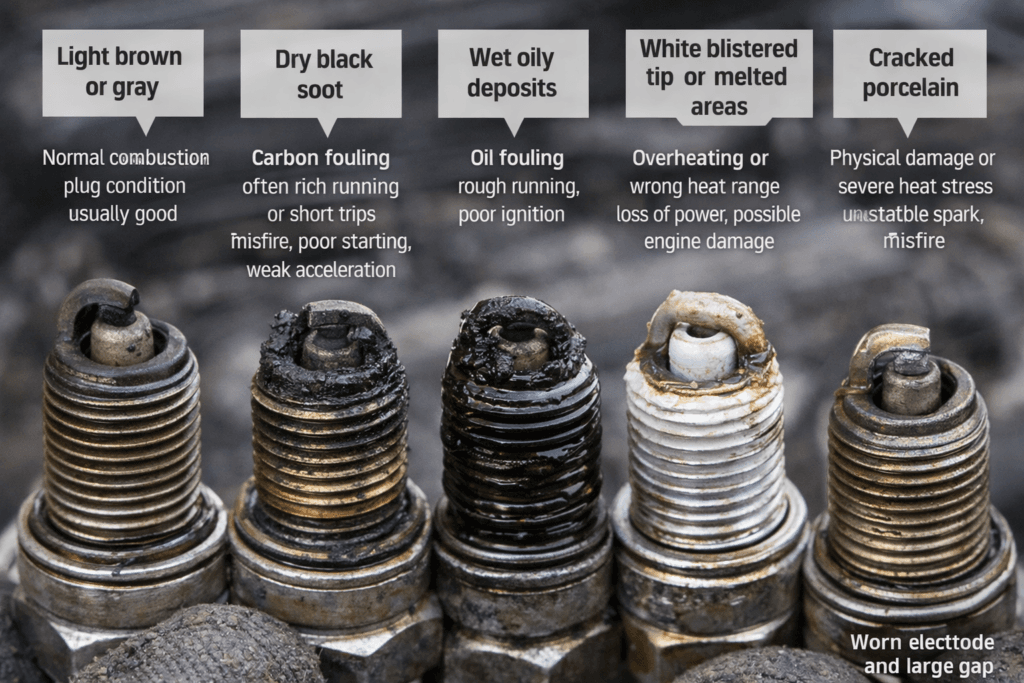
A plug can tell a story if you know how to read it. NGK says a healthy plug often shows a brown or light gray firing end. Denso and Champion also show that carbon fouling, oil fouling, overheating, and cracking each leave their own pattern.
| Plug appearance | What it often means | Common result |
|---|---|---|
| Light brown or gray | normal combustion | plug condition usually good |
| Dry black soot | carbon fouling often rich running or short trips | misfire poor starting weak acceleration |
| Wet oily deposits | oil fouling | rough running poor ignition |
| White blistered tip or melted areas | overheating or wrong heat range | loss of power possible engine damage |
| Cracked porcelain | physical damage or severe heat stress | unstable spark misfire |
| Worn electrode and large gap | age related wear | weak spark hard start poor performance |
These patterns matter because the fix is not always just new plugs. A carbon fouled plug can point to rich mixture or too much short trip driving. An oily plug can point to oil entering the chamber. An overheated plug can point to wrong heat range or deeper engine tuning issues.
What causes spark plugs to go bad
Spark plugs do not always fail from age alone. They fail from heat contamination, incorrect setup, and engine condition. Common causes include normal electrode wear, carbon fouling, oil fouling, incorrect gap, wrong heat range, and physical damage. Denso warns that wrong selection or wrong heat range can lead to carbon fouling, oil fouling, or even pre ignition related damage.
Common causes in workshop language
- Long service life and worn electrodes
- Carbon buildup from rich running or too many short trips
- Oil contamination
- Incorrect gap
- Wrong plug type or heat range
- Cracked insulator
- Ignition system weakness around the plug such as coil boot or related components
Bad spark plug vs bad coil vs bad injector
This is where many articles online stay weak. Symptoms overlap. A plug problem can feel like a coil issue. A leaking injector can also cause misfire. CarParts makes this point clearly and it is correct. Misfire does not automatically mean spark plug.
| Problem | What usually overlaps | What points more strongly to it |
|---|---|---|
| Bad spark plug | misfire rough idle hard start poor power | worn or fouled plug visible on inspection gap out of spec symptom follows plug when swapped |
| Bad ignition coil | misfire rough idle hesitation CEL | stronger failure under load weak or no spark on that coil cylinder misfire follows the coil |
| Bad injector | misfire fuel smell rough idle poor power | fuel trim issues wet plug leaking injector pattern injector balance problem |
I never guess here. I confirm. If cylinder 3 is misfiring and the plug from cylinder 3 is moved to cylinder 1 and the misfire follows the plug then the plug just told you the truth. If it stays on cylinder 3 then keep testing the coil injector wiring and compression. That is the proper way to avoid throwing parts at the car. This diagnostic logic lines up with current repair guidance that misfires can also come from injectors wiring and engine mechanical faults.
How to confirm bad spark plug symptoms properly
Step 1. Scan for codes
Look for misfire codes such as random misfire or cylinder specific misfire. Do not stop at the code. A code tells you where to begin not what part to buy.
Step 2. Inspect the plug
Remove the suspected plug and look at the tip condition the insulator and the electrode wear. Compare it with a known good plug if possible. NGK Champion and Denso all support plug reading as a real diagnostic clue.
Step 3. Check the gap
Too much gap can make the spark weak especially under load. NGK lists excessive gap as one of the reasons a misfire can happen.
Step 4. Swap test
If the misfire is on one cylinder swap that plug with another cylinder. If the misfire moves you likely found the bad plug. If it does not move look harder at the coil injector or compression.
A fresh spark plug will not solve an oil fouling problem a leaking injector or a weak coil. Fix the cause or the new plug may fail again.
Can you keep driving with bad spark plug symptoms
Sometimes a car with worn plugs will still drive. That does not mean it is safe to ignore. Firestone warns that faulty spark plugs can lead to long term engine issues and catalytic converter damage. A misfiring cylinder can send raw fuel into the exhaust where the converter overheats trying to burn it off.
My mechanic rule
If the car only has mild roughness and no flashing check engine light you may be able to drive a short distance carefully to get it repaired. If the engine is shaking badly, the check engine light is flashing, or the power drops sharply, stop pushing it. That is the point where a small ignition problem can become an expensive repair bill.
How long do spark plugs last
There is no single universal number. Plug material and manufacturer schedule matter. Toyota says spark plugs typically last around 80000 miles and should be handled by the vehicle maintenance schedule. ACDelco says its double platinum plugs are designed to last up to 100000 km in most applications. NGK notes that some iridium plugs are rated around 40000 to 50000 miles while Nissan states iridium platinum tipped plugs do not need replacement as frequently as conventional plugs and should follow the maintenance schedule.
So the smart answer is simple. Follow the owner manual first. Then inspect earlier if you have symptoms misfire codes hard starts rough idle or a tuned engine that works harder than stock.
Replacement intervals by plug type
| Plug type | Typical life direction | Real world note |
|---|---|---|
| Conventional copper or nickel | shortest life | inspect and replace more often |
| Platinum | longer life | still follow vehicle schedule |
| Iridium | longest life in many modern cars | may last much longer but do not assume forever |
| OE long life plugs | depends on manufacturer | owner manual always wins |
This is where many generic articles get lazy. They throw one mileage number at every car. That is bad advice. Plug life depends on plug material engine design heat load and driving pattern.
Best fix for bad spark plug symptoms
If inspection shows worn, fouled, or damaged plugs;replace the correct set with the correct type and gap for your engine. Do not buy plugs by guesswork. Use the specified plug from the manufacturer or a trusted direct equivalent. If a coil boot is damaged or a coil is failing fix that too. If the plug is oil fouled or overheated solve that root cause before the new plug gets ruined.
Fast diagnostic table
| Symptom | Most likely plug related reason | What I would check next |
|---|---|---|
| rough idle | weak spark or fouled tip | plug condition gap coil boot |
| hard start | worn electrode weak cold spark | plug wear battery cranking speed |
| hesitation under load | excessive gap weak spark at pressure | gap coil output cylinder specific misfire |
| poor MPG | incomplete combustion | plug wear fuel trims air filter |
| flashing CEL | severe active misfire | stop driving scan codes inspect cylinder now |
FAQs
Can bad spark plugs cause rough idle
Yes. Rough idle is one of the most common signs of worn or fouled spark plugs because combustion becomes uneven across the cylinders.
Can bad spark plugs cause poor acceleration
Yes. A weak spark means less efficient combustion and slower response when you press the throttle.
Can bad spark plugs trigger a check engine light
Yes. Ongoing misfires are commonly detected by the engine computer and can trigger the check engine light.
Can bad spark plugs damage the catalytic converter
Yes. Misfire can send unburned fuel into the exhaust and overheat the catalytic converter.
How do I know if it is the plug or the coil
Read the codes inspect the plug check the gap and do a swap test. If the misfire moves with the plug that is strong evidence the plug is the problem. If it stays on the same cylinder you need to test the coil injector wiring and compression.
Final verdict
Bad spark plug symptoms usually start small. A rough idle here. A lazy start there. Maybe a little hesitation when the engine is hot or under load. That is exactly why people leave it too long. Then one day the misfire gets stronger the check engine light comes on and now what could have been a normal maintenance job starts threatening the catalytic converter too. Current guidance from major repair and spark plug sources stays consistent on the core warning signs even if service life numbers vary by plug type and vehicle.
If your car has rough idle hard starting weak acceleration poor fuel economy or a misfire do not guess. Pull codes. Inspect the plug. Read the tip. Check the gap. Confirm the cylinder. That is how a real mechanic handles spark plug problems without wasting money on random parts.