
Contents
- Oil in Spark Plug well: Exact Causes Symptoms Diagnosis and the Right Fix
- Why This Problem Matters
- Oil in Spark Plug Well vs Oil on Spark Plug
- Most Common Causes of Oil in Spark Plug Well
- Symptoms of Oil in Spark Plug Well
- Is It Serious
- How to Diagnose It Properly
- Can a Bad Spark Plug Cause Oil in the Well
- How to Fix Oil in Spark Plug Well
- Do You Need New Spark Plugs Too
- Repair Cost Overview
- Can You Keep Driving
- How to Prevent It From Coming Back
- Honest Final Verdict
- FAQs
Oil in Spark Plug well: Exact Causes Symptoms Diagnosis and the Right Fix
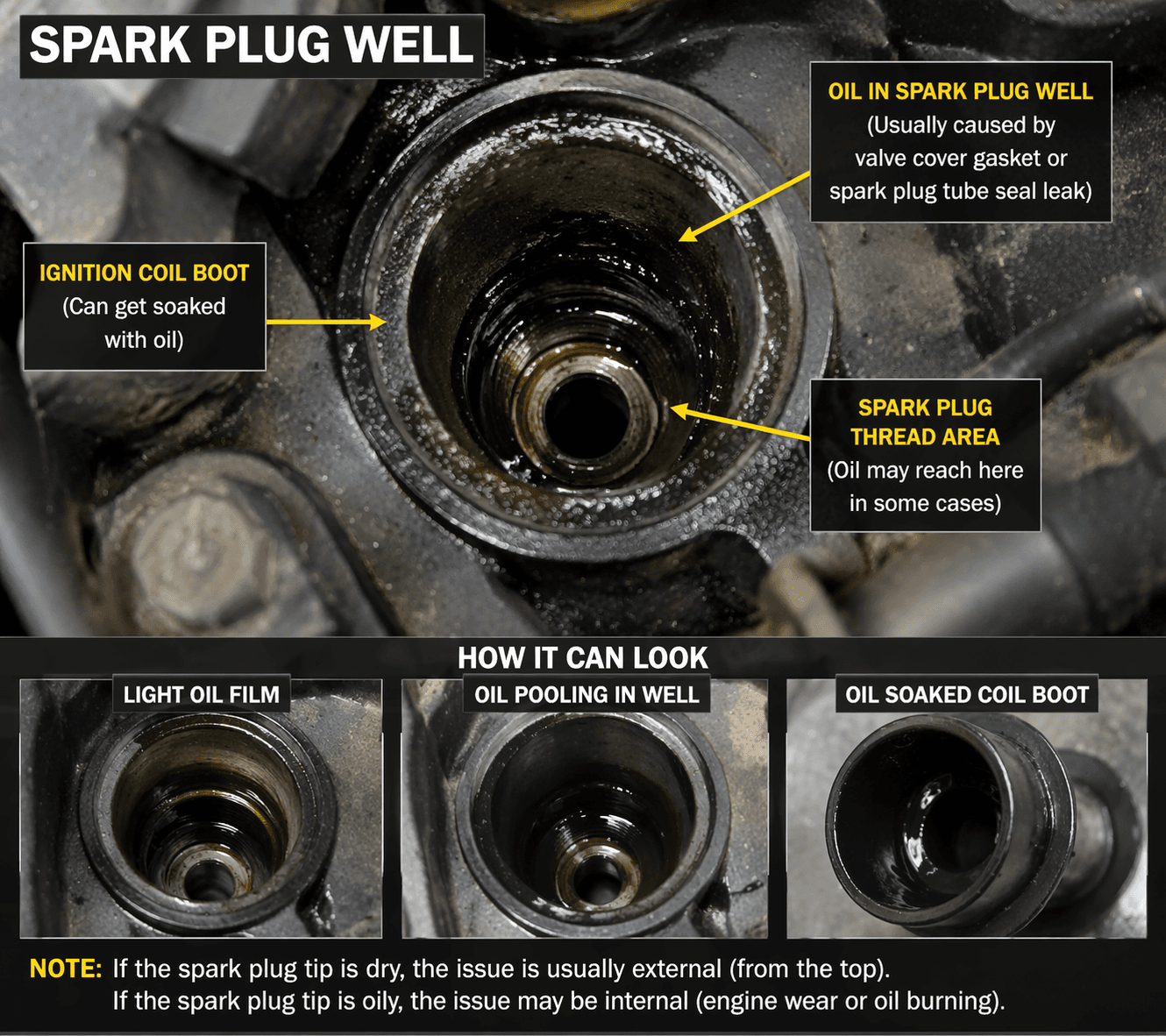
Oil in spark plug well is usually caused by leaking spark plug tube seals or a failing valve cover gasket. If oil is only inside the spark plug well and the spark plug tip is still dry then the leak is usually external and coming from the top side of the engine. If the spark plug tip is oily too then the problem may be internal such as worn piston rings valve seals or another oil control issue.
Why This Problem Matters
Oil in a spark plug is not something to ignore. A lot of people replace the spark plugs and think the issue is gone. Then a few days later the misfire comes back. The check engine light turns on. Idle gets rough. Acceleration feels weak. Then they start wondering why new spark plugs did not fix anything. The truth is simple. The spark plug is often not the root problem. The oil leak is.
When oil starts filling the spark plug tube it can soak the ignition coil boot. That can weaken spark delivery. In some cases current starts leaking. In other cases carbon tracking appears. Sometimes the threads get oily and that confuses people into thinking it is an internal engine problem right away. This confusion is exactly why this topic gets misdiagnosed so often.
Oil in Spark Plug Well vs Oil on Spark Plug
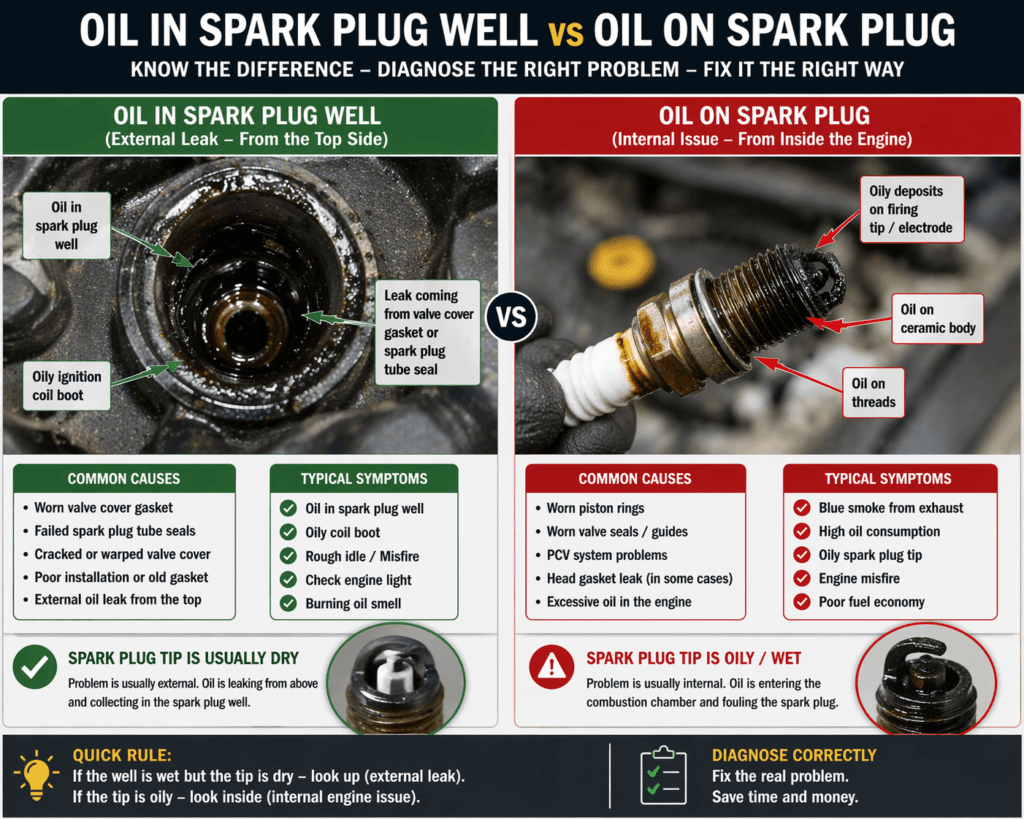
Oil only in the spark plug well
If there is oil inside the spark plug well and the firing tip is dry then the first thing to suspect is the valve cover gasket or the spark plug tube seal. That usually means the oil is not coming from inside the combustion chamber. It is leaking from above and entering the spark plug tube.
Oil on the spark plug threads
If the threads are oily when you remove the spark plug there are two common possibilities. Either the oil was already sitting in the well and coated the threads during removal or the leak traveled down far enough to reach the thread area. In this case it is still wrong to jump straight to piston rings.
Oil on the firing tip or electrode
This is where the situation changes. If the spark plug tip is oily or has wet oily deposits then the issue can be internal. That is when worn piston rings bad valve seals or another oil control problem become more likely. Oil in the spark plug well and oil on the firing tip are not the same diagnosis.
Most Common Causes of Oil in Spark Plug Well
1. Worn valve cover gasket
This is the most common cause. The valve cover gasket goes through years of heat cycles. The rubber hardens. It shrinks. The seal becomes weak. Then oil begins to seep out. Over time that oil can make its way into the spark plug well.
2. Failed spark plug tube seals
Some engines use separate spark plug tube seals. Others have them built into the valve cover. When these seals fail oil can leak directly into the spark plug tube. If one cylinder is worse than the others it may point to one tube seal failing before the rest.
3. Cracked valve cover
Plastic valve covers can warp over time and they can crack too. If someone overtightened the bolts in the past or if the cover has aged badly it may no longer sit flat on the cylinder head. In that case even a new gasket may not seal properly.
4. Poor previous repair
This happens more than people think. Someone replaces the gasket but does not clean the sealing surface properly. Old sealant is left behind. The bolts are tightened unevenly. The correct torque pattern is ignored. The result is simple. The leak comes back.
5. Wrong assumption after seeing oil
A lot of people immediately blame piston rings. That is a mistake. Every oily spark plug does not mean worn rings. First you need to see where the oil actually is. In the well. On the threads. Or on the firing tip.
Symptoms of Oil in Spark Plug Well
Not every symptom should be forced into every case. Many of these problems can feel similar to [bad spark plug symptoms] because oil contamination in the plug well can weaken spark delivery and trigger rough running.The real symptoms that fit this problem are:
- visible oil in the spark plug well
- oily ignition coil boot
- rough idle
- random or cylinder specific misfire
- hesitation under load
- check engine light
- hard starting
- burning oil smell from the engine bay
If you also have blue smoke from the exhaust and high oil consumption then this may not be just a spark plug well leak. At that point internal engine condition also needs to be checked.
If the problem gets worse it can lead to an engine misfire symptoms situation where the engine starts shaking under load.
Is It Serious
Yes it can be serious. Not every case is an emergency but ignoring it is a bad idea.
| Condition | Severity | Drive or Not |
|---|---|---|
| Light oil film in one well | Medium | Short distance only |
| Oil pooling in the well | High | Avoid regular driving |
| Misfire with oily coil boot | High | Better not drive |
| Check engine light flashing | Very high | Do not drive |
| Oily firing tip with smoke | Very high | Full diagnosis needed |
If it is only a small seep and the engine still runs smoothly you still should not delay the repair. Once oil reaches the coil boot the problem can get more expensive fast.
How to Diagnose It Properly
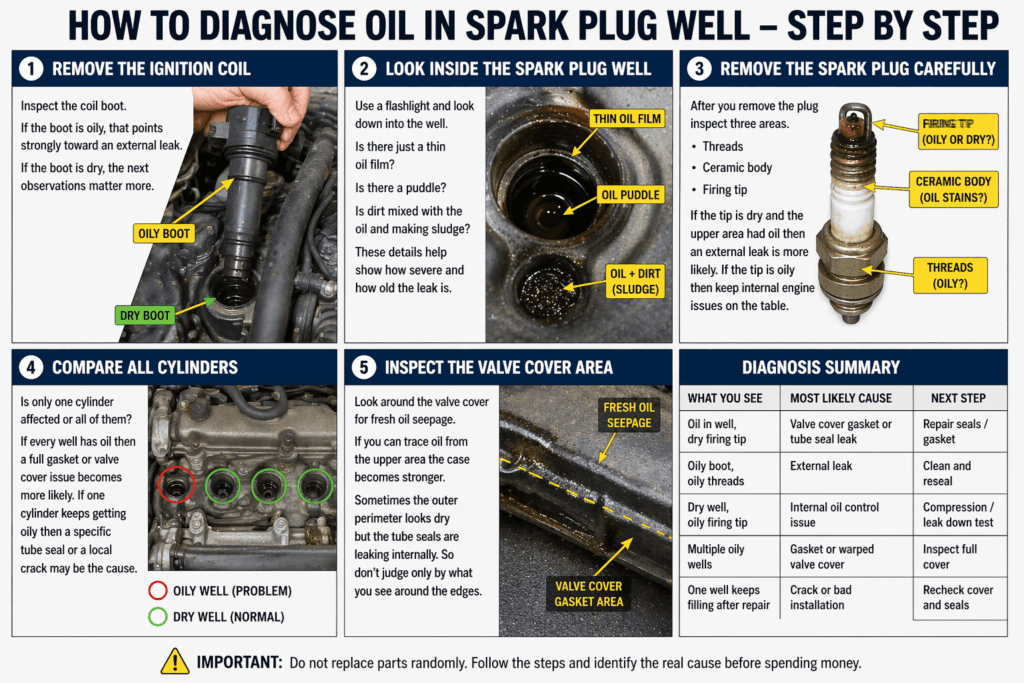
This is the most important part. Do not guess.
Step 1: Remove the ignition coil
Inspect the coil boot. If the boot is oily that points strongly toward an external leak. If the ignition coil boot is dry then the next observations matter even more.
Step 2: Look inside the spark plug well
Use a flashlight and look down into the well. Is there just a thin oil film. Is there a puddle. Is dirt mixed with the oil and making sludge. These details help show how severe and how old the leak is.
Step 3: Remove the spark plug carefully
After you remove the plug inspect three areas. The threads. The ceramic body. The firing tip. If the tip is dry and the upper area had oil then an external leak is more likely. If the tip is oily then keep internal engine issues on the table.
Step 4: Compare all cylinders
Is only one cylinder affected or all of them. If every well has oil then a full gasket or valve cover issue becomes more likely. If one cylinder keeps getting oily then a specific tube seal or a local crack may be the cause.
Step 5: Inspect the valve cover area
Look around the valve cover for fresh oil seepage. If you can trace oil from the upper area the case becomes stronger. Sometimes the outer perimeter looks dry but the tube seals are leaking internally. So do not judge only by what you see around the edges.
Step 6: Decide if it is external or internal
| What you find | Most likely meaning | What to do next |
|---|---|---|
| Oil in well and dry tip | Valve cover gasket or tube seal leak | Repair seals |
| Oily coil boot and oily threads | External leak | Clean and reseal |
| Dry well but oily tip | Internal oil control issue | Move toward compression and leak down testing |
| Multiple oily wells | Gasket or warped cover issue | Inspect full cover |
| One well fills again after repair | Crack or bad installation | Recheck cover and seal fit |
Can a Bad Spark Plug Cause Oil in the Well
No. In most cases the spark plug does not create the oil leak. The spark plug and ignition coil are the parts being affected by the leak. This is important. A lot of people install new plugs and think the issue is fixed. If the source of the oil leak is still there the oil will return and the new plugs will suffer too.
How to Fix Oil in Spark Plug Well
The real fix is to repair the source of the leak.
Parts commonly needed
- valve cover gasket set
- spark plug tube seals if they are separate
- sometimes a full valve cover
- new spark plugs if they are contaminated
- ignition coil or at least coil boot inspection
- brake cleaner
- lint free cloth
- torque wrench
Basic repair process
Start by removing the ignition coils. If there is a lot of oil in the wells remove as much of it as possible before taking the spark plugs out. Then remove the spark plugs. Take off the valve cover. Inspect the old gasket and tube seals. Clean the sealing surfaces properly. Install the new gasket or tube seals. If the valve cover is warped or cracked replace it. Reinstall everything using the correct torque pattern. Clean the spark plug wells fully. Then inspect the plugs and coils and reinstall or replace them as needed.
Common repair mistakes
- leaving oil in the well
- replacing only the spark plugs
- reusing hardened old gaskets
- overtightening bolts
- using the wrong sealant
- assuming a top side leak when the firing tip is clearly oil fouled
Do You Need New Spark Plugs Too
Not in every single case but often yes. If the spark plug threads are oily or the ceramic body is contaminated or the firing tip is fouled then replacing the plug is usually the smart move. If the coil boot has become soft damaged or shows tracking marks then the coil may also need replacement. A cheap shortcut often becomes a more expensive repair later.
Repair Cost Overview
| Repair Type | Parts Cost | Shop Cost Level |
|---|---|---|
| Valve cover gasket only | Low to medium | Medium |
| Tube seals with gasket | Medium | Medium |
| Full valve cover replacement | Medium to high | High |
| Add spark plugs | Medium | Medium |
| Add ignition coil replacement | High | High |
The exact cost depends on the vehicle. Some engines are easy to work on. Others take much more time because access is tight.
Can You Keep Driving
If the car still runs smoothly and there is only a light seep then short distance driving may still be possible. But that does not mean it is safe long term. If you have a misfire rough idle or a flashing check engine light then do not keep driving it. A misfire can damage the catalytic converter. An oily coil boot can make ignition performance worse very quickly.
How to Prevent It From Coming Back
Prevention is simple but often ignored.
- use the correct torque
- replace the full gasket set
- clean sealing surfaces properly
- avoid cheap low quality seals
- recheck the wells after installation
- do not mistake old leftover oil for a fresh leak
- inspect and clean the ignition coils
Honest Final Verdict
If you have found oil in a spark plug well the first thing to do is not panic but also do not guess. Every oily spark plug does not mean worn piston rings. Many times the problem is much simpler. The valve cover gasket or spark plug tube seal is leaking. But if you fail to separate an external leak from an internally oil fouled spark plug then the diagnosis will go wrong.
My direct mechanic style answer is this: If the well is wet but the tip is dry then look up first. If the tip is oily too then look deeper into the engine. That one line explains the whole logic. First understand where the oil is. Then understand the symptoms. Then repair the real source. That is how you solve this properly.
FAQs
What causes oil in spark plug well?
The most common cause is a leaking valve cover gasket or failed spark plug tube seals.
Is oil in spark plug well always a valve cover gasket problem?
Not always. Sometimes the tube seals fail separately. Sometimes the valve cover itself is cracked or warped.
Can oil in spark plug well cause a misfire?
Yes. Once oil affects the ignition coil boot and spark plug connection it can lead to misfire.
Do I need to replace the spark plug if oil got on it?
If contamination is noticeable then replacing the spark plug is usually the better option.
Can piston rings cause oil in the spark plug well?
Usually not as the main cause of pooled oil in the well. Piston rings are more often linked to oily firing tips and oil burning.
Can I drive with oil around the spark plug?
Sometimes short distance driving is possible but it is not a good long term idea. If there is a misfire or a flashing check engine light then do not drive it.